
Show summary Hide summary
- Why Guatemala walked away from oil in a key rainforest
- What will replace the oil field: security and conservation plans
- How Laguna del Tigre fits into regional biodiversity and climate goals
- Challenges ahead: enforcement, corruption, and skepticism
- What this means for local communities and conservationists
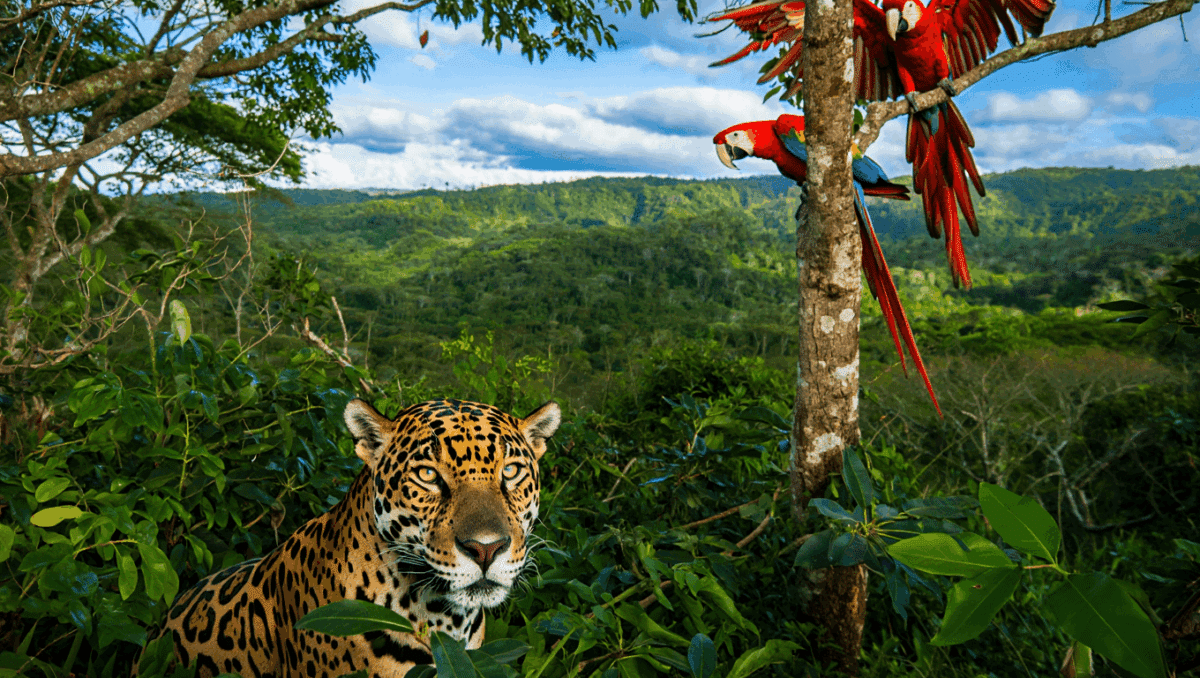
Guatemala has decided not to renew a lease on a 7,000-acre oil concession inside one of the hemisphere’s most vital wilderness areas, choosing to shut down extraction operations and refocus the site on protecting the surrounding Mayan Biosphere. The move signals a shift in priorities — from short-term oil revenue to conserving a fragile ecosystem that supports jaguars, scarlet macaws, and the cross-border wildlife corridors that connect Guatemala to Belize and Mexico.
Officials say pollution from the wells, weak global oil prices, and rampant illegal activity in the region made the project economically and environmentally untenable. The wells will be decommissioned and the property placed under military and police control to shore up security in the Laguna del Tigre sector of the Mayan Biosphere Reserve.
Why Guatemala walked away from oil in a key rainforest
The area once leased to the Anglo-French developer Perenco sat within a patchwork of protected lands treasured by conservationists. Over time, operations there became controversial as environmental impacts mounted and enforcement in the broader reserve faltered.
The Growing Demand for Data-Driven Decision Making in Silicon Valley
He quit, ran out of money, and begged to come back — here’s how his boss reacted
- Financial pressure: Persistently low oil prices reduced the project’s profitability.
- Environmental harm: Local pollution tied to extraction intensified public concern.
- Illegal exploitation: The surrounding reserve faces persistent threats from cattle ranching, illegal farming, and logging, undermining the case for continued development.
President Bernardo Arévalo framed the decision as reclaiming national territory that had been vulnerable to “actors who often exploit it for illicit activities,” saying the government must change how the region is managed to protect both people and nature.
What will replace the oil field: security and conservation plans
Authorities plan to close the wells at the site known locally as Campo Xan and transfer management to the Ministry of National Defense and the National Civil Police. The stated goal is to use a stronger on-the-ground presence to prevent illegal land use and to coordinate cross-border efforts with Belize and Mexico.
Immediate steps officials say they will take
- Safely decommission and close oil wells and infrastructure.
- Deploy military and police units to monitor the area more consistently.
- Establish cooperative patrols and intelligence-sharing with neighboring countries.
- Prioritize enforcement against illegal logging, ranching, and agricultural encroachment.
Government ministers emphasize that this is part of a broader management overhaul. Environment and Natural Resources Minister Patricia Orantes described the initiative as a near “180-degree” change in how the Maya Forest and the rest of the biosphere will be defended and stewarded.
How Laguna del Tigre fits into regional biodiversity and climate goals
The Laguna del Tigre sector is a key component of the greater Mayan Biosphere Reserve — roughly an 830,000-acre expanse that functions as a biological bridge between Guatemala, Belize, and Mexico. Conserving this forest has local and global consequences: it preserves habitat for emblematic species, protects indigenous and rural livelihoods, and helps sequester carbon.
- Wildlife corridor: Enables movement of wide-ranging species such as jaguars across national boundaries.
- Biodiversity hotspot: Hosts diverse birdlife including macaws, as well as endangered mammals and reptiles.
- Climate value: Intact forest stores carbon and influences regional climate patterns.
Removing industrial activity from within the reserve reduces immediate threats to fragile habitats while signaling a commitment to greater conservation across the Maya Forest complex.
Challenges ahead: enforcement, corruption, and skepticism
Environmentalists cautiously welcomed the announcement but warned that implementation will be the real test. Critics argue the state already maintains a security component in the reserve, and that corruption and weak institutions have long hampered enforcement. Some observers view the takeover as symbolic unless sustained resources and political will follow.
- Longstanding illegal cattle ranching and farming continue to erode forest cover each year.
- Logging and other extractive activities often persist despite patrols, exploiting governance gaps.
- Effective cross-border coordination with Mexico and Belize will be crucial but difficult to maintain.
President Arévalo’s administration campaigned on a platform of protecting indigenous rights, advancing clean energy, and strengthening environmental protections. For supporters, the Xan decision is an early test of that agenda. Government officials have stressed that protecting the Maya Forest is “for the good of Guatemalans and for the world,” framing conservation as both a national duty and a contribution to global climate goals.
What this means for local communities and conservationists
For communities living around the biosphere, the removal of oil operations could mean reduced contamination and fewer industrial disruptions, but also uncertainty around enforcement and land tenure. Conservation groups hope the shift will slow habitat loss and strengthen long-term protections, while advocates for rural development will watch how the government balances livelihoods with preservation.
- Potential benefits: Cleaner water, reduced industrial impact, stronger habitat protections.
- Risks: If security operations focus only on repression, they could strain relations with local and indigenous communities; if enforcement is weak, illegal activities may rebound.
Authorities say the policy change is intended to be more than a one-off gesture: it is part of a package intended to restructure management of the Mayan Biosphere and to reduce the kinds of illicit economic activity that have driven deforestation and pollution in the region.
You might also like:
- Cloud jaguar sighting in Honduras caught on trail cam, first in a decade
- UNESCO adds area the size of Bolivia to reserves protecting 5% of world land
- Bolivia protects 660 square miles of biodiverse forest
- French Guiana protects 370,000 acres of rainforest and granite peaks
- New Zealand marine reserves: 5 new sites to protect dolphins and kelp forests off South Island

Michael Thompson is an experienced journalist covering U.S. and global news. With ten years on the front lines, he breaks down political and economic stories that matter. His precise writing and keen attention to detail help you grasp the real‑world impact of every event.


Man, finally some good news for the wildlife! Guatemala stepping up to protect jaguars and macaws is a boss move. Oil can take a hike, natures got the spotlight now. Lets see more of this!
Man, finally some good news for Mother Nature! Guatemala stepping up to protect jaguars and macaws is like a plot twist in a nature documentary. Hope more countries follow suit and prioritize wildlife over drilling!
Man, Guatemalas pulling a 180 on those oil plans to save jaguars and macaws? Thats some next-level eco-warrior stuff! Hope more countries take notes and protect our furry and feathery buddies.
Man, finally some good news for our furry friends! Its like Guatemalas giving nature a high-five by protecting those jaguars and macaws. Oil can take a back seat; these critters deserve some peace and quiet.
Dude, totally! Its about time we give those furry pals some R&R, right? Guate-gang coming in hot with the protection vibes for the jaguars and macaws. Oil can chillax for a bit; let nature do its thing, man. Peace and quiet for the critters all the way!
Man, finally some good news for our furry and feathered buddies down in Guatemala! Halting oil extraction to protect jaguars and macaws is a step in the right direction. Lets hope more countries follow suit!
Man, thats a win for the animal kingdom down there! About time they get some love and protection. Hopefully, this move sets a trend for other nations to step up and safeguard our wildlife. Lets keep those paws and feathers safe, right?
Man, Guatemalas got its priorities straight! Protecting jaguars and macaws over oil extraction? Love to see it. Hope other countries take notes and start prioritizing wildlife and nature conservation too.
Man, about time someone stood up for the wild ones! Saving jaguars and macaws over oil? Thats the move. Guatemala, youre speaking my language. Lets protect those beauties and keep the Earth thriving!
Man, finally some good news for the environment! Guatemala stepping up to protect those jaguars and macaws is a move we need more of. Who needs oil when you got wildlife this cool? Hope other countries take notes!
Man, Guatemala stepping up for those jaguars and macaws is like a plot twist in a nature documentary. Who needs oil drama when you got wildlife protection kicking in? Natures the real star here!
Man, Guatemalas got their priorities straight! Protecting jaguars and macaws over oil? Thats what I call a win for nature! Hope other countries take note and follow suit. Wildlife > black gold any day!
Man, I remember when folks used to think the environment was just something to bulldoze for profit. Guatemala stepping up to protect jaguars and macaws? Now thats a plot twist worth cheering for!
Man, finally some good news for the wildlife! Guatemala stepping up to protect jaguars and macaws is what Im talking about. Hope other countries take notes and prioritize conservation over profit, yknow?
Man, Guatemala really stepping up for those jaguars and macaws! Oil cant compete with those majestic creatures. Hope they stick to their word and protect that precious biosphere. Mother Natures counting on them!
Man, finally some good news for the wildlife! Guatemalas decision to protect jaguars and macaws over oil extraction is a win for nature. Lets hope more countries follow suit. Mother Earth needs a break, yknow?
Man, I hear ya! Its about time we start putting our furry and feathered friends first, right? Mother Earths been carrying us for too long; bout time we give her a break. Hopefully, the domino effect kicks in, and more countries step up for our wildlife buddies. Cheers to Guatemala for setting the bar high!