
Show summary Hide summary
- Where Terrorgram started and how it spread on Telegram
- How police and intelligence services track and disrupt the network
- Notable disruptions and arrests globally
- Why the network remains resilient: encryption, aesthetics and platform hopping
- What civil society and platforms are doing—and what experts recommend
- What to watch next: indicators of resurgence and emergent threats
Police and intelligence agencies continue to battle a loosely organized, transnational neo-Nazi network known online as Terrorgram. What began as a cluster of encrypted channels and extremist art has evolved into a resilient ecosystem that law enforcement says remains capable of inspiring violence and coordinating criminal activity across borders.
Investigators describe Terrorgram not as a single organization but as an overlapping set of channels, file repositories and image boards that amplify neo-Nazi ideology, normalize violence and supply users with propaganda, manuals and target lists. Despite repeated takedowns and arrests, the network’s ability to adapt to new platforms and recruit young adherents has kept it on the radar of authorities worldwide.
Where Terrorgram started and how it spread on Telegram
Terrorgram emerged on Telegram, a messaging app that offers large, often public channels, private groups and robust file-sharing. Users exploited those features to distribute extremist art, music, manifestos and other propaganda that glamorized far-right violence and white supremacist ideas. The channels used polished graphics and coded language to attract and radicalize new followers.
The Growing Demand for Data-Driven Decision Making in Silicon Valley
He quit, ran out of money, and begged to come back — here’s how his boss reacted
Key features that accelerated its spread:
- High-production imagery and memes that made extremist themes shareable across social platforms.
- Encrypted group chats and invite-only channels that limited visibility to law enforcement and casual observers.
- Use of multiple languages and international contributors, allowing rapid cross-border recruitment.
That combination of aesthetics and technology made Terrorgram both influential and difficult to dismantle.
How police and intelligence services track and disrupt the network
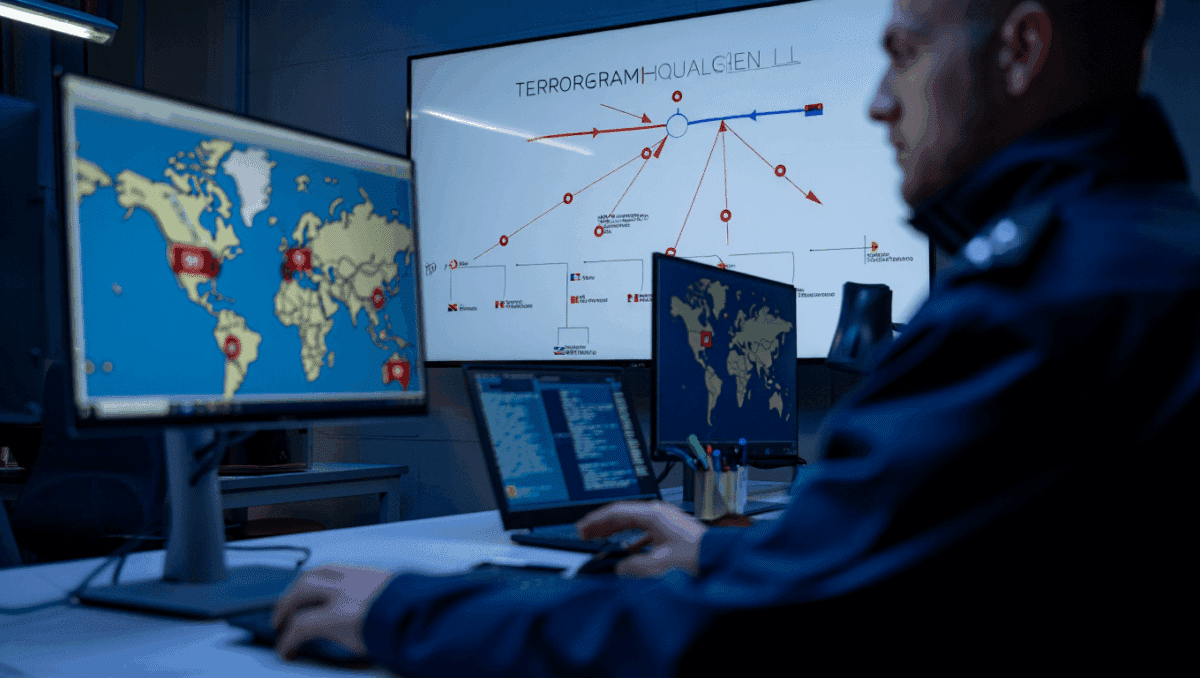
Law enforcement agencies employ a mix of traditional and digital tactics to identify members, disrupt channels and prevent attacks. The operations are frequently collaborative because the network’s users live in different countries and move between platforms.
Methods used by authorities include:
- Undercover online operations to infiltrate private channels and gather intelligence.
- Digital forensics to recover deleted content, trace file origins and link accounts.
- International cooperation through task forces, Europol, Interpol and bilateral agreements.
- Legal tools such as warrants, asset freezes and criminal charges for weapons, conspiracy or hate crimes.
- Coordination with tech companies to remove channels, block accounts and limit distribution.
Investigators emphasize that takedowns must be paired with long-term monitoring because users often resurface under new names or on different services.
Notable disruptions and arrests globally
Since the network became visible to authorities, police in multiple countries have announced arrests and seizures tied to channels associated with Terrorgram content. While individual operations vary, common outcomes include criminal charges for firearms offenses, planning or plotting attacks, and possession of extremist material.
Examples of law enforcement actions typically involve:
- Arrests following investigations into online extremism, sometimes uncovering weapons or concrete attack plans.
- Prosecutions using digital evidence from seized devices and recovered chat histories.
- Cross-border intelligence sharing that enabled simultaneous raids and evidence collection.
These interventions demonstrate that traditional policing paired with cyber expertise can disrupt cells inspired by online networks, but they have not eliminated the threat.
Why the network remains resilient: encryption, aesthetics and platform hopping
Several technical and social factors help explain why groups tied to Terrorgram continue to reappear.
- Encryption and privacy features on messaging apps make surveillance harder and give users confidence to share illicit material.
- High-quality propaganda—music, videos and graphic design—keeps communities engaged and attractive to new recruits.
- Users frequently move to alternative platforms, create mirror channels, or adopt ephemeral accounts to avoid detection.
- Shared ideology and subcultural symbols foster loyalty and make it easier for networks to reorganize after takedowns.
Cybersecurity experts note that removing one channel often leads to rapid reconstitution elsewhere; moderators, bots and channel owners adapt their tactics to stay ahead of enforcement.
How the group adapts its recruitment and messaging
Recruitment is less about formal membership and more about influence. Content creators produce a steady stream of material that normalizes violence and frames extremist acts as heroic. This approach appeals to impressionable or isolated individuals and can escalate fringe sympathies into real-world harm.
Techniques include:
- Storytelling through personal narratives that glorify violence.
- Visual branding that borrows from gaming and music subcultures to lower barriers to entry.
- Use of coded language and euphemisms to evade moderation while signaling intent to insiders.
What civil society and platforms are doing—and what experts recommend
Civil society organizations, content moderators and independent researchers play a key role in identifying trends, documenting channels and alerting authorities. Platform companies have responded with policies to ban extremist content, but enforcement remains inconsistent.
Common responses and recommendations:
- Expanded research and monitoring by NGOs to map networks and provide evidence to law enforcement.
- Improved reporting tools and clearer community standards on messaging apps and social platforms.
- Stronger legal frameworks to hold platform operators accountable for persistent extremist networks.
- Investment in prevention programs that target at-risk youth and online communities vulnerable to radicalization.
Experts stress that a combined approach—law enforcement, technology intervention, and community prevention—is essential to reduce the network’s influence.
What to watch next: indicators of resurgence and emergent threats
Policing Terrorgram-style networks is ongoing and dynamic. Analysts advise watching for several warning signs that could signal renewed activity or an escalation in threat levels.
Watch for:
- A spike in newly created channels carrying similar aesthetics and slogans.
- Coordination across platforms indicating an organized shift to evade takedowns.
- An increase in localized messaging that seeks to direct lone actors toward specific targets.
- Use of alternative technologies—like decentralized platforms or encrypted file-sharing services—to host banned materials.
Law enforcement officials say these patterns often precede attempts to orchestrate real-world violence, making early detection and rapid response vital.
You might also like:
- Parents arrested over WhatsApp group as police investigate
- Secret Service finds underground cell network that could cripple New York City
- Graham Linehan arrest shows UK needs First Amendment-style free speech protections
- AI-generated police report falsely claims officer turned into frog
- Two people injured in late-night Allendale shooting, police confirm

William Anderson is a multimedia producer specializing in videos, podcasts, and interactive galleries. With five years of immersive content creation, he turns information into a rich audio‑visual experience. His storytelling skills draw you directly into the heart of every story, on any platform.


Man, its like whack-a-mole with these Terrorgram dudes. Always popping up somewhere new. How do they even keep that hate train going? Feels like an evil game of hide and seek for the cops.
Yo, for real! Its like these Terrorgram dudes are playing a twisted game of whack-a-mole. Every time you think youve got em, they pop up somewhere new. Its insane how they keep that hate train going. Feels like the cops are in an endless game of hide and seek with em. Crazy stuff.
Man, these Terrorgram folks are like cockroaches, just when you think youve squashed em, they pop up elsewhere. Cant imagine the headache for the cops. How do they even keep track of all these encrypted chats? Its like a twisted game of hide and seek.
Man, whys it like playing whack-a-mole with these Terrorgram dudes? Police bust one spot, and they pop up elsewhere. Its like a twisted game of cat and mouse, but with scary extremists. Hope they nab em all soon.
Man, its like playing whack-a-mole with these Terrorgram dudes. How do they keep popping up? Police need a new game plan, for real. Scary to think how deep this networks roots go.
I used to think Telegram was just for group chats and memes, but dang, this Terrorgram mess is like a horror movie plot. The fact that these neo-Nazis can still lurk online makes me side-eye my screen. Crazy, right?
I once stumbled into a rabbit hole of weird Telegram channels, and man, let me tell you, those Neo-Nazi creeps are like cockroaches. Squash one, and ten more pop up. Hope the cops keep stomping hard on Terrorgram!
Man, these Terrorgram folks are like cockroaches, surviving anything! Police gotta step up their game. But hey, how come a bunch of idiots can outsmart the whole system? Makes you wonder, right?
I mean, tell me about it! These Terrorgram dudes are like the ultimate escape artists, slipping through the cracks like nobodys business. Its wild how they keep giving the police the slip. Makes you wonder if theyre operating on some next-level strategy or if the systems just playing catch-up, right? Its like a real-life game of cat and mouse out there.
Man, these Terrorgram dudes are like cockroaches, never seem to disappear! Police must be pulling their hair out trying to squash em. Wonder whats their secret sauce. Stay safe out there, folks!
Yo, did you hear about that Terrorgram mess? Its like playing Whack-a-Mole with these hate groups. Feels like theyre always one step ahead. How do we even tackle this for real?
Man, its like playing whack-a-mole with these Terrorgram dudes. Police bust one cell, another pops up. Feels like theyre always one step ahead. How do they keep evading the fuzz? Its like a twisted game of hide and seek.
Man, these Terrorgram folks are like cockroaches, you squash one, and another pops up. Its like a twisted game of Whack-a-Mole. Wonder if theyll ever truly shut this circus down…
Oh man, tell me bout it! Its like playing a never-ending round of Whack-a-Mole with those Terrorgram peeps. You whack one, and poof, another pops up! Wonder if theyll ever throw in the towel and call it a day. Its like a circus that just wont pack up its tent, ya know?
Man, its like playing whack-a-mole with these Terrorgram dudes. Every time you think theyre out, they pop back up like a demented game of hide and seek. How do they keep dodging the fuzz like that?