
Show summary Hide summary
- How a “Weird Cat” Found Its Way to Science: The Field Discovery
- From Specimen to Species: The Genomic Process that Confirmed Leopardus tilcayo
- What Scientists Have Learned About the Tilcayo’s Habitat and Lifestyle
- Rethinking the Leopardus Genus: A Family Tree in Flux
- Conservation Consequences: New Species, New Concerns
- The Bigger Picture: Why This Discovery Matters
A chance phone call in 2016 sent a Bolivian biologist into the remote cloud forests of the Andes and set in motion a scientific detective story that ended with the identification of a cat species never before recorded by science. Smaller than a typical housecat, with striking rosettes and unusually long whiskers, the animal looked familiar at first glance — but the more researchers examined it, the clearer it became that they were looking at something entirely new.
What began as simple curiosity morphed into a multiyear genomic investigation led by a National Geographic Explorer and a team of geneticists. Their findings, published in a major journal, add a new branch to the Leopardus family tree and remind us that even in the 21st century, large, charismatic mammals can still escape scientific notice.
How a “Weird Cat” Found Its Way to Science: The Field Discovery
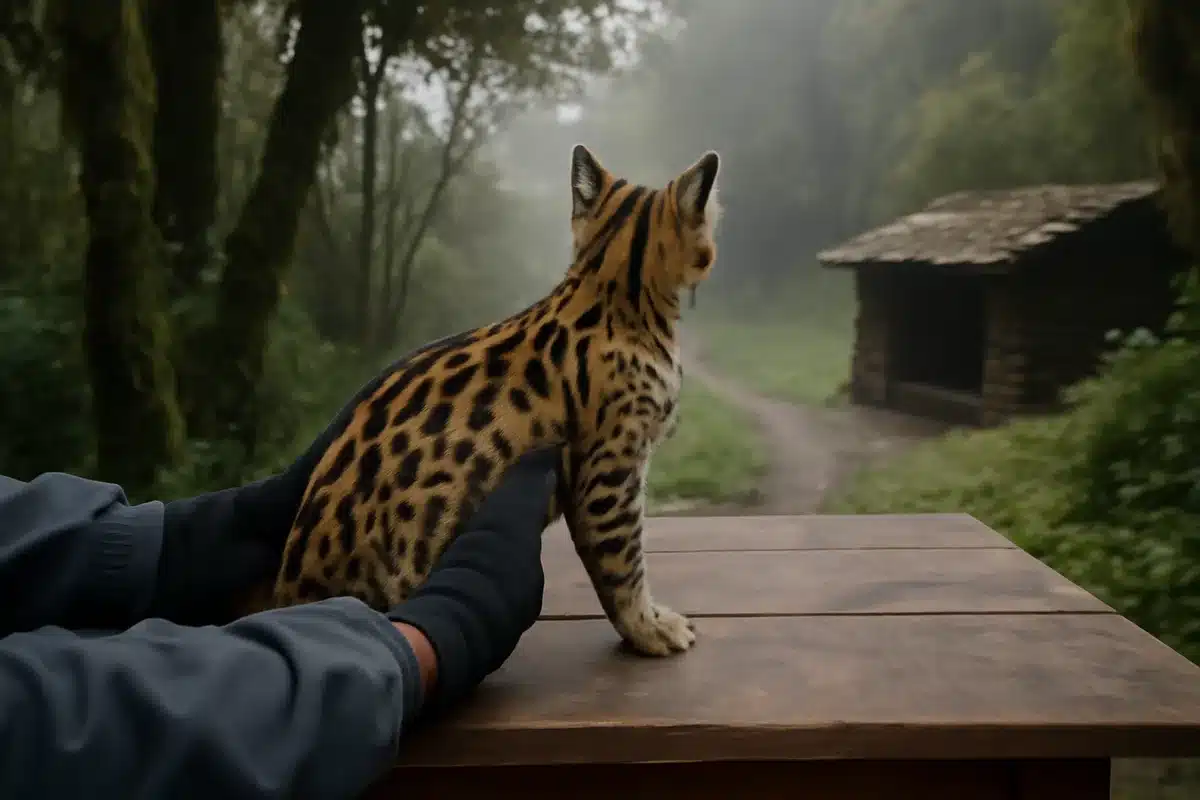
The story starts when a local man in Bolivia discovered an oddly marked kitten and brought it to a wildlife sanctuary after realizing it could not be tamed. Paola Nogales-Ascarrunz, a Bolivian biologist and founder of the Bolivian Felids Research Program, was called in to examine the animal. Her first impressions were of a small felid with long whiskers, small ears, and distinctive rosette patterns — features that placed it in the genus Leopardus, commonly referred to as “tiger cats” or oncillas in South America.
The Growing Demand for Data-Driven Decision Making in Silicon Valley
He quit, ran out of money, and begged to come back — here’s how his boss reacted
Initial field observations suggested it could be a known species, but subtle differences in coat pattern, skull shape, and other traits raised questions. As Nogales-Ascarrunz prepared educational materials on Bolivia’s wild cats, those questions deepened, prompting a decision to move beyond morphology and into genetic analysis.
From Specimen to Species: The Genomic Process that Confirmed Leopardus tilcayo
Scientists followed a stepwise approach to verify whether the Bolivian cat was new to science:
- Field assessment and photographic documentation of the individual found at the sanctuary.
- Comparative morphological review against known Leopardus species and subspecies.
- Collection of genetic samples and collaboration with molecular specialists.
- Genome sequencing and phylogenetic analysis to determine evolutionary relationships.
- Peer-reviewed publication to formalize the species description and name.
With the help of Brazilian geneticist Eduardo Eizirik and other collaborators, Nogales-Ascarrunz spent several years sequencing DNA and building phylogenetic trees. The genetic data revealed that this population diverged from its nearest relative roughly 1.4 million years ago — a timespan comparable to the split between modern lions and the extinct cave lion. Those results justified naming the cat as a distinct species: Leopardus tilcayo.

Why “tilcayo” — and how names matter
The chosen scientific name honors a local indigenous term. When researchers asked community members why they called the animal “tilcayo,” the typical reply was, “My grandfather called it that.” By adopting a vernacular name, the team acknowledged the long-standing local knowledge of a creature that had simply not been formally recognized by science.
What Scientists Have Learned About the Tilcayo’s Habitat and Lifestyle
Although genomic evidence firmly places L. tilcayo on the feline family tree, many aspects of its ecology remain unknown. What is clear so far:
- Range: L. tilcayo lives in the Yungas forest ecosystem on the eastern slopes of the Bolivian Andes — a region of steep elevations, humid cloud forests, and high biodiversity.
- Size and appearance: The cat is smaller than an average housecat and shows large rosettes on its coat, long facial whiskers, and compact ears.
- Behavioral gaps: Scientists do not yet know the tilcayo’s diet, mating system, territorial habits, or main predators.
Because the species has only recently been recognized, long-term field studies, camera-trap surveys, and ecological monitoring will be necessary to paint a full picture of its life history and ecological role.
Rethinking the Leopardus Genus: A Family Tree in Flux
The discovery of L. tilcayo is not just the addition of one more species; it forces a broader reexamination of the Leopardus genus, particularly the so-called “tiger cats.” Over decades, taxonomists have revised classifications based on new morphological and genetic evidence, and recent genomic work has revealed that what was once seen as a single species can actually represent a complex of multiple distinct lineages.
Key points about Leopardus taxonomy:
- Historically, the genus included several named species such as the ocelot, margay, kodkod, pampas cat, and the group commonly called tiger cats.
- Advances in DNA sequencing have shown deep splits among lineages, prompting reclassification and the recognition of additional species.
- The tilcayo’s divergence time — about 1.4 million years — shows that distinct evolutionary histories were hiding beneath superficially similar appearances.
Researchers emphasize that molecular data can reveal hidden diversity that morphology alone cannot detect. As genomic sampling expands across South America, more cryptic diversity may come to light.
Conservation Consequences: New Species, New Concerns
Identifying a new species often brings unintended conservation implications. When populations that were once lumped into a widespread species are split into multiple narrower-range species, each newly defined taxon typically has a smaller estimated population and more restricted distribution. That shift can elevate conservation priority.
- Many Leopardus species are not globally listed as critically endangered, but the group faces habitat loss and fragmentation across South America.
- Taxonomic splitting can reveal that some lineages are more vulnerable than previously recognized, affecting IUCN assessments and management plans.
- For the tilcayo, establishing accurate population counts and threats is an urgent next step to determine conservation status and protection needs.
The Bigger Picture: Why This Discovery Matters
The tilcayo discovery highlights the value of local knowledge, fieldwork persistence, and cross-disciplinary collaboration between field biologists and geneticists. It also serves as a reminder that even in a well-studied group like mammals, surprising discoveries remain possible — especially in biodiverse but under-surveyed habitats like the Andean Yungas. Ongoing research into Leopardus tilcayo will shape how scientists understand species boundaries, evolutionary history, and the conservation priorities for small wild cats across South America.
You might also like:
- Great Salt Lake new species discovered: what scientists know so far
- Dolphin health revealed by seawater eDNA sampling in a conservation first
- New Jersey wildflower species found that grows only in the state
- Marsupials discovered after 6,000 years presumed extinct
- Nonphotosynthetic plant discovered: species abandoned photosynthesis entirely

Michael Thompson is an experienced journalist covering U.S. and global news. With ten years on the front lines, he breaks down political and economic stories that matter. His precise writing and keen attention to detail help you grasp the real‑world impact of every event.


Whoa, a new cat species? Thats like finding a secret level in a video game! Cant wait to learn more about this mysterious Tilcayo cat and its habitat. Nature never runs out of surprises, huh?
Dang, after a century, a new cat species? Thats wild! Can you imagine stumbling upon a brand-new feline friend out there? Nature keeps dropping surprises like its no big deal. Hats off to the scientists diving into this discovery!
Man, its wild how were still discovering new cat species in this day and age. Makes you wonder what else is out there, lurking in the shadows. Exciting times to be a wildlife enthusiast, for sure.
Dude, right? Cats be pulling a sneaky on us, showing up like Surprise, Im a new species! Its like a real-life game of hide and seek out there in the wild. Who knows what other furry surprises are waiting to strut their stuff? Makes you wanna grab some binoculars and go on a critter hunt, dont it?
I heard about these weird cats before they were hipster-cool. Tilcayo sounds like a name for a secret agent cat, right? Cant wait to see them in action, sneaking through the jungle like little feline spies!
Oh man, those Tilcayo cats are like the James Bond of the feline world, you know? Imagine them slinking through the jungle with their spy gear, ready to pounce on their next mission. Theyre the cool cats with a covert twist, for sure. Cant wait to see them in action; its gonna be like watching a real-life cat-and-mouse game unfold!
Man, this Tilcayo cat species discovery got me feelin like a detective uncovering a hidden gem. Cant believe its been a century since a new cat strutted into the scientific spotlight. Nature always keeps us on our toes!
Man, talk bout a cat-tastic surprise! Tilcayos discoverys like a plot twist in a nature documentary. Cant wait for more on these elusive felines. Meow-velous news, fur real!
Man, talk about a blast from the past! New cat species? Its like Mother Nature is dropping surprises left and right. Cant wait to learn more about this mysterious feline. Wildlife never fails to keep us on our toes!
Yo, this new cat species discovery aint no joke! Imagine going a century without finding a new feline friend. Nature keeps surprising us, huh? Cant wait to learn more about these elusive cuties!
Man, new cat species? Thats wild! Reminds me of that time I thought my neighbors fat tabby was an undiscovered breed. Turns out it was just well-fed. Cheers to the real deal, though!
Man, talk about a blast from the past! New cat species? I thought we had them all figured out. Guess nature still has some surprises up its sleeve. Cant wait to learn more about this weird cat!
Whoa, another new cat species in town? Tilcayo is one mysterious feline! Cant wait to see how this fluffy discovery shakes up the cat kingdom. Wonder if its as sassy as my own furball at home!
Whoa, a new cat species? Tilcayo, huh? Sounds like a secret agent name! Cant wait for them to make a movie about a super spy cat saving the world. Agent Tilcayo, reporting for duty!
I once thought I knew all the cat species out there, but bam! Tilcayo comes along, blowing my mind. Natures full of surprises, huh? Cant wait to learn more about this mysterious feline!
Dude, right? Natures like, Hold my beer! and just keeps pullin out these surprises. Its like a never-ending game of Guess the New Species. Tilcayos the latest star of the show, huh? So mysterious, so enigmatic. Cant wait for the next episode of Cats: Unfurled Mysteries. Its like a Netflix series, but with more meow.
Man, this new cat species discovery got me hyped! Cant believe its the first in over a century. Nature never fails to surprise us, huh? Lets hope we can learn more about these cool felines soon!
Yo, this cat discovery is wild, right?! Nature stays keeping us on our toes. Who knew there were still surprises like this out there? Cant wait to see what else we uncover about these mysterious felines. Whats your take on their sudden debut, huh?
Man, can you believe they discovered a new cat species after a century? Natures full of surprises, huh? Makes you wonder what else is out there waiting to be found. Pretty wild stuff!
Dang, thats some crazy news, innit? A new cat species outta nowhere? Natures like a never-ending mystery box, man. Just when you think youve seen it all, BOOM, surprise! Makes you wonder what else is chillin out there, waiting for us to stumble upon, huh? Wild stuff, for real!
Man, Im all for new cat species *yawns*, but what’s with the name Tilcayo? Like, did they just scramble some letters together after a long day in the lab? Should’ve called it “Majestic Fluffball” or something…
Dude, I feel ya on the whole Majestic Fluffball vibe! Tilcayo does sound like they just mashed some letters together in a hurry. Imagine the chaos in that lab at the end of their shift—just picking letters out of a hat! Maybe next time theyll let us name the new species. Im all for a bit of creativity. Who wouldnt want to meet a Majestic Fluffball instead of a Tilcayo, right?