
Show summary Hide summary
- What makes the Lycurgus Cup shift color: the science behind dichroic glass
- Reconstructing a Roman method more than 1,600 years later
- Challenges that made replication difficult and informative
- From archaeological curiosity to museum display: contemporary re-creations
- How this links to later technologies and modern dichroic glass
- Why archaeologists and materials scientists care
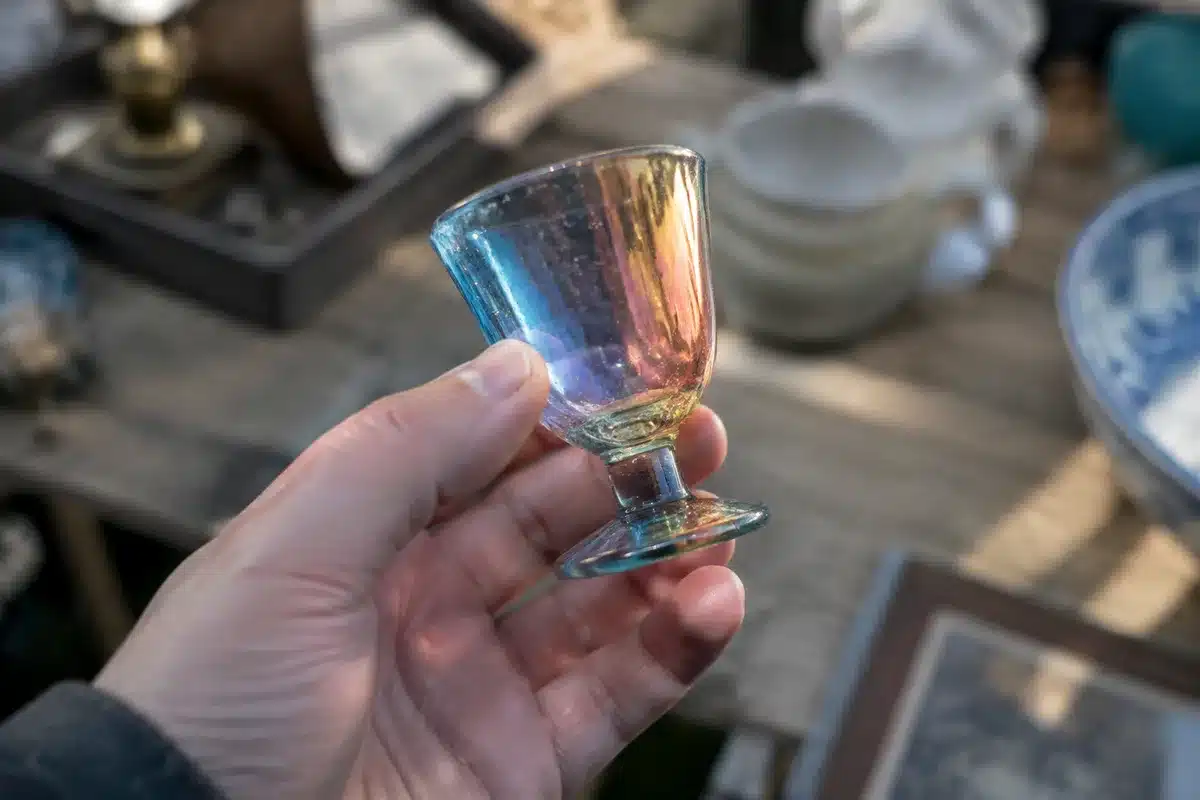
When a small, ancient goblet flips from green to a warm red depending on how light hits it, you know something extraordinary is happening. The Lycurgus Cup, a 4th-century Roman glass masterpiece, has fascinated historians and scientists for generations because its color-changing effect looks like a trick—yet it’s pure material science from late antiquity.
Researchers at the University of Sheffield have now recreated that mesmerizing effect using the same raw ingredients likely available to Roman craftsmen, shedding light on an early form of nanoscale engineering and revealing just how difficult the original makers’ task must have been.
The Growing Demand for Data-Driven Decision Making in Silicon Valley
He quit, ran out of money, and begged to come back — here’s how his boss reacted
What makes the Lycurgus Cup shift color: the science behind dichroic glass
The cup’s magic lies in dichroic glass: glass that shows different hues when light passes through it versus when light reflects off its surface. The effect isn’t paint or pigment but a physical interaction with tiny metal particles suspended inside the glass matrix.
- Embedded nanoparticles of gold and silver interact with incoming light.
- Light transmitted through the cup favors warm tones like red and orange because the particles absorb blue and green wavelengths.
- Light reflected from the outer surface scatters differently, producing an opaque green appearance.
Because those metal particles measure less than the wavelengths of visible light, the phenomenon is effectively an ancient application of what modern scientists call nanotechnology. Instead of modern cleanrooms and microscopes, Roman glassworkers achieved this with furnaces and raw materials.
Reconstructing a Roman method more than 1,600 years later
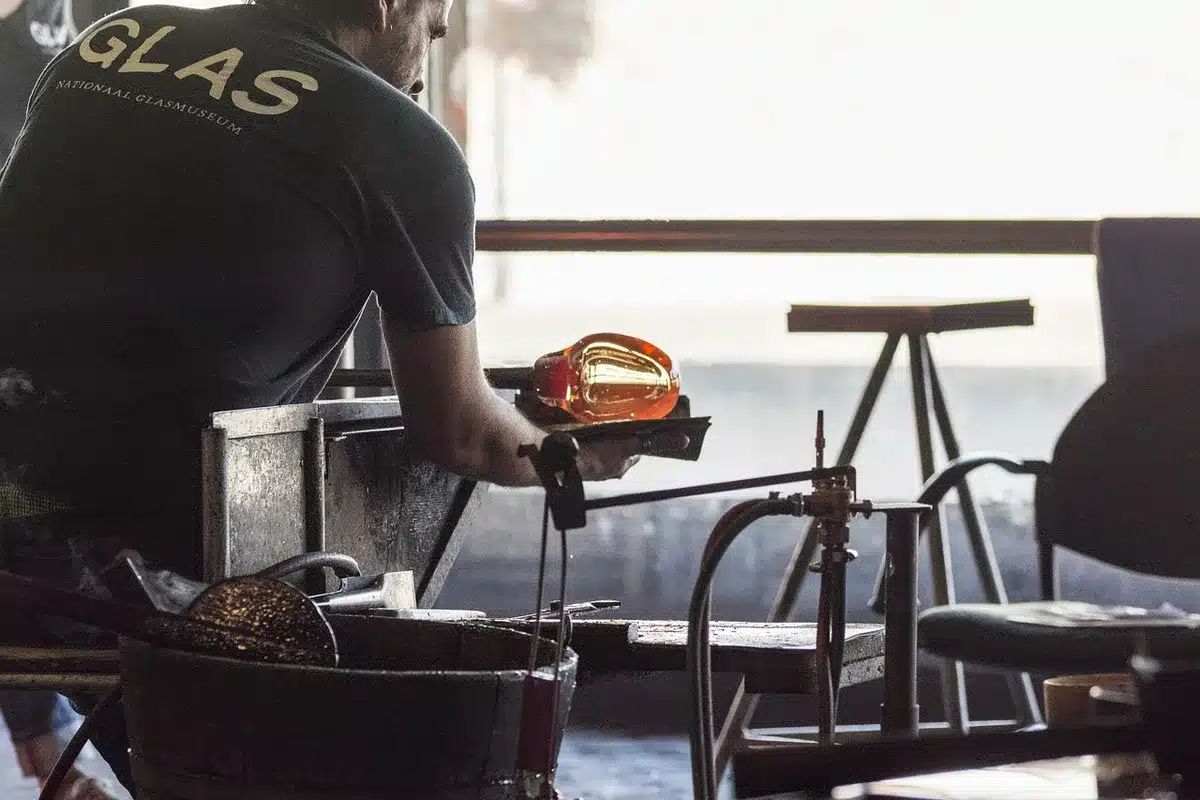
A team led by glass specialist Lisa Hollands set out to reproduce the Lycurgus Cup using period-appropriate materials and techniques. Their approach mirrored a forensic experiment: start with historically plausible compositions, then vary processing conditions until the same optical effects appear.
Key variables they tested
- Atmosphere in the furnace (oxygen-rich vs. reducing conditions)
- Exact temperature and heating profiles
- Placement of glass objects within the kiln
- Proportions and forms of silver and gold additives
One surprising outcome was how capricious the color proved to be. The position of a sample inside the furnace could mean the difference between the sought-after dichroic effect and a dull, single-colored piece. As Ian Freestone of University College London observed, the Romans may have relied on luck or repeated trial-and-error to achieve the cup’s particular hue—a lucky, repeatable accident rather than a strictly controlled recipe.
Challenges that made replication difficult and informative
The Sheffield team’s work highlights several obstacles glassmakers then—and now—face:
- Oxygen control: The glass color shifts dramatically with small changes in the furnace atmosphere.
- Temperature precision: Achieving the right nucleation of metal particles requires tight thermal management.
- Particle formation: Generating uniformly sized gold and silver nanoparticles without modern tools is inherently unpredictable.
After many iterations of firing, cooling, and chemical adjustments, the researchers succeeded in producing glass that behaves like the Lycurgus Cup. Their result confirmed that the Romans could plausibly have created the dichroic effect using contemporary raw materials and kilns—if they were fortunate and skilled enough to navigate the narrow window of conditions that produce the phenomenon.
From archaeological curiosity to museum display: contemporary re-creations
Once the production sequence was nailed down, the team entrusted the final artistic realization to glass artist Elliot Walker. He designed a modern piece inspired by both the Lycurgus Cup and classical sculpture—replacing the globe borne by Atlas with a cup that performs the same color-shifting feat.
The recreated work is slated to be part of the Turner Museum of Glass collection at the University of Sheffield. It stands alongside scientific documentation of the experiments, offering visitors a rare chance to see ancient optical science reproduced faithfully and to understand the meticulous conditions behind the effect.
How this links to later technologies and modern dichroic glass
Although dichroic coatings and color-shifting glass were developed for modern applications—NASA produced a version in the 1960s for optical filters—the Roman approach is distinct. The ancient pieces rely on embedded metal particles formed inside the glass itself, rather than thin-film interference coatings used in many modern dichroic materials.
The Sheffield reconstruction thus bridges two worlds: it confirms an ancient, particle-based method of manipulating light and also emphasizes how sophisticated Roman materials practice could be. It invites fresh thinking about technological continuity from antiquity to present-day optics research.
Why archaeologists and materials scientists care
Beyond the visual spectacle, this work matters because it reframes how we view technical skill in antiquity. The Lycurgus Cup is not merely an artistic oddity; it reveals that late Roman artisans worked with concepts—nucleation, metal chemistry, and controlled firing—that resonate with contemporary materials science.
- Cultural insight: Objects like the cup show sophisticated craft traditions and experimental approaches among ancient workshops.
- Scientific legacy: Reproductions provide empirical evidence for historical manufacturing methods.
- Educational value: Museums can now display working examples alongside scientific narratives, making invisible processes visible to the public.

You might also like:
- Ancient Romans used feces as medicine, study confirms
- Rome’s self-healing concrete leads scientist to launch Roman-style concrete business
- Roman stone-lined basin discovered predates concrete, reveals advanced engineering
- 2,000-year-old shipwreck artifacts found in Swiss lake include Roman chariot parts
- Pompeii evidence reveals Roman automatic weapon used more than 2,000 years ago

Michael Thompson is an experienced journalist covering U.S. and global news. With ten years on the front lines, he breaks down political and economic stories that matter. His precise writing and keen attention to detail help you grasp the real‑world impact of every event.

