
Show summary Hide summary
- From simple molecules to cannabinoid precursors: the chemical starting line
- Enzymes that decide the cannabinoid profile: THCA, CBDA, and CBCA synthases
- Decarboxylation: turning acidic cannabinoids into active molecules
- Where cannabinoids are made: the role of glandular trichomes
- Genes, environment, and cultivation: shaping the final cannabinoid mix
- Beyond the plant: biotech approaches to cannabinoid manufacture
- How terpenes and minor cannabinoids interact with THC, CBD, and CBC
- Practical implications for growers, consumers, and clinicians
Cannabis plants are chemical factories. In tiny glandular hairs called trichomes, a sequence of enzymes and simple building blocks come together to create cannabinoids like THC, CBD, and CBC — compounds that shape effects, aroma, and medical potential. Understanding how the plant synthesizes these molecules helps growers, researchers, and consumers make smarter choices about strains, cultivation, and product use.
This article walks through the biochemical pathways and biological machinery behind cannabinoid production, explains how enzymes determine whether a plant produces more THC, CBD, or CBC, and outlines how environmental factors and biotechnology can shift those outcomes. Expect a clear, science-backed guide that connects plant biology to what shows up in your vape pen or lab report.
From simple molecules to cannabinoid precursors: the chemical starting line
Cannabinoid synthesis begins with two basic metabolic streams inside the plant: one provides a short-chain isoprenoid (geranyl pyrophosphate, GPP), and the other supplies a polyketide-derived component (olivetolic acid). These two react to form the universal precursor for major cannabinoids, **cannabigerolic acid (CBGA)**.
The Growing Demand for Data-Driven Decision Making in Silicon Valley
He quit, ran out of money, and begged to come back — here’s how his boss reacted
- Geranyl pyrophosphate (GPP) — produced via the MEP pathway in plastids, GPP is a common building block also used to make terpenes.
- Olivetolic acid — formed through polyketide synthase activity, providing the phenolic backbone specific to cannabinoids.
- CBGA — the central branching point: once formed, CBGA can be turned into THCA, CBDA, or CBCA depending on which synthase enzyme acts on it.
This early chemistry explains why cannabinoids share structural similarities: they are all variations on the CBGA scaffold. The plant’s enzyme toolkit determines which branch of that chemical tree dominates.
Enzymes that decide the cannabinoid profile: THCA, CBDA, and CBCA synthases
Three primary synthase enzymes convert CBGA into the major acidic cannabinoids:
- THCA synthase — converts CBGA into tetrahydrocannabinolic acid (THCA), the precursor that becomes psychoactive THC after decarboxylation.
- CBDA synthase — converts CBGA into cannabidiolic acid (CBDA), which yields non-intoxicating CBD after activation.
- CBCA synthase — produces cannabichromenic acid (CBCA), the precursor to CBC.
Each synthase is encoded by distinct genes and varies among cannabis varieties. Some plants express a dominant form of THCA synthase and produce high levels of THCA, while others favor CBDA synthase and yield CBD-rich chemotypes. The relative expression, enzyme efficiency, and available CBGA pool together shape a strain’s cannabinoid fingerprint.
How small differences have big effects
Minor genetic changes in synthase genes or regulatory regions can shift enzyme activity. Variants that reduce THCA synthase activity while conserving CBDA synthase can turn a high-THC plant into a high-CBD cultivar across generations. Environmental factors that change CBGA availability — like nutrient status or light intensity — also tip the balance.
Decarboxylation: turning acidic cannabinoids into active molecules
Cannabinoids are produced by the plant primarily as carboxylic acids (THCA, CBDA, CBCA). These acidic forms are not the same as the familiar active molecules. Heat or time removes the carboxyl group in a process called decarboxylation, converting:
- THCA → THC (psychoactive)
- CBDA → CBD (non-intoxicating, therapeutic interest)
- CBCA → CBC (being studied for anti-inflammatory and other effects)
Smoking, vaping, or baking activates cannabinoids by applying heat. Some modern extraction and processing methods also deliberately decarboxylate material to produce ready-to-use THC or CBD oils. Decarboxylation is a critical step because it determines how the cannabinoids interact with the human endocannabinoid system.
Where cannabinoids are made: the role of glandular trichomes
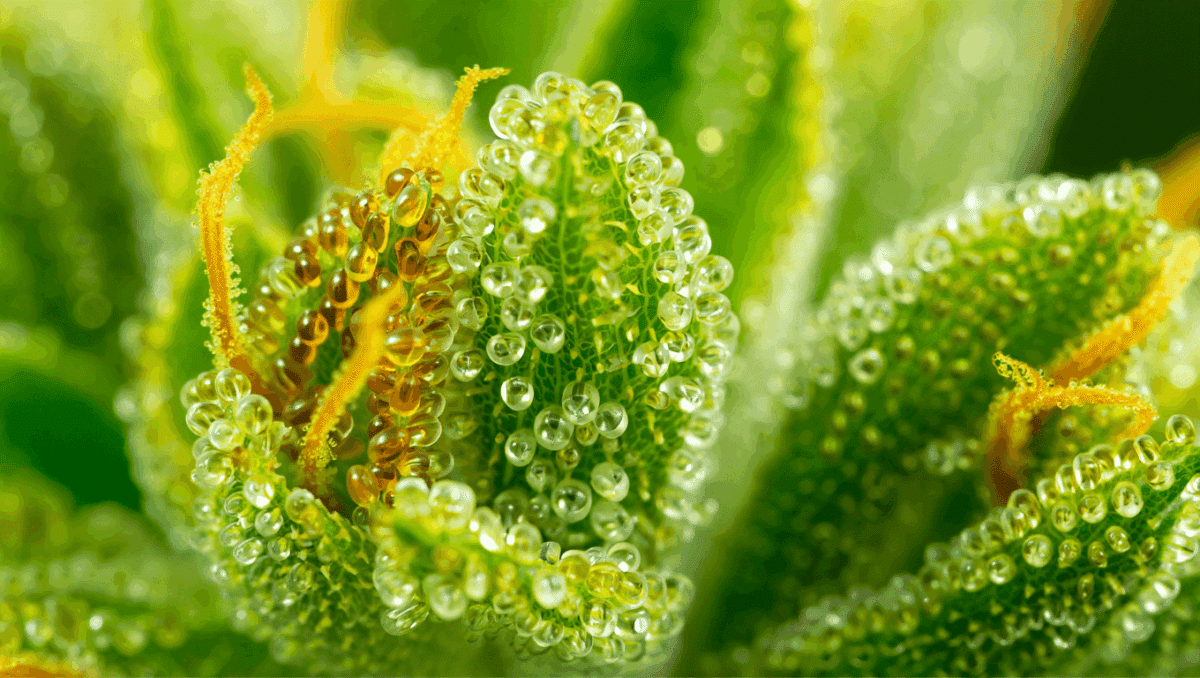
Cannabinoid biosynthesis is concentrated in glandular trichomes — tiny, mushroom-shaped glands that coat flowers and, to a lesser extent, leaves. Trichomes serve multiple functions: they protect against herbivores and UV damage and act as micro-reactors where metabolic pathways are localized.
- Capitate-stalked trichomes are the primary production sites for cannabinoids and many terpenes.
- Trichome density and maturity influence total cannabinoid yield: more and larger trichomes generally mean higher concentrations.
- Environmental stresses often increase trichome activity, which can alter cannabinoid and terpene profiles.
Breeding for trichome traits or adjusting cultivation practices to boost trichome development is a common route for growers aiming to increase potency or tailor a product’s chemical profile.
Genes, environment, and cultivation: shaping the final cannabinoid mix
Cannabinoid production is a complex trait shaped by genetics (G) and environment (E), plus their interaction (G×E). Key influences include:
- Genotype: the plant’s genetic makeup determines which synthase genes are present and how strongly they’re expressed.
- Light: intensity and spectrum, especially UV-B, can increase cannabinoid and terpene production.
- Nutrients and water: stress from limited water or altered nutrient balance can shift metabolic priorities.
- Temperature: extremes can impair enzymatic activity, while ideal ranges support consistent biosynthesis.
- Harvest timing: cannabinoids accumulate and change over flower maturation; choosing the right harvest window affects potency and ratios.
Growers use genetic testing to predict chemotype and pair it with environmental controls to hit targets like high-THC or CBD-dominant flower. Intentional cultivation choices matter as much as genetic potential.
Beyond the plant: biotech approaches to cannabinoid manufacture
Plants aren’t the only route to cannabinoids anymore. Biotechnologists have engineered microbes and cell systems to produce cannabinoids in contained, scalable setups. Key techniques include:
- Yeast or bacterial production: inserting cannabis biosynthetic genes into Saccharomyces cerevisiae or other microbes lets fermentation produce CBGA, THC, CBD analogs, and rarer cannabinoids.
- Enzyme optimization: modifying synthase enzymes for higher activity or altered specificity expands the palette of accessible cannabinoids.
- CRISPR and gene editing: targeted edits in cannabis can dial up or down specific synthases, enabling new chemotype development without traditional crossing.
These methods can deliver consistent, pesticide-free cannabinoids at scale and enable synthesis of rare molecules that are difficult to extract from plant material. Regulatory frameworks still shape how biotech cannabinoids are deployed commercially.
How terpenes and minor cannabinoids interact with THC, CBD, and CBC
Cannabis chemistry is not limited to cannabinoids. Terpenes — volatile aromatic compounds — and minor cannabinoids (like CBG, CBN, THCV) combine with major cannabinoids to influence perceived effects and therapeutic profiles. Scientists study these interactions to understand the so-called “entourage effect,” where mixtures produce different outcomes than isolated molecules.
- Terpenes such as limonene, myrcene, and pinene modulate aroma and may influence absorption or receptor interaction.
- Minor cannabinoids like cannabigerol (CBG) can act as precursors or separate active compounds with distinct effects.
- Product formulation (whole-plant extract vs. isolate) changes how these chemicals work together.
Understanding these interactions helps clinicians and formulators design products for specific symptom relief, while consumers can choose strains based on more than just THC percentage.
Practical implications for growers, consumers, and clinicians
Knowing how cannabis makes its principal cannabinoids has practical value at several levels:
- Growers can select genetics and tweak environmental factors to produce targeted cannabinoid profiles and optimize yield.
- Processors choose decarboxylation, extraction, and refining techniques to deliver desired active compounds and purity.
- Researchers and clinicians use biosynthetic knowledge to explore novel cannabinoids for therapeutic use and to standardize dosing.
- Consumers gain insight into why two strains with similar THC percentages can feel very different based on minor cannabinoids and terpenes.
Advances in genetics, cultivation science, and biotechnology mean cannabinoid production is becoming more predictable and customizable. This opens pathways for new medicines and commercial products while raising questions about regulation, quality control, and accessibility.
You might also like:
- THCa strain Dark Rainbow: fruity flavor and potent high
- THCa vs THCp: differences, effects, potency and what to know
- THCa vape cart from Royal smells fresher than Pine-Sol
- Best cannabis flower: how to choose strains and effects that hit the spot
- Best cannabis vapes: sweet to stealthy and everything in between

William Anderson is a multimedia producer specializing in videos, podcasts, and interactive galleries. With five years of immersive content creation, he turns information into a rich audio‑visual experience. His storytelling skills draw you directly into the heart of every story, on any platform.


Man, learning about how cannabis produces those cannabinoids is like uncovering a secret garden of chemistry! Who knew plants could be so complex? Nature, you sneaky genius!
Man, learning about cannabinoids is like uncovering a secret stash of science magic. THC, CBD, CBC… its like a chemistry class, but with a twist. Natures own little chemical symphony, huh? Cant wait to see what else this plants hiding!
Oh man, aint it a trip diving into the world of cannabinoids? Its like Mother Natures sneaky little science party, right? THC, CBD, CBC… theyre like the cool kids in chemistry class with their own special vibe. Cant wait to see what other tricks this plants got up its sleeve!
Man, reading about how cannabis makes these cannabinoids is like peeking behind the curtain of a magic show! The whole process, from enzymes to decarboxylation, its like a science fiction plot happening in real life. Nature is one heck of a chemist, aint it?
Man, learning about how cannabis makes those cannabinoids is like uncovering a secret recipe! Its wild how enzymes decide the whole profile. Makes me appreciate the chemistry behind my chill sessions a bit more, you know?
Man, talking about THC, CBD, and CBC is like diving into a whole science class, aint it? Its wild how cannabis plants cook up these cannabinoids like a secret recipe. Makes you appreciate natures chemistry, yo.
Man, the chemistry behind cannabis is wild! Like, enzymes deciding the cannabinoid mix? Mind-blowing! Who knew plants were so sophisticated? Science is like unlocking natures secret stoner recipe book!
Man, diving into the science behind cannabinoids is like unlocking a secret universe. THC, CBD, CBC… its like a whole chemistry class in my joint. Who knew getting high could be so educational? *chuckles*
Man, learning how cannabis cooks up THC, CBD, and CBC is like uncovering a secret recipe. Its wild how those enzymes call the shots on which cannabinoids to whip up. Natures own little chemistry lab, aint it?
Man, learning about how cannabinoids like THC, CBD, and CBC are made in cannabis is like uncovering the secret recipe for grandmas cookies. Its all about those enzymes and chemical reactions, turning simple stuff into magic. Who knew plants were such chemists?
Man, diving into the science behind cannabinoids is like going down a rabbit hole. Who knew enzymes were such VIPs in creating THC, CBD, and CBC? Its like a secret club in the plant world. Mind blown!
Man, learning about how cannabis makes those cannabinoids is like uncovering a secret labs formula. Its wild how enzymes play chemist in there. Natures own little alchemy show, huh? So, whos the real wizard here—Mother Nature or the scientists unraveling her tricks?
Man, reading about how cannabis makes those cannabinoids is like uncovering a secret recipe! Its wild how enzymes are the chefs behind the scenes, cooking up THC and CBD. Natures own little kitchen, aint it?
Man, learning bout how cannabis makes these cannabinoids is like peeking behind the curtain. Its wild how enzymes and decarboxylation play a role. Natures got some serious chemistry game going on!
Dude, I totally get what youre sayin! Its like Mother Natures cookin up some next-level chemistry experiments right under our noses. Who knew plants could be such mad scientists, right? Enzymes, decarboxylation, cannabinoids… its like a whole secret world unfolding. Nature aint playin around with its stash of tricks!
Oh, I remember trying to make sense of all those cannabinoids when I first started diving into cannabis science. Its like a whole world of molecules and enzymes playing a funky dance. Quite the chemistry lesson, but fascinating stuff!
Dude, learning how cannabis cooks up those cannabinoids is like watching a mad scientist at work. Its like they got this secret lab inside, makin magic happen with THC, CBD, and CBC. Natures own little chemistry set, man.