
Show summary Hide summary
- How THCa and THCp differ at the molecular level
- What happens when you consume each compound
- Pharmacology and the science behind effects
- How people typically use THCa and THCp products
- Safety, side effects and practical dosing tips
- What labs and drug tests can detect
- Legal and market realities to watch
- Research gaps and what scientists are studying now
The cannabis world keeps producing new acronyms, and two that frequently come up are THCa and THCp. They share a root in the plant’s chemistry, but they behave very differently when users consume them, when labs test for them, and when lawmakers try to regulate them. Understanding those differences matters for patients, recreational users, and anyone working in cannabis retail or testing.
Below you’ll find a clear, up-to-date guide to how THCa and THCp compare: what they are chemically, how they affect the body, how people typically consume them, and what the current science and legal frameworks say. This is written with the realities of modern cannabis markets and lab testing in mind, so you can make better-informed decisions and ask smarter questions at the dispensary or clinic.
How THCa and THCp differ at the molecular level
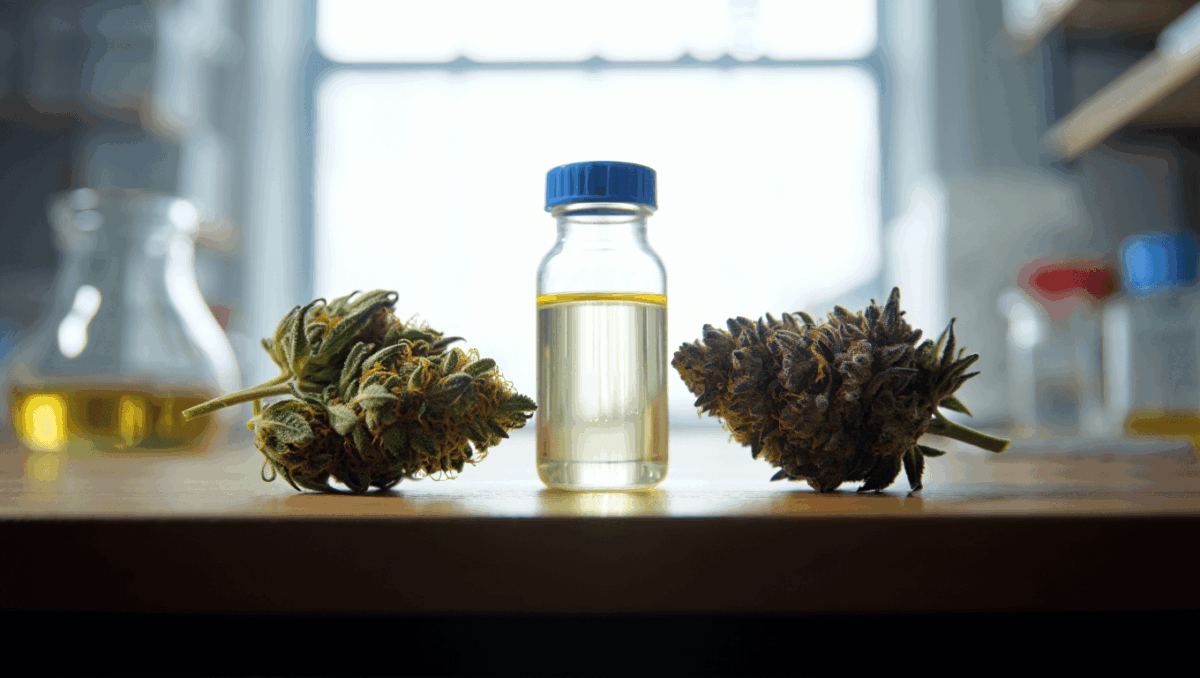
THCa (tetrahydrocannabinolic acid) and THCp (tetrahydrocannabiphorol) are both cannabinoids produced by the cannabis plant, but their chemical makeups diverge in ways that change their behavior.
The Growing Demand for Data-Driven Decision Making in Silicon Valley
He quit, ran out of money, and begged to come back — here’s how his boss reacted
- THCa is an acidic precursor: In the living plant, most THC exists as THCa. It has a carboxyl group that prevents it from binding strongly to cannabinoid receptors until that group is removed by heat or time—a process called decarboxylation.
- THCp has a longer alkyl chain: THCp resembles Delta-9 THC structurally but with a longer side chain. That longer chain appears to increase affinity for CB1 receptors in lab studies, which may translate to greater potency.
- Because of these chemical differences, THCa is essentially non-intoxicating until converted, while THCp can be psychoactive in much smaller doses than standard Delta-9 THC.
What happens when you consume each compound
How you use cannabis determines whether you experience THCa, THCp, or converted Delta-9 THC. The route of administration and processing play a big role.
THCa: raw, decarboxylated, and medicinal forms
- Raw plant material, fresh juiced leaves or low-heat extracts contain THCa. In this form it doesn’t produce a high because it cannot readily activate CB1 receptors.
- When you heat THCa (smoking, vaping, baking), it undergoes decarboxylation and becomes Delta-9 THC, producing psychoactive effects. Temperature and time influence how much converts.
- Many medical users consume THCa in capsules or tinctures touted for potential anti-inflammatory or neuroprotective properties without strong intoxication—though clinical evidence is limited.
THCp: potency and practical effects
- THCp’s longer chain may make it bind more tightly to CB1 receptors. Early studies suggest it could be significantly more potent than Delta-9 THC.
- Because it’s psychoactive at lower doses, users report more pronounced or prolonged intoxication with THCp-dominant products, though individual sensitivity varies.
- THCp is typically found in concentrated extracts or specially bred chemovars rather than raw flower in appreciable amounts.
Pharmacology and the science behind effects
At the receptor level and in clinical research, THCa and THCp occupy very different positions.
- Receptor interaction: THCa shows limited CB1 activation until heated. Some studies indicate it interacts with other molecular targets, which might explain reported anti-inflammatory or neuroprotective actions.
- THCp potency: Laboratory assays show THCp has greater CB1 receptor affinity than Delta-9 THC, implying higher potency. Human studies are scarce, so real-world effects come mainly from user reports and small-scale research.
- Metabolism and duration: Like other cannabinoids, both undergo hepatic metabolism. Converted Delta-9 from THCa follows standard THC pharmacokinetics; THCp’s metabolites and half-life are less well-characterized.
How people typically use THCa and THCp products
Choosing between THCa and THCp often depends on the goal—medical relief without intoxication, a stronger psychoactive experience, or lab-tested consistency.
- THCa use cases:
- Raw cannabis juicing for non-intoxicating consumption.
- Topicals or low-temp tinctures aimed at localized or subtle effects.
- Flower sold as “high in THCa” for users who plan to decarb to create potent edibles or pre-heat cannabis prior to vaping.
- THCp use cases:
- Concentrates and cartridges marketed for potency.
- Specialty products for experienced consumers seeking stronger effects.
- Occasionally included in small-batch research or breeding programs focused on novel cannabinoid profiles.
Safety, side effects and practical dosing tips
Because research is limited—especially for THCp—caution and conservative dosing are prudent.
- Start low, go slow: This is particularly important with THCp. Begin with fractions of a typical Delta-9 dose and wait longer between increments.
- THCa in raw form is generally considered low-risk for intoxication, but concentrated THCa that is decarboxylated will produce standard THC effects and associated risks.
- Potential side effects from high-potency cannabinoids include anxiety, paranoia, rapid heart rate, and impaired coordination. Those with heart conditions or psychiatric histories should consult a clinician.
- Pregnant or breastfeeding people should avoid cannabinoid use due to limited safety data.
What labs and drug tests can detect
Detection depends on which compound was consumed and how it metabolized.
- Standard urine tests look for THC metabolites, primarily 11-nor-9-carboxy-THC, which results from Delta-9 metabolism. If THCa was decarboxylated to Delta-9 in the user’s body or prior to ingestion, it will likely trigger a positive screen.
- THCp is likely to produce metabolites that may cross-react on routine drug tests, but specific assays for THCp metabolites are rare in clinical settings.
- For workplace or legal situations, assume any psychoactive cannabinoid that converts to Delta-9 or behaves like it can lead to a positive result unless you have laboratory confirmation otherwise.
Legal and market realities to watch
Laws are shifting, and compound-specific rules are inconsistent across jurisdictions.
- Some jurisdictions regulate cannabinoids by chemical structure or potency; others ban “Delta-9 THC” specifically. That patchwork creates gray areas for THCa and THCp.
- Because THCa converts to Delta-9 when heated, regulators sometimes treat high-THCa products as THC products, especially in states with strict THC limits.
- THCp’s novelty has triggered scrutiny in some markets, and regulators may classify it under analog or synthetic cannabinoid rules where laws are broad.
- Buyers should look for third-party lab results (COAs) that list cannabinoid profiles, residual solvents, and potency verification.
Research gaps and what scientists are studying now
The literature on both compounds is growing but far from definitive.
- THCa research focuses on potential anti-inflammatory, neuroprotective and antiemetic properties, mostly in preclinical models.
- THCp studies concentrate on receptor affinity and potency; human clinical trials are largely absent.
- Key open questions include long-term safety, precise metabolic pathways, therapeutic windows, and interactions with other medications.
Practical advice for consumers and professionals
- Always check a product’s lab certificate. Confirm total potential THC (when THCa converts) and specific levels of THCp if listed.
- If you’re new to high-potency cannabinoids, consult a clinician experienced in medical cannabis and start with a fraction of the recommended dose.
- Be mindful of storage: THCa can convert over time or with exposure to heat, and concentrated extracts containing THCp should be kept in cool, dark conditions.
- Ask vendors how their product was processed and whether decarboxylation occurred during manufacture—this directly affects whether you’re buying an intoxicating product.
You might also like:
- THCa strain Dark Rainbow: fruity flavor and potent high
- Best cannabis vapes: sweet to stealthy and everything in between
- THC, CBD and CBC: how cannabis produces these cannabinoids
- THCa preroll: jammy, dreamy high that takes you from munchies to midnight
- Experience Euphoria: Discover the Best THC Syrups for a Jolly Good Time!

William Anderson is a multimedia producer specializing in videos, podcasts, and interactive galleries. With five years of immersive content creation, he turns information into a rich audio‑visual experience. His storytelling skills draw you directly into the heart of every story, on any platform.


Man, I tried both THCa and THCp – felt like I was on a chemistry rollercoaster! THCa for the raw vibes, THCp for the power punch. Gotta say, each has its own groove, ya dig?
Man, THCa and THCp are like siblings, but with different superpowers. THCa’s the raw sidekick, while THCp’s the potent hero. One’s all about chill vibes, the other’s a wild ride. Can’t pick sides, they’re both rockstars in their own way.
Man, THCa and THCp got me thinkin – its like a science class in my blunt! But seriously, who knew these compounds were so complex? Gotta watch out for those different effects, huh? Time to be a THC detective!
Man, gotta get my facts straight on THCa vs THCp. I heard THCas like the cool kid at school, all raw and green, while THCps the strong silent type. But which ones gonna rock my world more, you know?
Man, diving into the world of THCa vs. THCp is like exploring two different universes, you know? The molecular level drama, the potency battles… its like a cannabis soap opera! Gotta love the complexity of natures chemistry!
Man, THCa and THCp are like the odd couple of the cannabis world. Ones raw and chill, the others all about the power trip. Its like pairing a zen monk with a rockstar. Crazy how different molecules can mess with your head in such unique ways.
Man, the way THCa and THCp hit you is like comparing a gentle rain to a thunderstorm. THCas like a sneak peek, while THCps a full-blown party. Its all about that molecular dance, baby!
Man, THCa and THCp got me feeling like a science student again. Its like, do I want the raw, chill version or the pumped-up one? Decisions, decisions. Gotta love the biochemistry of getting high!
Man, THCa and THCp are like the cool siblings of the cannabis world. Ones all raw and chill, the others the potent rebel. Its like choosing between a mellow Sunday afternoon and a wild Friday night. So, which ones your vibe?
Man, talking about THCa vs THCp is like diving into a science class after a coffee overdose. But hey, knowing the nitty-gritty could make you the ganja guru at the next smoke sesh. Keep those molecules straight, folks!
Man, trying to decode the whole THCa vs THCp thing is like a puzzle for the brain. But hey, understanding the nitty-gritty details of how they differ can really level up your cannabis game, ya know? Time to dive deep!
Man, I remember trying THCa and THCp back in college. THCa was like a mellow hug, while THCp hit like a freight train. Crazy how those tiny molecular differences can change the whole vibe, you know?
Dude, I feel you on that molecular rollercoaster! THCas like a chill friend, giving you those cozy vibes, while THCps more like a wild party crasher, hitting you outta nowhere. Its nuts how those tiny tweaks can flip the whole script on your buzz, right? Crazy college memories, man!
Man, I remember trying THCa and THCp for the first time, wild ride! The differences in effects and potency are mind-blowing, aint it? Gotta respect the science behind it, though. Crazy stuff!
Ah, dude, totally get ya! Trying out those new cannabinoids can feel like diving into a whole new universe, right? The way they hit you differently is like a rollercoaster for the brain. Its wild to see how precise science can get with this stuff. Like, who knew our brains had this secret stash of surprises, huh? Keep exploring, man, the cannabis worlds full of crazy twists and turns!