
Show summary Hide summary
- Orion: The Most Recognizable Hunter in the Winter Sky
- Taurus and the Pleiades: A Pair of Winter Landmarks
- Gemini: The Twin Constellation with Two Bright Anchors
- Canis Major: Home of Sirius, the Brightest Night Star
- Canis Minor: A Simple Constellation with a Bright Guide Star
- Auriga: The Charioteer with Capella Shining Bright
- Perseus: A Winter Constellation Full of Myth and Objects to Explore
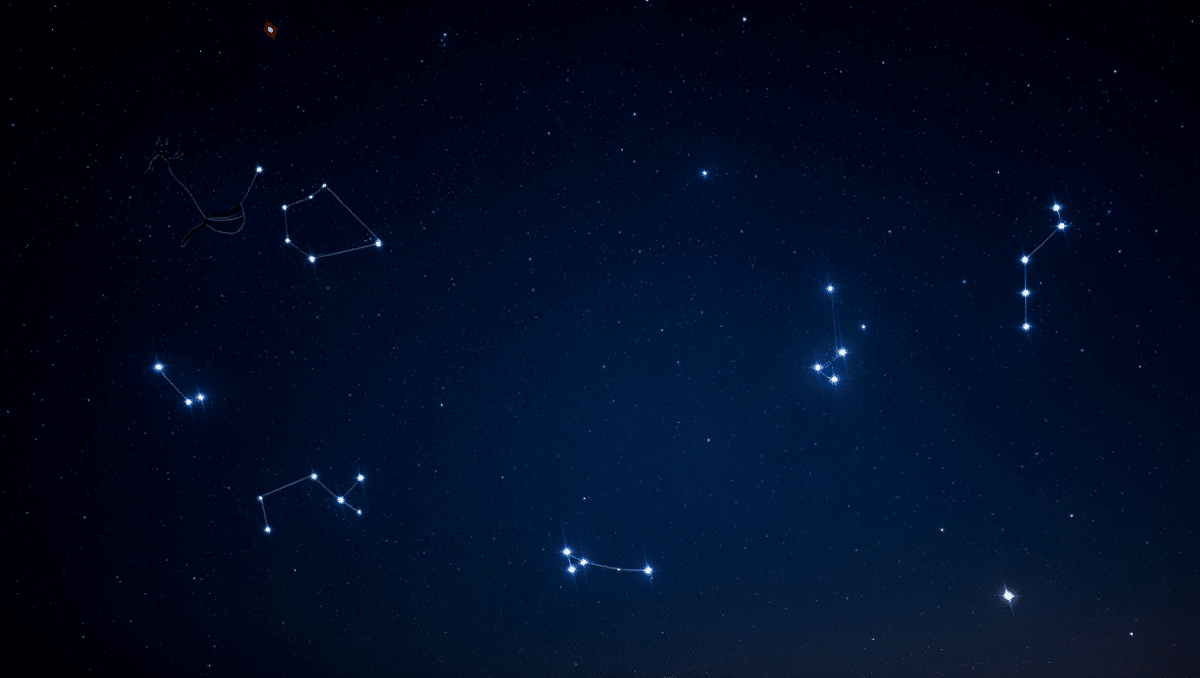
On a clear winter night, the sky becomes a stage of bright, familiar figures that even first-time stargazers can pick out without a telescope. Crisp air, long nights, and easily recognizable star patterns make this season ideal for learning the constellations that guide sailors, storytellers, and amateur astronomers alike.
Below are seven accessible winter constellations, described in plain language with simple tips for finding them. Whether you’re using your naked eye, a pair of binoculars, or a smartphone app, these stars and shapes will help you build confidence observing the night sky.
Orion: The Most Recognizable Hunter in the Winter Sky
The Growing Demand for Data-Driven Decision Making in Silicon Valley
He quit, ran out of money, and begged to come back — here’s how his boss reacted
Orion dominates the winter hemisphere with a bright, instantly familiar pattern. Look for three closely spaced stars in a straight line—Orion’s Belt—which acts as the easiest anchor in the sky.
How to find Orion
- Find the three-star belt and then identify Betelgeuse (a reddish star) above and to the left and Rigel (a blue-white star) below and to the right.
- Orion rises in the east and crosses high in the southern sky in midwinter for observers in the Northern Hemisphere.
Why Orion matters to beginners
- Its bright, contrasting stars make it visible even from light-polluted areas.
- The pattern points toward other targets: follow Orion’s Belt southeast to locate Sirius, the brightest star, and northwest toward Aldebaran in Taurus.
Binoculars reveal Orion’s sword and the Orion Nebula (M42), a fuzzy patch below the belt that’s a rewarding first deep-sky sight.
Taurus and the Pleiades: A Pair of Winter Landmarks
Taurus the Bull is anchored by the bright orange star Aldebaran and the compact star cluster known as the Pleiades (Messier 45). Together they form a useful pattern for winter navigation.
Spotting tips
- From Orion, follow the curve of the belt stars northwest to reach Aldebaran.
- The Pleiades looks like a tiny dipper or cluster of shimmering stars—easy to spot with the naked eye and beautiful in binoculars.
Good times and what to expect
Taurus is best viewed from late fall through early spring. The Pleiades is one of the most photogenic open clusters and offers a great target for entry-level astrophotography with a smartphone adapter and inexpensive lenses.
Gemini: The Twin Constellation with Two Bright Anchors
Gemini is marked by two bright stars, Castor and Pollux, which represent the mythic twins. These stars make the constellation easy to pick out once you’ve found Orion and Taurus nearby.
Finding Gemini in the sky
- Look north of Orion to discover the parallel line of stars forming Gemini’s body, with Castor and Pollux at the heads.
- Gemini rises earlier than Orion as winter progresses, making it prominent in late evening skies.
Why beginners like Gemini
Castor and Pollux are bright and well-separated, which helps new observers orient themselves. Binoculars can reveal multiple faint companions around Castor, turning a simple sighting into a mini star-hopping session.
Canis Major: Home of Sirius, the Brightest Night Star
Canis Major, the “Greater Dog,” follows Orion across the sky and contains Sirius, the brightest star visible from Earth. Sirius is a superb reference point for anyone just learning to navigate the winter sky.
Quick guide to locating Sirius
- Extend Orion’s Belt southeast and you’ll land on Sirius—commonly called the Dog Star.
- Sirius often appears to twinkle more dramatically because it’s low on the horizon in many locations.
Observing details
Sirius outshines most other stars, making it visible from urban areas. Once you’ve found Sirius, you can trace the shape of Canis Major and use it to locate fainter star clusters in the region with binoculars.
Canis Minor: A Simple Constellation with a Bright Guide Star
Canis Minor is small but easy to find thanks to its bright star, Procyon. It sits roughly between Orion and Gemini, forming the famous Winter Triangle along with Sirius and Betelgeuse.
How to identify Canis Minor
- Find the bright star Procyon; it’s one corner of the Winter Triangle and lies northeast of Sirius.
- The rest of Canis Minor is faint, but Procyon alone makes the constellation memorable.
Why Procyon is useful
Procyon is a reliable reference for star-hopping because it’s bright and distinct. Use it along with Orion and Sirius to orient yourself quickly across the winter sky.
Auriga: The Charioteer with Capella Shining Bright
Auriga stands out because of Capella, a yellow-white star nearly as bright as the other winter luminaries. The constellation resembles a pentagon of stars and sits north of Taurus.
Finding Capella and Auriga
- Trace a line upward from Orion and Taurus toward the northern sky; Capella is often high and easy to spot.
- Auriga’s pentagon shape can be plotted with binoculars if light pollution makes the outline weak.
Observation tips
Capella remains high in the evening sky during winter, making it a convenient target from early night until midnight. Amateur astronomers will notice star clusters sprinkled around Auriga that respond well to binocular viewing.
Perseus: A Winter Constellation Full of Myth and Objects to Explore
Perseus arcs above the northern portion of the winter sky and contains striking features like the Double Cluster and the variable star Algol. It’s a rewarding constellation for those ready to step past the brightest stars.
How to locate Perseus
- Look northeast of Cassiopeia’s W-shape to find Perseus; during winter, it sits comfortably above the horizon for northern observers.
- The Double Cluster, visible with binoculars, lies along Perseus’s lower edge and makes an inviting first deep-sky target.
What makes Perseus interesting
Algol, the “Demon Star,” periodically dims and brightens, offering a simple variable-star experience for beginners to time and track. The constellation also hosts several open clusters that are beautiful through small telescopes or binoculars.
You might also like:
- July meteor showers: two peaks to light up the late July night sky
- This week, 4 zodiac signs receive a life-changing message from the stars
- Planets align this week: how to see the planet parade in the night sky
- Warning in May: Why Taurus Needs to Rethink Health Habits for Lasting Wellness
- 4 zodiac sign pairs to avoid for harmony in your relationships

William Anderson is a multimedia producer specializing in videos, podcasts, and interactive galleries. With five years of immersive content creation, he turns information into a rich audio‑visual experience. His storytelling skills draw you directly into the heart of every story, on any platform.


Man, spotting the Winter constellations is like finding hidden treasure in the sky! Orions like a bold warrior leading the pack. Taurus and the Pleiades? Theyre like old friends chilling together, easy to spot even for us newbies!
Man, Orion is like the rockstar of the night sky, right? Always struttin his stuff, easy to spot, like, bam! But Taurus and the Pleiades? Lowkey underrated duo, sneaking in like, Hey, look at us too! Winter skies got all the drama, man.
Man, Orions belt, thats like the OG of winter constellations, you know? Once you spot those three stars in a row, youre basically a stargazing pro. But hey, Taurus and the Pleiades aint too shabby either for a beginner like me. Just gotta keep an eye out for those cosmic landmarks!
Man, spotting winter constellations is like finding hidden treasure in the sky! Orions belt is the OG, easy to find. And Taurus with the Pleiades? Its like stumbling upon a secret celestial club. Who knew stargazing could be this cool?
Man, finding Orion in the winter sky is like a rite of passage. Its like spotting your first shooting star or nailing that perfect smore. Once you lock eyes on those hunters belt, youre officially in the stargazing game, my friend.
Dude, I totally get what youre saying. Its like cracking the stargazing code, right? Orions belt is like the secret handshake of the night sky. Once you spot it, youre officially in the cosmic club. And lets be real, who doesnt want to be part of that stellar squad? Its like natures VIP section up there!
Oh man, spotting Orion in the winter sky is like finding a hidden treasure! The Pleiades next to Taurus? Its like theyre having a cosmic dance party up there. Who needs Netflix when youve got the stars, am I right?
Man, spotting Orion in the sky always gives me chills. Its like natures own superhero up there, flaunting his belt like, Hey, Earth, check me out! Cant wait to learn more about his crew and other winter celebs. Stargazing vibes, yknow?
Man, Orion always reminds me of camping trips with my grandpa. Wed argue about which star was brighter, pretending we knew something. Now I wanna impress my kids with my constellation skills. Lets hope I dont mix up Taurus and Pleiades!
Man, spotting winter constellations is like finding gems in the sky! Orions belt is my go-to, but the Pleiades in Taurus? Thats some next-level stargazing right there. Gotta love how the universe puts on a show for us, right?
Oh, Orion, the big, bad hunter of the winter sky! I remember spotting him once during a camping trip. A friend pointed and said, Look, its like a giant bow and arrow in space! Never looked at the stars the same way again.
Man, Orions like the rockstar of the night sky, ya know? When I was a kid, spotting those three stars in a row felt like finding buried treasure. Winter stargazings got that magic vibe that never gets old.
Ah, totally get what you mean, mate! Orions are like the rockstars up there, shining bright and stealing the show every time. Remember those childhood stargazing adventures like they were yesterday – finding Orions Belt was like hitting the jackpot! Winter nights just hit different with those magical vibes, ya know? Its like a timeless treasure hunt in the sky that never gets old. Whats your go-to stargazing spot?
Aint no stargazing without Orion, am I right? The dudes like the rockstar of the night sky, impossible to miss. And hey, spotting Taurus chilling with the Pleiades? Its like finding celeb BFFs up there!
Yo, I remember stargazin with my grandpa, and he pointed out Orion like it was his best buddy. Easy to spot, he said. And man, he was right. The dudes like the rockstar of winter constellations, no joke.
I remember my grandpa pointing out Orion in the sky, saying its like a cosmic hunter. It stuck with me. Easy to find and always brings back those cozy memories. Stargazing connects generations, man.
Man, spotting Orion in the winter sky always makes me feel like I stumbled upon a celestial rockstar. Its like the skys way of saying, Hey, look up and appreciate this badass hunter constellation! Cant wait to explore the others too!
Man, Orion is like that friend who always shows up uninvited but you end up having a blast with. And spotting Taurus and the Pleiades? Its like finding a hidden gem in the winter night sky. Gotta love those celestial landmarks!
Man, spotting Orion in the winter sky always feels like finding an old friend at a party. Its like, Hey, there you are, buddy! Easy to find, recognizable… kinda like the Jack Black of constellations, you know?