
Show summary Hide summary
- How the AI detects invisible early disease on standard CT scans
- Performance and key findings that matter for patients
- Real-world validation: multi-center testing and longitudinal consistency
- Moving from research to the clinic: AI-PACED and next steps
- Potential benefits and practical considerations for patients and physicians
- Technical challenges, ethical questions, and adoption hurdles
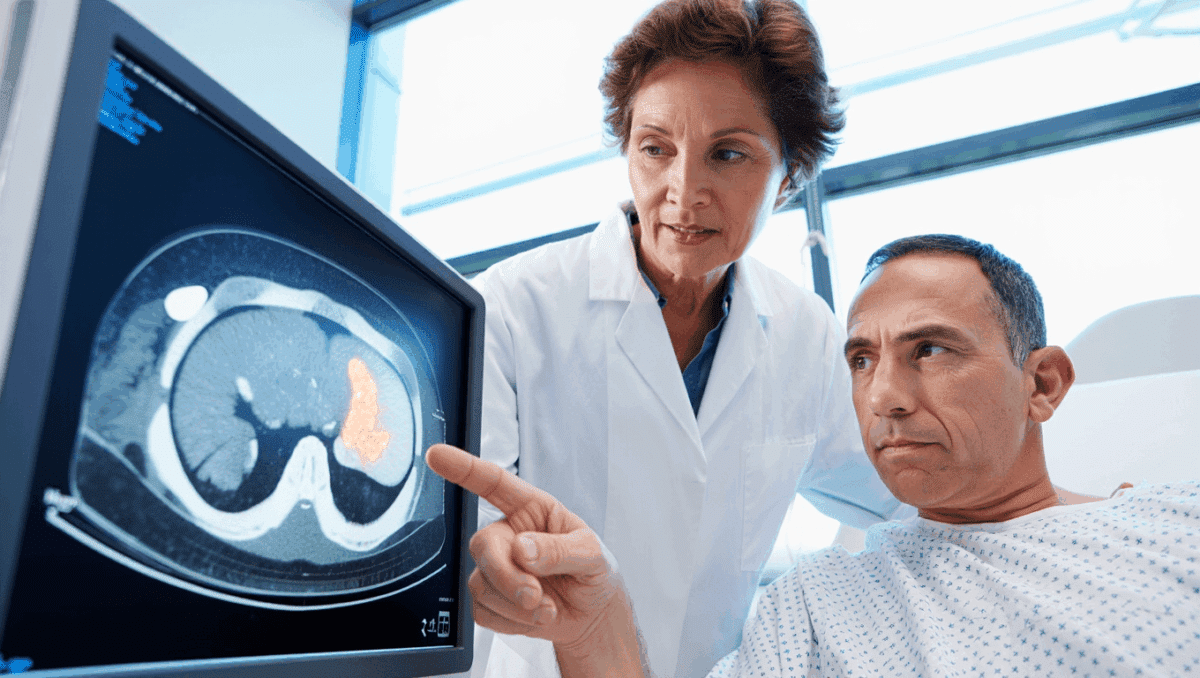
A new artificial intelligence tool from the Mayo Clinic can read routine abdominal CT images and flag early pancreatic cancer changes long before tumors appear on scans. Researchers say this method spots subtle tissue alterations that human readers miss, potentially creating a critical window when curative treatment is still an option.
Published in the journal Gut and tested across real-world imaging systems, the model represents a major step toward detecting one of the deadliest cancers at a stage when intervention can change outcomes. The work aims to turn ordinary CT scans—often performed for unrelated reasons—into an opportunity for life-saving early diagnosis.
How the AI detects invisible early disease on standard CT scans
The Growing Demand for Data-Driven Decision Making in Silicon Valley
He quit, ran out of money, and begged to come back — here’s how his boss reacted
The system, developed around radiomics and machine learning, examines hundreds of quantitative imaging features that describe tissue texture, density, and microstructure. Instead of looking for an obvious tumor mass, the algorithm recognizes faint, reproducible patterns that suggest biology is shifting toward malignancy.
- Model name: Radiomics-based Early Detection Model (REDMOD).
- Data analyzed: Nearly 2,000 abdominal CT scans, including scans later linked to pancreatic cancer but originally read as normal.
- What it measures: Subtle imaging biomarkers—tiny texture and structural changes—rather than visible lesions.
By learning the signatures of early tissue change, the AI can assign an elevated-risk flag on scans taken for other clinical reasons, particularly useful for people already considered at higher risk, such as those with new-onset diabetes.
Performance and key findings that matter for patients
When tested against conventional radiology reads, the AI produced markedly higher early-detection rates and remained reliable across different scanners and institutions. Important performance highlights include:
- Overall detection rate: REDMOD identified about 73% of prediagnostic cases in scans later associated with pancreatic cancer.
- Typical lead time: The median lead time was roughly 16 months before clinical diagnosis.
- Earlier-window advantage: For scans taken more than two years prior to diagnosis, the AI detected nearly three times as many cancers compared with standard reads.
These results suggest the AI can reliably pick up a cancer “signal” long before a mass is visible and before most patients would otherwise be diagnosed, a major barrier to improving outcomes for this disease.
Real-world validation: multi-center testing and longitudinal consistency
A central strength of the study is that it mimicked routine clinical workflows. The model was validated on CT images from multiple hospitals, acquired with a variety of scanners and protocols, and still produced consistent results. In patients who had multiple scans over time, the AI gave reproducible risk scores months apart—supporting its use for ongoing monitoring rather than a one-off screen.
Why multi-site performance matters
- Reduces the risk that results are limited to a single vendor or imaging protocol.
- Increases the likelihood the tool will generalize to community hospitals and large health systems.
- Supports regulatory and clinical adoption by demonstrating robustness across diverse settings.
Moving from research to the clinic: AI-PACED and next steps
Investigators are now advancing REDMOD into a prospective clinical study called Artificial Intelligence for Pancreatic Cancer Early Detection (AI-PACED). That trial will evaluate how clinicians can integrate AI prompts into standard care pathways for people at higher risk, combining automated analysis with long-term follow-up to measure false positives, downstream testing, and actual clinical outcomes.
The project is part of a broader Mayo Clinic effort, funded in part by the National Institutes of Health, to identify the earliest biological changes that precede disease and intervene sooner through the Precure initiative.
Potential benefits and practical considerations for patients and physicians
Early identification of pancreatic cancer could transform treatment options. When disease is confined to the pancreas, surgical removal and other curative approaches become possible. Detecting risk earlier may:
- Enable timely referral to specialists and targeted surveillance.
- Increase the number of patients eligible for curative surgery.
- Lower the proportion of cases discovered after metastasis, when survival is poor.
At the same time, implementation requires careful handling of follow-up testing to avoid unnecessary invasive procedures from false alarms. The prospective study will help balance sensitivity with specificity and clarify clinical pathways for positive AI findings.
Technical challenges, ethical questions, and adoption hurdles
Bringing this kind of AI into routine practice raises several considerations:
- False positives and confirmatory testing: Systems that flag risk will need standardized algorithms for follow-up imaging, biomarkers, or endoscopic evaluation to prevent harm from overtesting.
- Workflow integration: Radiology departments must decide how AI outputs are displayed, who acts on them, and how to document findings in the medical record.
- Regulatory and reimbursement pathways: Tools must meet regulatory standards and find sustainable payment models to be broadly adopted.
- Equity and access: Ensuring performance across diverse populations and imaging centers is essential to avoid widening disparities in cancer outcomes.
By relying on CT scans already performed for other reasons, the approach can serve as an opportunistic screening strategy—extending early detection without requiring a separate dedicated test—but only if clinical pathways and safeguards are put in place.
You might also like:
- Cancer breath test hailed as most significant step toward lifesaving breakthrough in 50 years
- Heart disease risk from routine mammograms detected by AI: up to 70% higher
- Prostate cancer scans make cells glow: can eliminate invasive biopsies and false diagnoses
- Cancer survival rates reach 70% after 20 years of research
- Lung cancer detected by dog sniffing mom’s breath: e-nose being trained to save more lives

Michael Thompson is an experienced journalist covering U.S. and global news. With ten years on the front lines, he breaks down political and economic stories that matter. His precise writing and keen attention to detail help you grasp the real‑world impact of every event.


Man, AIs now spotting pancreatic cancer even before the docs? Thats some sci-fi stuff right there. Gotta admit, its both cool and kinda freaky at the same time. Technology sure is racing ahead, huh?
I always feared the big C-word, yknow? But if this AI can spot pancreatic cancer early, thats like having a guardian angel in your gut. Amazing stuff, Mayo Clinic! Can it detect pizza cravings too, or is that a stretch?
I remember when Aunt May got diagnosed too late. This AI stuffs like a superhero, spotting trouble early. Hope its not just for the rich, though. Everyone deserves a fighting chance, right?
Man, AIs like a sci-fi flick coming true, detecting cancer before we even feel sick. Its like having a secret weapon in the medical world. Hope this tech spreads fast cause early detections a game-changer!
Man, AIs like a wizard these days! Detecting pancreatic cancer early? Mind-blowing stuff. Imagine the lives saved! Techs really stepping up its game. Cant wait to see more breakthroughs like this.
Man, technologys really pushing boundaries, huh? Detecting pancreatic cancer before it shows up… Wild. Can AI be my doctor now? Or at least remind me to drink water?
Man, AI detecting cancer early? Thats some sci-fi stuff right there! But hey, if it saves lives, sign me up. Wonder what other tricks AIs got up its sleeve. Time to bow down to our robot overlords, I guess!
I remember when folks said robots wont replace doctors. Now AIs sniffing out pancreatic cancer before it even shows up on scans. Who needs crystal balls when youve got algorithms, right? The futures sneaky, man.
Man, aint that the truth! The futures playing some sneaky moves on us. I guess were all just living in a sci-fi movie now, huh? Who wouldve thought robots and AIs would be out here diagnosing stuff better than us humans? Its like were in the middle of a tech takeover. Whats next, robot comedians?
Man, AIs like the secret agents of the medical world, sniffing out trouble before it even surfaces. Its wild to think they can spot pancreatic cancer way in advance. Techs getting spooky smart, huh?
Man, AIs really out here doing the most, huh? Detecting pancreatic cancer super early? Thats some sci-fi level stuff right there. Can you imagine what else these machines will be able to do in the future? Wild.