
Show summary Hide summary
- Why Thwaites Glacier is a global concern
- How researchers are probing the ice and the ocean
- Obstacles that make the work urgent and difficult
- Recent findings changing the scientific picture
- What a collapse could mean for coastal communities
- International teamwork and new strategies to reduce uncertainty
- Why time is running short for data collection
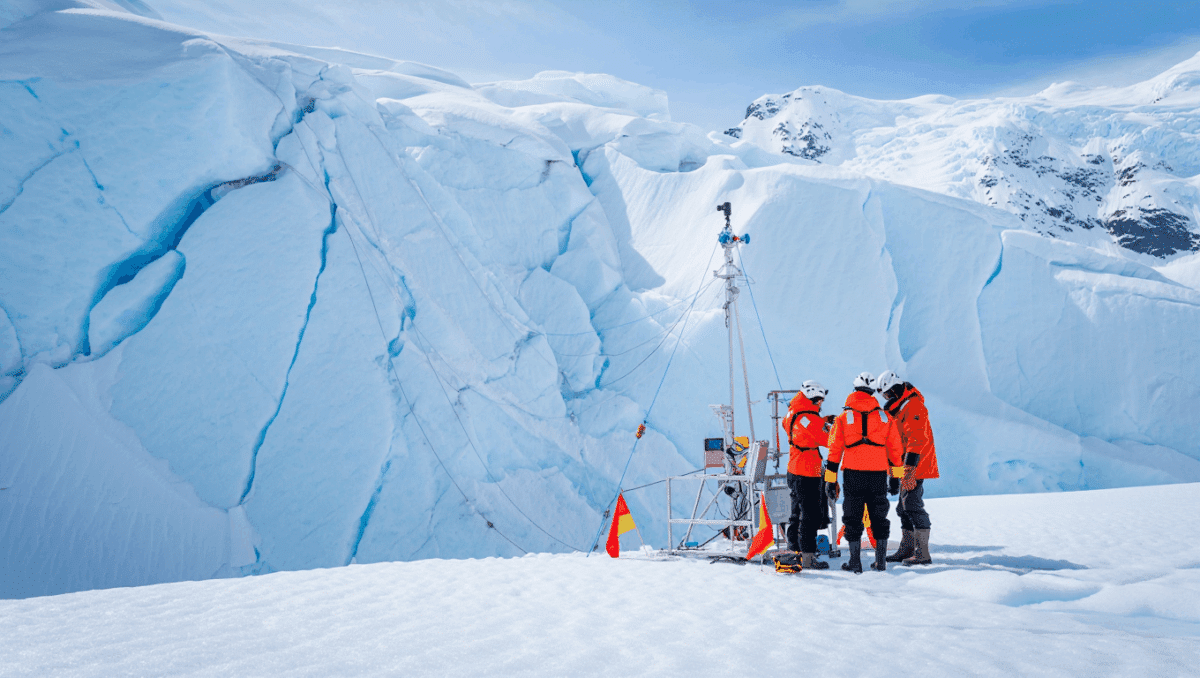
Scientists racing to unlock the secrets of one of Antarctica’s most vulnerable ice giants are performing daring fieldwork on a landscape most of the world will never see. Their efforts are urgent: what happens beneath and around this vast glacier over the next few decades could reshape coastlines worldwide.
Known to many as a potential trigger for rapid sea-level rise, Thwaites Glacier draws an extraordinary share of attention from glaciologists, oceanographers, and engineers. Teams are deploying high-tech tools and old-fashioned grit to map what is happening where the ice meets the ocean, trying to answer whether a sudden, large-scale collapse is possible — and how quickly it might unfold.
Why Thwaites Glacier is a global concern
Scientists focus on Thwaites because of its size, location, and the way it sits on the bedrock. The glacier drains a huge portion of the West Antarctic Ice Sheet into the Amundsen Sea, and its ice shelf — the floating front — is thinning as warmer ocean waters creep underneath.
The Growing Demand for Data-Driven Decision Making in Silicon Valley
He quit, ran out of money, and begged to come back — here’s how his boss reacted
- Huge potential for sea-level rise: Thwaites alone contains enough ice to raise global sea levels by more than two feet if it were to melt entirely; its destabilization could also accelerate ice loss from neighboring glaciers.
- Sensitive grounding line: The glacier rests on a bed that slopes downward inland, which makes it susceptible to the marine ice sheet instability mechanism — a feedback that can lead to rapid and irreversible retreat once a tipping point is crossed.
- Connection to ocean currents: Warm Circumpolar Deep Water has been implicated in melting the glacier from below, eroding the base of the ice shelf and undermining its stability.
How researchers are probing the ice and the ocean
Field campaigns are combining airborne surveys, ship-based oceanography, satellite monitoring, and subsea robots to build a three-dimensional picture of the glacier and the water beneath it. This multidisciplinary approach helps teams observe both the ice’s motion and the hidden forces acting at its base.
- Airborne radar and lidar missions map ice thickness and surface elevation changes over large areas, revealing long-term trends and localized thinning.
- Research ships collect temperature, salinity, and current data around the ice shelf, often using autonomous underwater vehicles (AUVs) to penetrate caverns and channels inaccessible to humans.
- Boreholes drilled through the ice permit direct sampling of water and sediment at the ice-bed interface, giving clues about melt rates and past behavior preserved in the geological record.
- Satellites provide continuous monitoring of ice speed, grounding line position, and surface melt, enabling near-real-time assessments of change.
Cutting-edge tools on a hostile frontier
Robotic submarines and tethered probes are particularly useful under the floating ice. They relay images and measurements of under-ice topography, basal melting, and the mixing of glacial water with the ocean. These instruments, together with seismic surveys and GPS networks anchored to the ice, allow scientists to measure how the glacier responds to seasonal and interannual variations.
Obstacles that make the work urgent and difficult
Collecting reliable data in the Amundsen Sea region presents logistical and environmental hurdles that amplify the race against time. Harsh weather, sea ice, deep crevasses, and the sheer remoteness of the site all complicate field operations.
- Access and safety: Transporting people and heavy equipment to drilling sites or ships requires icebreakers, aircraft, and careful planning to avoid accidents on brittle, crevassed surfaces.
- Instrument durability: Electronics and mechanical systems must withstand extreme cold, pressure, and corrosive seawater; many devices are custom-built and expensive.
- Data gaps: While satellites offer broad coverage, they can’t see what’s happening beneath the ice, and in situ observations are episodic and costly — creating uncertainties about short-term dynamics.
- Funding and coordination: Large-scale research programs require international funding and cooperation, which can be difficult to align quickly despite widespread scientific agreement on the glacier’s importance.
Recent findings changing the scientific picture
New campaigns over the last few years have produced surprising details about Thwaites’ structure and behavior. Researchers have learned that the glacier’s grounding line has retreated, parts of its ice shelf are riddled with cavities, and the sea floor beneath the ice is more complex than previously thought.
- Seismic and sonar mapping revealed deep channels carved into the bedrock under the glacier, which guide warm water inland and increase basal melting.
- Measurements show that melt rates under certain parts of the ice shelf are higher than model predictions, suggesting the need to revise projections.
- Subglacial sediments recovered from boreholes indicate periods of past instability, offering analogs for the glacier’s potential future behavior.
Implications for climate models
Incorporating these empirical observations into ice-sheet models has been a priority. Improved physics and finer spatial resolution are changing projections of how quickly the glacier might contribute to sea-level rise. Still, models vary significantly depending on assumptions about ocean warming, basal friction, and ice fracture mechanics.
What a collapse could mean for coastal communities
If Thwaites were to undergo rapid retreat or partial collapse, the consequences for coastal areas would be profound. Even more gradual increases in sea level would compound storm surge impacts, threaten infrastructure, and require costly adaptation measures.
- Increased flooding risk: Higher baseline sea levels mean more frequent and severe coastal flooding during storms and high tides.
- Economic consequences: Property damage, loss of arable land, and expensive relocation or protective works would burden local and national budgets.
- Ecosystem disruption: Saltwater intrusion and habitat loss would affect freshwater supplies, fisheries, and coastal ecosystems.
International teamwork and new strategies to reduce uncertainty
Responding to the challenge has required unprecedented coordination among nations, research institutions, and funding agencies. Programs like the International Thwaites Glacier Collaboration pool resources, expertise, and logistics to undertake sustained observation and modeling efforts.
- Shared platforms: Partner nations provide research vessels, icebreakers, aircraft, and satellite data to support year-round science.
- Open data initiatives: Teams increasingly share raw observations and model outputs, accelerating progress and enabling independent verification.
- Technology transfer: Advances in robotics, remote sensing, and high-performance computing are being rapidly adopted across research groups.
What scientists are asking next
Researchers are prioritizing several key questions that could narrow the range of outcomes and improve preparedness:
- How fast will the grounding line continue to retreat under projected ocean warming scenarios?
- To what extent could ice-shelf weakening lead to accelerated flow of upstream ice?
- What feedbacks might amplify or dampen ice loss once certain thresholds are crossed?
Why time is running short for data collection
Every season of observation refines models and reduces uncertainty. But logistical costs and the glacier’s dynamic nature mean there’s a limited opportunity to capture crucial processes while they unfold. Warmer waters and continuing ice loss could change the system faster than teams can document it.
That urgency is why researchers are scaling up efforts now — to record how Thwaites behaves before its next major transition and to give coastal planners better tools to prepare for coming sea-level changes.
You might also like:
- Growing glacier puzzles scientists as they race to uncover its secrets
- Scientists discover a massive ocean 700 km beneath Earth’s surface
- Vast Subterranean Ocean Discovered 700 Kilometers Below Earth’s Surface Astounds Scientists
- Ocean vortex off Australia: mysterious wave glitch baffling scientists
- Prehistoric sea monster ventured onto land, study finds

William Anderson is a multimedia producer specializing in videos, podcasts, and interactive galleries. With five years of immersive content creation, he turns information into a rich audio‑visual experience. His storytelling skills draw you directly into the heart of every story, on any platform.


Man, Antarcticas melting like a popsicle in the sun. Thwaites Glaciers on a meltdown mission. Scientists better hustle before were all swimming to work. Can they save the day or are we all doomed?
Whoa, dude, Antarcticas heating up faster than a microwave burrito! Thwaites Glaciers like, Im outta here! Scientists better grab their capes cause we might need some heroes to save us from turning our commutes into boat rides. Will they pull off a last-minute miracle, or are we all gonna need some serious floaties?
Man, this Thwaites Glacier talk is like a thriller movie, but real life! Racing against time, trying to outsmart natures ticking bomb. Its like our own version of Ice Age: Doomsday Edition. Hope they figure it out, for real.
Man, Thwaites Glacier is like a ticking time bomb, aint it? Scientists racing against the clock to figure out when that bad boy might collapse. Its like a real-life disaster movie, but scarier cause its real.
Man, its like a race against time down in Antarctica with this Thwaites Glacier situation. The urgency is real, but hey, at least the scientists are on it. Mother Nature aint playing around, huh?
Man, Antarcticas melting like a popsicle in July. Thwaites Glaciers the OG doomsday glacier, huh? Scientists busy playing catch-up before its too late. Hope they find some good news down there.
Man, Thwaites Glacier is like the ticking time bomb of ice melt. Its crazy how were rushing to figure out if this bad boys gonna collapse on us before its game over. Mother Natures got her own suspense thriller going on down there.
Man, talk about a ticking time bomb! We better listen to those scientists ASAP before we end up with a real-life disaster movie on our hands. Climate change aint playing, yall.
Man, for real, those scientists better drop some wisdom on us before Mother Nature goes full-on blockbuster on us. Climate change aint messing around, its like the ultimate reality show we didnt sign up for. Lets hope we get our act together before were all starring in Apocalypse: The Sequel.
Man, Thwaites Glacier aint playing around. Its like the ticking time bomb of ice melt, and were all just standing here like, Oh, whats for dinner? Scientists better hustle, or were in for a cold wake-up call.
Man, Thwaites Glacier is like that ticking time bomb you cant ignore, yknow? Scientists diving deep, risking frostbite to decode the collapse. Its like a real-life thriller, but its our future on the line. Crazy stuff.
A nature lover stumbled upon this article while browsing Antarctic mysteries. The urgency these scientists show? Admirable. Hope they crack the glacier collapse mystery before its too late. Mother Nature doesnt play.
I mean, if Thwaites Glacier decides to ghost us, were all in deep trouble, right? Its like that one flaky friend who never shows up until you really need em. But hey, big ups to the scientists hustlin to crack the code on this icy drama!
Man, Thwaites Glacier got scientists sweatin bullets. Its like a ticking time bomb, but icy. Makes you wonder if were pushing our luck too far with this whole climate change thing, huh?
I heard bout that Thwaites Glacier, meltin faster than my ice cream on a hot day! Scientists better hurry up, or well be paddlin to work soon. Mother Nature aint playin!
Man, Thwaites Glaciers got me thinkin bout global warming like never before. We gotta hustle, study that bad boy before its too late. Mother Natures givin us a wake-up call, aint she?
Man, Thwaites Glacier is like that ticking time bomb in a thriller movie. The urgency to study it before it goes boom is intense! Scientists racing against nature… thats some real-life drama right there.
Oh man, youre totally right! Thwaites Glacier is like the real-life villain in a thriller flick, silently scheming to wreak havoc. Its like Mother Natures own ticking time bomb, ready to explode at any moment. The race between scientists and the glacier is like a high-stakes drama – will they crack the code before its too late? Its like watching a suspenseful movie unfold right before our eyes!
Man, Thwaites Glacier sounds like a ticking time bomb! Can you imagine if that thing collapses? Its like a real-life disaster movie, but scarier cause its, you know, real. Hope those scientists figure it out before its too late.
Oh man, Thwaites Glacier is no joke, mate! Its like Mother Nature playing a suspenseful game of Jenga. Imagine the chaos if that icy behemoth decides to do a dramatic collapse dance! Lets hope those brainy scientists pull a rabbit out of their hats and save the day. Its a real-life thriller, innit?
Man, Thwaites Glacier sounds like a ticking time bomb! Its like a real-life disaster movie unfolding in slow motion. Gotta hand it to those scientists racing against the clock. Hope they figure it out before its too late!
Man, Thwaites Glacier aint playing around! Its like the ticking time bomb of icebergs. Can you imagine what would happen if that bad boy decides to break loose? Scientists better hustle up and figure this out before its too late!
Man, the Thwaites Glacier is like that ticking time bomb in a movie, but its real life! The urgency these scientists face is insane. Mother Natures got her own thriller plot going on down in Antarctica.
Man, Thwaites Glacier is like the ticking time bomb of Antarctica, huh? Scientists better hustle before it goes *poof*! Mother Nature aint playing around. Hope they figure out how to save our butts!