
Show summary Hide summary
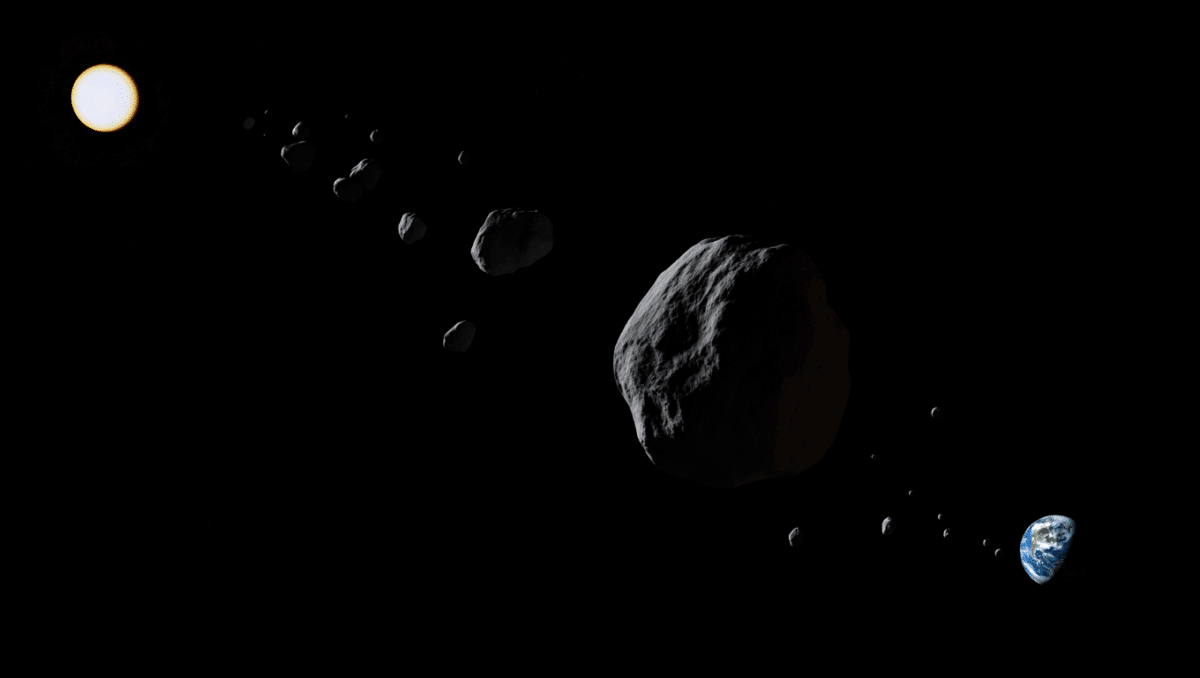
Space is full of hazards, but the most worrying are the ones escaping our view. New research indicates a swarm of asteroids may be sharing Venus’ orbit — largely hidden from Earth — and some are big enough to cause city-scale devastation if they ever cross paths with our planet.
Scientists call these objects “co-orbitals” because they travel around the Sun on trajectories tied to Venus. Their proximity to the Sun and chaotic paths make them especially hard to detect from ground-based observatories, creating a blind spot in planetary defense that researchers are racing to map.
Hidden neighbors of Venus: what researchers have found
The Growing Demand for Data-Driven Decision Making in Silicon Valley
He quit, ran out of money, and begged to come back — here’s how his boss reacted
A team led by Valerio Carruba at São Paulo State University used computer simulations and available observations to show that the known sample of Venus co-orbitals is likely just the tip of the iceberg. While astronomers have officially cataloged about two dozen of these bodies, the models point to a far larger population lurking near the planet’s orbital path.
These co-orbitals don’t move like the predictable planets. Some lead Venus, some trail it, and others execute complex, looping motions that weave across the planet’s course. Because their motion is sensitive to small perturbations, long-term orbital forecasts become unreliable beyond a century or two. In the words of the researchers, this makes the population both difficult to follow and potentially hazardous over longer timescales.
How serious is the threat? Size, energy and potential impact
Not all co-orbitals are dangerous, but several are large enough to matter. Models suggest objects roughly the size of a few hundred meters could produce catastrophic regional effects if they struck Earth.
- Energy release: An impact by a ~300-meter object would release energy measured in the hundreds of megatons — orders of magnitude above most nuclear detonations.
- Local destruction: Such an impact could carve out a crater several kilometers across and devastate nearby cities and infrastructure.
- Wider consequences: Blast waves, fires and atmospheric dust could cause long-lasting damage beyond the immediate strike zone.
Why these asteroids are almost invisible to us
The main problem for detection is geometry. Venus orbits closer to the Sun than Earth does, so any asteroid sharing Venus’ path usually sits between us and the Sun or very close to the solar glare. From the ground that translates into extremely low solar elongation — they appear close to the Sun’s bright disk and are easily washed out.
Large, ground-based surveys like the upcoming Vera Rubin Observatory will dramatically improve discovery rates for many classes of asteroids, but even Rubin will only have short twilight windows to catch objects near the inner edge of the Solar System. In practice, that leaves many co-orbitals observable for only a few minutes or hours at a time, if at all.
Detection challenges at a glance
- Low elongation makes objects hard to see against sunlight.
- Short, unpredictable visibility windows limit follow-up observations.
- Chaotic orbits reduce the accuracy of long-term predictions.
- Current ground surveys are optimized for objects outside Earth’s orbit, not inside it.
Space-based solutions: how scientists propose to fill the gap
Because the Sun’s glare is the key obstacle, many researchers favor putting telescopes in space, where observations can be made from angles impossible on Earth. Two main approaches are gaining traction:
- Infrared space telescopes: Missions like NASA’s NEO Surveyor are designed to spot near-Earth objects by their heat signatures, which works well even for dark bodies and objects close to the Sun’s direction.
- Observatories closer to Venus: A platform stationed interior to Earth’s orbit or near Venus could monitor co-orbitals directly, leaving Earth-based blind spots behind.
Both strategies would expand our ability to detect and track inner Solar System objects well before they posed an imminent threat, improving the lead time needed for any potential mitigation effort.
Tracking what we know now and the limits ahead
Of the roughly 20 co-orbitals currently cataloged, many have orbits that appear stable only on century-long timescales. Beyond those horizons, gravitational nudges from planets — plus small effects like sunlight-driven forces — can push them into very different paths. That unpredictability is part of what makes the population worrisome: an object benign today could become an Earth-crosser several decades from now.
Researchers stress that knowing the size and behavior of this population is essential to planetary defense. Better surveys, more computing power for dynamical models, and new space missions are the tools being discussed to close this gap.
For now, the reality is clear: we have identified some of these inner-Solar-System neighbors and know a number are large enough to be dangerous, but our capacity to see them is limited. That uncertainty is a notable vulnerability in our efforts to protect the planet from natural cosmic hazards.
You might also like:
- asteroid collision observed: astronomers see debris cloud and brightness changes
- Asteroid could hit the moon in 2032: what we know
- Venus lava tubes may exist: what it means for geology and exploration
- Mysterious “Second Moon” Revealed: Hidden for 60 Years, Now Uncovered!
- Planets align this week: how to see the planet parade in the night sky

William Anderson is a multimedia producer specializing in videos, podcasts, and interactive galleries. With five years of immersive content creation, he turns information into a rich audio‑visual experience. His storytelling skills draw you directly into the heart of every story, on any platform.


Man, space is like a giant game of hide and seek. Asteroids near Venus sneakin up on us? Thats some sneaky cosmic business. Telescopes need an upgrade, ASAP. Cant afford no interplanetary surprises, yknow?
I swear, space is like a giant game of hide and seek. These asteroids sneaking around Venus? Sneakier than a cat burglar. Can we get some intergalactic glasses or something?
Oh man, I hear ya! Those sneaky asteroids be playing hide-and-seek like pros around Venus. Its like they got a handbook on stealth moves or something! Interstellar glasses? Heck, sign me up for a pair too! Imagine spotting those cosmic pranksters pulling off their intergalactic shenanigans. The universe sure knows how to keep us on our toes!
I once saw a sci-fi flick where hidden asteroids near Venus threatened Earth. Crazy how real life mirrors art, innit? Telescopes missing em is like a plot twist. Stay safe out there, stargazers!
Man, space is full of surprises! Asteroids near Venus, sneaky little things. Makes you wonder what else is out there, right? Maybe we need some galactic detectives to track em down before they surprise us.
I once saw a movie where asteroids were sneaky lil things, dodging telescopes like theyre cosmic ninjas. Cant believe real lifes the same! Venus got some space secrets, huh? Bet those rocks are up to no good.
Man, talk about a cosmic game of hide and seek! Who knew those sneaky asteroids could be lurking near Venus, ready to play a game of interplanetary dodgeball with Earth? Time to up our telescope game, folks!
Man, this reminds me of that time I lost my keys in the dark! Like, asteroids sneakin around, invisible to telescopes? Thats some sneaky cosmic business, makes you wonder what else is out there playin hide and seek.
I mean, come on, asteroids playing hide and seek near Venus? Whats next, a cosmic game of cat and mouse? But seriously, its wild how much we still dont know about whats out there in space, lurking just beyond our reach.
Asteroids playing hide and seek near Venus, huh? Sounds like the universe is pulling a cosmic prank on us! But seriously, its mind-blowing how much of space is still a mystery, like a never-ending treasure hunt with no map. Makes you wonder what else is lurking out there beyond our radar, right?
Wait, asteroids sneaking around Venus? Thats some sci-fi plot twist! But hey, if these rocks pack a punch heading Earths way, we better start upgrading those telescopes, right? Who knew space could get this sneaky!