
Show summary Hide summary
- How AI-driven impersonations work and why they succeed
- Examples from the field: tactics and real impacts
- Why religious settings are prime targets for AI scams
- Red flags to watch for in pastor impersonation attempts
- Practical steps churches and members can take now
- Legal, ethical, and technological responses shaping the future
- What congregations should demand from platforms and lawmakers
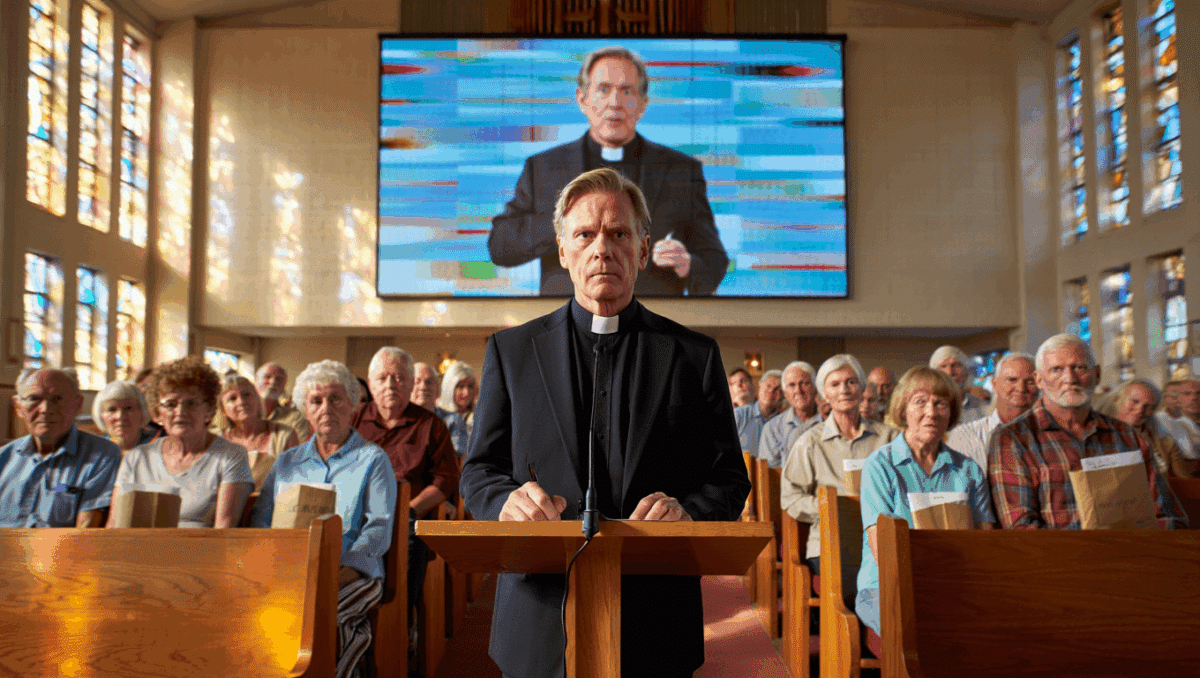
Church communities across the country are waking up to a disturbing new twist on an old crime: scammers using artificial intelligence to impersonate pastors and spiritual leaders to extract money and personal information. What began as isolated incidents has grown into a pattern of coordinated attacks that exploit trust, familiarity, and the emotional power of religious appeals.
These schemes use AI-generated audio and video—deepfakes—to create convincing messages that appear to come from a congregation’s own clergy. The result: well-meaning churchgoers handing over donations, opening phishing links, or divulging sensitive data after seeing or hearing what they believe is a trusted minister. The fallout has left some congregations embarrassed, financially harmed, and wary of digital outreach.
How AI-driven impersonations work and why they succeed
The Growing Demand for Data-Driven Decision Making in Silicon Valley
He quit, ran out of money, and begged to come back — here’s how his boss reacted
Deepfake scams targeting religious communities combine several technologies and psychological tactics. Scammers first collect publicly available sermons, social media videos, and audio clips of a pastor to train generative models. The software then synthesizes new video or voice messages that mimic the leader’s appearance, tone, and mannerisms. These fabricated messages are often paired with urgency—requests for an “emergency” donation, a link to sign up for a fake relief fund, or instructions to transfer money immediately.
- Voice cloning: AI recreates the pastor’s voice from short audio samples, producing realistic voicemail or live-call impersonations.
- Deepfake video: Technology maps facial expressions and lip movements onto footage to create believable sermon clips or recorded messages.
- Social engineering: Scammers exploit trust by tapping into the congregation’s emotional state—grief, fear, or generosity—during crises or holidays.
Examples from the field: tactics and real impacts
While specifics vary, several patterns have emerged from reported cases. Some fraudsters send urgent donation requests that mimic the pastor’s exact phrasing and cadence, while others publish fake livestreams on social media channels that look indistinguishable from legitimate broadcasts. A common ploy is to direct victims to fraudulent donation pages that capture credit card details, or to ask for wire transfers to accounts labeled as “emergency relief.”
Common tactics used in these scams
- Fake voicemail or call claiming a need for immediate funds for a congregation member or outreach program.
- Altered sermon videos asking viewers to click a link for a verification form that collects personal data.
- Hijacked social media accounts or cloned profiles used to share deepfake content to a pastor’s followers.
Financial consequences can be substantial for smaller congregations and individuals who donate impulsively. Beyond money, victims report emotional betrayal and loss of confidence in online communications from their church.
Why religious settings are prime targets for AI scams
Religious communities are built on trust and shared values, making members especially vulnerable to appeals framed as spiritual or charitable. Several features of church life amplify the risk:
- High emotional engagement: Congregants are more likely to respond quickly and generously to urgent appeals tied to human suffering or ministry work.
- Close-knit networks: Personal recommendations and group messaging create rapid, trusted information flows that scammers can exploit.
- Limited IT resources: Many churches lack the cybersecurity infrastructure and training that organizations use to detect fraud.
Red flags to watch for in pastor impersonation attempts
Awareness is the most effective early defense. Congregants and staff should be trained to recognize telltale signs of a fake message or request.
- Uncharacteristic urgency or pressure to send money immediately.
- Requests to use nonstandard payment methods (e.g., gift cards, wire transfers, cryptocurrency).
- Links or attachments asking for personal data or credentials before any verification.
- Minor voice or visual inconsistencies—odd pauses, slightly off lip-sync, or unusual facial micro-expressions.
- Messages sent from new, unfamiliar accounts instead of established church channels.
Practical steps churches and members can take now
Mitigating this threat requires a mix of technology, policy, and community education. The following measures strengthen defenses without sacrificing accessibility.
- Verify requests independently: Always confirm urgent financial appeals directly with church staff via a trusted phone number or in person before acting.
- Lock down donation channels: Use reputable payment processors, enable two-factor authentication, and publish official donation links prominently on the church’s verified website.
- Train volunteer teams: Run periodic awareness sessions that teach congregation members how to spot deepfakes and phishing attempts.
- Authenticate live messages: Consider verbal or visual codewords announced during services for verifying legitimate urgent messages.
- Use tech tools: Employ authentication features for livestreams, like digitally signed video, watermarks, or verified social media pages.
- Report fraud quickly: Notify law enforcement, the platform hosting the fake content, and the payment processor if a scam occurs.
Legal, ethical, and technological responses shaping the future
Governments, platforms, and civil society are scrambling to catch up. Law enforcement increasingly treats deepfake impersonation with the same seriousness as other fraud schemes, focusing on wire fraud and identity theft statutes. Social platforms are updating policies to remove manipulated media that could cause financial harm, and some payment providers now block suspicious donation pages.
Ongoing technical defenses
- Research into automated deepfake detection tools aims to flag manipulated audio and video before it spreads.
- Watermarking and provenance systems—digital signatures that verify the origin of a video—are gaining traction among media creators and platforms.
- Authentication protocols for livestreams and verified channels help congregations distinguish official content from impostors.
What congregations should demand from platforms and lawmakers
Churches and faith leaders have begun calling for stronger platform accountability and clearer legal remedies. Key demands include faster takedowns of fake content, better transparency around content provenance, and specific legal penalties for AI-enhanced impersonation that targets vulnerable communities.
- Faster platform response times to reported deepfakes and impersonation accounts.
- Funding for community education initiatives aimed at cyberfraud prevention.
- Regulatory frameworks that balance free expression with protections against fraudulent, financially-motivated deception.
You might also like:
- Woman scammed out of $6,800 by fake astronaut who claimed he was running out of oxygen
- Archbishop accused of being woke faces backlash from conservatives
- Zack Polanski campaigning in Urdu: why he’s targeting Urdu-speaking voters
- World Series of Poker removes No Limit documentary amid AI scandal
- AI homeless man trend sparks deepfake, safety and ethical concerns

William Anderson is a multimedia producer specializing in videos, podcasts, and interactive galleries. With five years of immersive content creation, he turns information into a rich audio‑visual experience. His storytelling skills draw you directly into the heart of every story, on any platform.


Man, these AI scams are getting outta hand! Can you imagine being duped by a virtual pastor? Its like the futures here, but in a really sketchy, deceptive way. Stay woke, folks!
Dang, those AI scammers are really pushin the limits now, huh? Virtual pastor? Thats a whole new level of shady! Its like some twisted version of Back to the Future… Stay sharp, peeps!
Man, talk about taking advantage of peoples faith! These deepfake AI pastors are out of control. Cant trust anything these days. Hope folks stay sharp and dont fall for these scams.
Man, these deepfake AI pastors? Its like a sci-fi movie, but its real life! Cant believe people fall for that. Gotta stay woke and question everything these days, I tell ya.
Man, AIs getting too smart for its own good. Deepfake pastors now? Whats next, AI offering therapy sessions? Gotta stay sharp and not fall for those high-tech cons. Trust your gut, peeps!
Whoa, talk about next-level crazy! I mean, deepfake pastors? Thats some Black Mirror stuff right there. Can you imagine AI offering therapy sessions? Like, Tell me about your motherboard issues. Gotta keep those scam radars on high alert, folks! Trust your instincts, dont let the robots fool ya!
Man, AI pastors scamming people now? Whats next, robot politicians? Its wild how techs used for shady stuff. Gotta double-check whos preaching the sermon these days. Trust issues, anyone?
Man, those deepfake AI pastors? Its like a sci-fi movie meets Sunday service. People need to stay woke and not let these bots scam em outta their hard-earned cash. Trust in the real deal, not some glitchy impostor!
Man, fakes everywhere! Cant trust AI, cant trust people… Church scams, really? Whats next, deepfake politicians? Gotta stay woke, folks, or well be donating to bots!
Man, these deepfake AI pastors are like something out of a sci-fi flick! Scamming folks out of their hard-earned cash in the name of religion? Thats just low, even for the shadiest con artists out there. Cant trust anything these days!
Dude, tell me about it! These fake pastor algorithms are like something straight out of a Black Mirror episode, man. Its messed up how theyre preying on peoples faith just to make a quick buck. Cant trust anything these days, not even the virtual sermons!
Man, these deepfake AI pastors are like a sci-fi movie plot coming to life! Cant believe people fall for that. Gotta stay woke, folks, or youll end up donating to a virtual preacher. Wild times we live in!
Man, these deepfake AI pastors are like a sci-fi movie plot coming to life! Cant believe people fall for that. Gotta stay woke, folks, or youll end up donating to a virtual preacher. Wild times we live in! Its like were in a twisted episode of Black Mirror, where the line between reality and fiction gets blurrier by the day. Whos next, a hologram giving sermons? Stay sharp out there, or you might accidentally tithe to a pixelated preacher!
Man, these fake pastors using AI to scam folks outta their hard-earned cash – its a whole new level of shady. Like, how do people fall for that? Hope they catch these scammers soon.
Man, AI pastors? Whats next, AI therapists? People need to wake up and smell the digital coffee. Cant trust technology with your soul, folks. Keep those donations in your pockets, where they belong.
Man, these deepfake AI pastors are like something out of a sci-fi movie! Cant believe people fall for it. Gotta stay woke and keep an eye out for those sneaky scams, yall.
Man, were living in a wild time when even AI is getting in on the holy game. Its like, can you trust anything or anyone these days? Gotta keep those eyes peeled for those sneaky scams, fam.