
Show summary Hide summary
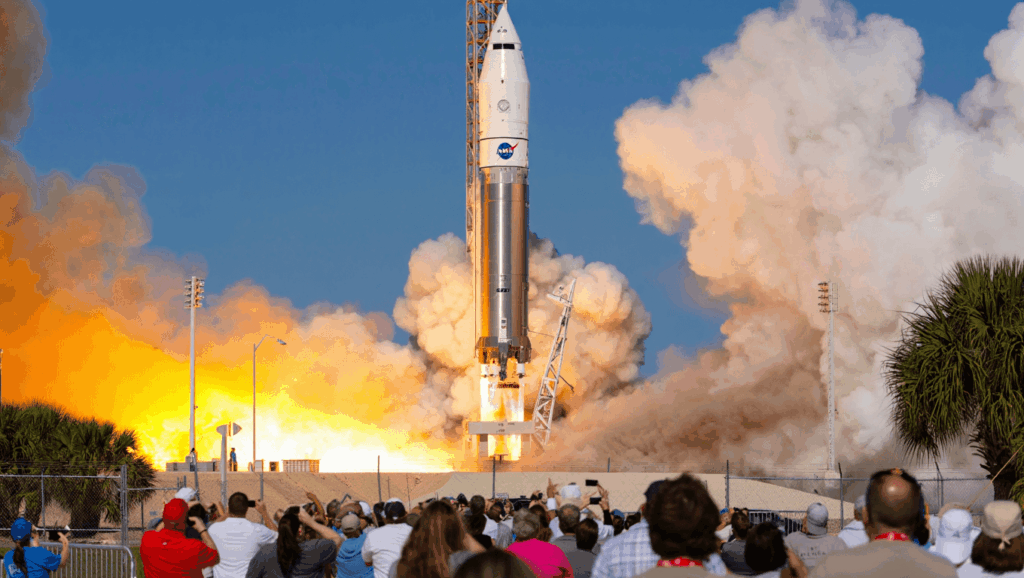
The return to crewed lunar missions is no longer a distant idea — it’s scheduled on the calendar. NASA’s Artemis 2 is preparing to send astronauts back around the Moon in early 2026, and the mission carries a political and strategic edge that feels eerily familiar to the space race of the 20th century.
Beyond science and exploration, Artemis 2 has become wrapped up in a global competition for lunar influence, with China’s own crewed-Moon timeline looming on the horizon. The makeup of the crew, the mission goals, and concerns over safety and scheduling have all fueled an intense public conversation about what comes next for human spaceflight.
What Artemis 2 will actually do and who’s going
The Growing Demand for Data-Driven Decision Making in Silicon Valley
He quit, ran out of money, and begged to come back — here’s how his boss reacted
Artemis 2 is not a surface landing. Instead, it’s a crewed lunar flyby designed to test systems and gather data ahead of future landing attempts. The mission is planned for a window between February and April 2026 and will last about 10 days.
- Mission profile: Crewed lunar orbit and system validation.
- Duration: Approximately 10 days.
- Crew composition: Three U.S. astronauts and one Canadian astronaut.
- Primary goal: Return humans safely to Moon vicinity and verify spacecraft performance before any landing mission.
Unlike an Apollo-style touchdown, Artemis 2’s purpose is largely preparatory: to exercise the Orion spacecraft, test life-support and communication systems in deep space, and collect valuable data that will shape Artemis 3 and later missions.
How this mission fits into the broader Artemis plan and lunar strategy
Artemis 2 sits between uncrewed test flights and the planned Artemis 3 lunar landing. Think of it as the crucial bridge that validates crewed operations beyond low Earth orbit.
Key differences between Artemis 2 and Artemis 3
- Artemis 2: Crewed lunar orbit, no landing.
- Artemis 3: Intended to carry astronauts to the lunar surface and return them to Earth.
- Program dependencies: Artemis 3’s success is contingent on lessons learned from Artemis 2 and ongoing development of lunar landers and surface systems.
Artemis 3 remains the mission that would place astronauts on the Moon again, but its timeline is more uncertain because it depends on hardware readiness, partner contributions, and safety approvals.
The geopolitical context: a modern space rivalry with China
National ambitions are reshaping lunar activity. China has publicly targeted the 2030s for a crewed lunar mission and is actively pursuing long-term lunar infrastructure. That ambition has turned the Moon into a strategic focal point.
- U.S. stance: Reinvigorated lunar programs and public rhetoric likening current efforts to a “second space race.”
- China’s timeline: Official goals include a crewed Moon mission within the next decade-plus and plans for lunar research facilities.
- Long-term picture: Both nations envision permanent or semi-permanent lunar outposts, which raises questions about governance, resource access, and security.
These ambitions suggest a future where lunar locations become extensions of geopolitical influence rather than purely scientific sites. Popular culture and fiction have already explored how competition in space can create complex — and potentially dangerous — tensions on and around the Moon.
Safety concerns and leadership debates inside NASA
Officials at NASA have emphasized the agency’s commitment to crew safety while also expressing urgency about meeting scheduled launch windows. Agency spokespeople have reassured the public that safety will remain paramount even as they strive to meet political and programmatic expectations.
- Agency messaging: NASA leaders say they will aim to balance schedule commitments with rigorous safety checks.
- Leadership scrutiny: Recent remarks from acting leadership have sparked debate about whether schedule pressures could overshadow safety priorities.
- Public reaction: Space policy watchers and some Congressional members are watching closely, pressing NASA to avoid shortcuts in testing or risk assessment.
Those internal debates matter because they influence how tightly timelines are enforced and how conservatively missions proceed — especially when human lives are at stake.
What to watch next as Artemis 2 approaches
With the February–April 2026 window fast approaching, several developments will be important to follow:
- Progress on Orion and SLS integrated testing.
- Final crew training milestones and any changes to the roster.
- Announcements about Artemis 3 lander contracts and schedule updates.
- International reactions, particularly from China, regarding lunar policy and cooperation or competition.
Given the mix of technical hurdles and geopolitical stakes, the months ahead will tell whether Artemis 2 meets its objectives on time and how it shapes the next chapter of human lunar exploration.
You might also like:
- NASA moon base details: plan to prepare humanity for next phase of exploration
- NASA race to the moon could put astronauts at risk
- NASA postpones ISS spacewalk after astronaut medical issue
- NASA laser sends terabits from beyond Mars in deep-space communications test breakthrough
- NASA may nuke an asteroid to save the moon

William Anderson is a multimedia producer specializing in videos, podcasts, and interactive galleries. With five years of immersive content creation, he turns information into a rich audio‑visual experience. His storytelling skills draw you directly into the heart of every story, on any platform.


Remember when space travel was just a sci-fi dream? Now NASAs gearing up for a moon mission in 2026! Crazy to think were living in a time where this stuff isnt just in the movies anymore. Exciting times ahead, folks!
Man, talk about a blast from the past! Excited to see NASA gearing up for a crewed moon mission. Its like a modern-day space race, but this time, were aiming for the stars… or should I say, the moon! Cant wait to see what Artemis 2 has in store for us!
Man, Artemis 2 got me pumped! I remember watching Apollo missions on TV as a kid. This lunar mission in 2026 feels like a blast from the past with a futuristic twist. Cant wait to see what they achieve up there!
Man, Artemis 2 sounds like a wild ride! I remember watching the Apollo missions on TV as a kiddo, and now were gearing up for another lunar jaunt. Exciting stuff, hope they bring back some moon rocks for us regular folks to gawk at!
Well, well, look whos getting back in the lunar game! NASA aint playing around with Artemis 2, huh? About time we see some action up there. Lets see if they can stick the landing this time!
Man, lunar missions are back! I remember being a kid, dreaming about space adventures. Now, Artemis 2 is taking us to the Moon. Hope they find some cool alien tech up there or at least a good space rock to bring back!
Man, cant believe its been 50 years since the last moon mission! Artemis 2 better bring us some game-changing discoveries this time. Exciting to see NASA pushing the boundaries again.
Man, space race vibes are back! Artemis 2 sounds like a sci-fi sequel, but its real life. Hope theres less drama than in those movies. Excited to see what goes down up there.
Man, space exploration is like the ultimate adventure! Cant wait to see what the Artemis 2 mission brings to the table. The moon, huh? Feels like were stepping into a sci-fi novel, but its real life!
Man, Artemis 2 is really bringing the space vibes back! Cant wait to see what the crew will discover up there. Its like a real-life sci-fi adventure unfolding before our eyes. So pumped for this lunar mission!
Man, space missions are like the ultimate road trips, right? Artemis 2 heading to the Moon in 2026 is like that epic sequel youve been waiting for. Cant wait to see what they discover up there this time!
Man, back in 69, they made it to the moon. Now, the Artemis 2 mission is getting ready to roll! Cant wait to see the advancements and discoveries this new crew will bring back. Exciting times ahead!