
Show summary Hide summary
- Why NASA paused the ISS spacewalk: mission safety first
- What officials have said about the astronaut’s condition
- How a postponed EVA affects the ISS schedule and upcoming tasks
- Protocols NASA follows when crew health issues arise in orbit
- How experts and former astronauts view the decision
- Next steps: what to expect from NASA and the ISS team
- Broader implications for station operations and future EVAs
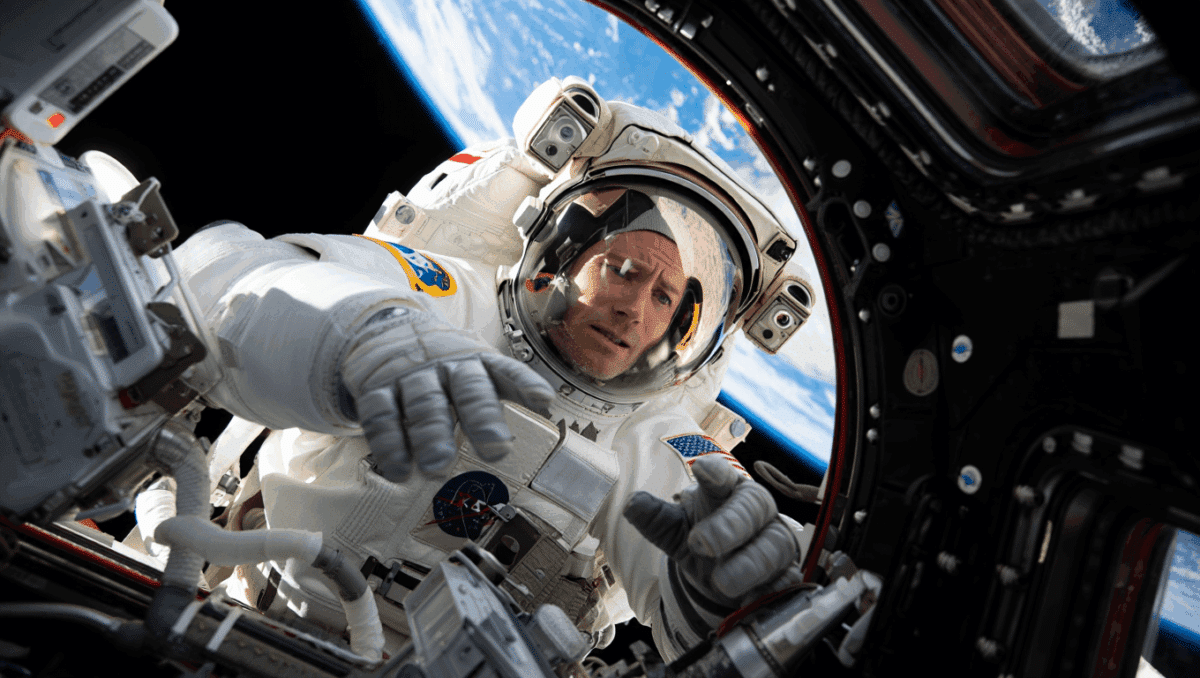
The planned spacewalk outside the International Space Station was put on hold after NASA reported an astronaut required attention for a medical issue, forcing mission managers to delay critical maintenance work. The decision interrupts a carefully timed schedule of extravehicular activity (EVA) and leaves the agency balancing crew health with the station’s operational needs.
NASA has been tight-lipped about specifics while confirming that the astronaut’s condition is not considered life-threatening. Mission control and flight surgeons are coordinating closely with the crew aboard the ISS as they evaluate next steps and determine when the EVA can safely proceed.
Why NASA paused the ISS spacewalk: mission safety first
NASA’s priority in orbit is the health and safety of its astronauts, and that principle drove the choice to postpone the EVA. Spacewalks are high-risk events that require a full complement of physically prepared crew members and proper timing relative to orbital mechanics. Any medical concern, even one that may appear minor on the ground, can complicate emergency response options while in space.
The Growing Demand for Data-Driven Decision Making in Silicon Valley
He quit, ran out of money, and begged to come back — here’s how his boss reacted
- Risk assessment: Flight surgeons run a real-time risk analysis to decide whether to proceed with scheduled tasks.
- Operational constraints: EVA plans depend on suit readiness, crew stamina, and available contingency support.
- Mission priorities: When crew health becomes a variable, non-urgent tasks are frequently delayed to preserve long-term station function.
What officials have said about the astronaut’s condition
NASA spokespeople described the situation as a “medical matter” and emphasized that the crew member is receiving care from onboard personnel and ground-based medical teams. The agency has not released the astronaut’s name or specific symptoms, citing privacy and ongoing evaluation.
Confirmed facts and what remains undisclosed
- NASA confirmed the EVA was postponed and the station’s routine operations are otherwise normal.
- Flight surgeons are involved in continuous monitoring; no emergency evacuation has been initiated.
- The exact nature of the medical issue, treatment administered, and prognosis remain under review and are being withheld pending the astronaut’s and family’s privacy considerations.
How a postponed EVA affects the ISS schedule and upcoming tasks
Delaying a spacewalk can affect multiple downstream activities. EVAs are often choreographed weeks in advance to align with resupply missions, robotic operations, and scientific experiments. A single postponement can create ripple effects that require rescheduling and re-prioritizing resources.
- Critical hardware replacements or upgrades may be deferred until the crew is fully cleared.
- Robotic arms and ground-controlled systems can sometimes substitute for human work but cannot always replicate EVA tasks.
- Upcoming launches or visiting vehicle operations may be shifted slightly to maintain a coherent timeline.
Protocols NASA follows when crew health issues arise in orbit
NASA maintains exhaustive medical protocols for astronauts, including preflight screening, onboard medical kits, telemedicine support, and contingency plans for evacuation. The agency routinely practices a conservative approach: if any crew member isn’t at peak health, managers will postpone physically demanding activities.
Key elements of in-orbit medical response
- Immediate assessment by onboard medical personnel and telemedicine consultation with flight surgeons on Earth.
- Modification of daily schedules to reduce physical strain and monitor recovery.
- Activation of evacuation plans only when diagnostic data and consultation indicate the need.
How experts and former astronauts view the decision
Retired crew members and mission planners say delaying a spacewalk for medical reasons aligns with best practices. Spaceflight veterans point out that a modest short-term delay usually preserves long-term mission capacity and reduces risk to the entire crew.
- Former astronauts note that medical transparency is critical but also must respect privacy.
- Mission designers emphasize the flexibility built into ISS timelines to accommodate such contingencies.
- Space medicine specialists observe that telehealth capabilities have dramatically improved in recent years, enabling better on-orbit diagnosis and care.
Next steps: what to expect from NASA and the ISS team
NASA will continue to provide updates as more information becomes available. The agency typically releases formal status reports through its public affairs office once flight surgeons have finished their assessment and a revised timeline is established.
- Watch for official briefings from NASA’s Johnson Space Center and the ISS Program Office.
- Expect the rescheduling of the EVA to depend on ongoing medical clearance and logistical checks.
- Follow-up updates will likely include whether any equipment or station tasks will be reprioritized.
Broader implications for station operations and future EVAs
Delaying a spacewalk due to a medical issue underscores the fragility and complexity of human spaceflight. It highlights why NASA invests heavily in crew health systems, remote diagnostics, and operational redundancies to keep the ISS functioning through unexpected events.
- Operational resilience: The ISS program’s layered approach helps mitigate risks without jeopardizing scientific objectives.
- Public interest: Such incidents often prompt renewed attention to astronaut safety measures and medical preparedness.
- Scheduling flexibility: Future EVAs will be sequenced with contingencies in mind, reflecting lessons from each delay.
You might also like:
- NASA moon mission 2026: first crewed lunar mission in 50 years
- NASA moon base details: plan to prepare humanity for next phase of exploration
- Firefighters rush 5-year-old’s fingertips to hospital; she recovers and paints thank-you picture
- NASA laser sends terabits from beyond Mars in deep-space communications test breakthrough
- Astronauts stranded in orbit after space junk hits capsule

William Anderson is a multimedia producer specializing in videos, podcasts, and interactive galleries. With five years of immersive content creation, he turns information into a rich audio‑visual experience. His storytelling skills draw you directly into the heart of every story, on any platform.


Man, spacewalks are intense! Hope the astronauts okay. Safety first, right? Better delay than risk it. Space can be a wild ride! Cant imagine floating up there, fixing stuff. Admirable, really.
Ugh, spacewalk canceled? Reminds me of that time I prepped for a beach day, then it rained. Safety first, I get it, but still, gotta be frustrating for the astronauts. Hope they can reschedule soon!
Man, talk about bad luck up there in space! Imagine getting ready for a spacewalk, and then bam, medical issue hits. Hope the astronauts okay. Safety first, though. Space aint no joke.
Dang, talk about cosmic curveballs! Just when youre suited up for a spacewalk, the universe throws a medical twist. Hope those spacefolk are hangin in there. Gotta agree, safetys the name of the game in that zero-gravity gig. Space is a whole different ball game, aint it?
Man, can you imagine prepping for a spacewalk and then bam, medical issue outta nowhere? Space is no joke, folks. Gotta keep those astronauts safe up there, even if it means delaying the mission. Safety first, always.
Oh man, totally feel ya on that! Spacewalks are like high-stakes extreme sports, but with zero gravity and spacesuits instead of helmets. Can you imagine having a sneeze attack out there? Talk about a cosmic tissue emergency! Safety first, for sure, cause aint no urgent care clinics in orbit. Keep those astronauts safe, NASA!
Man, talk about bad luck for that astronaut. Hope theyre alright. Safety first, I guess. Spacewalks are risky biz. Better postpone than regret, right? The ISS can wait a bit longer. Theyll get back to it soon.
Man, spacewalks are intense! Hope the astronauts alright. Safety first, right? Better a delay than a disaster up there. Those ISS folks have nerves of steel. Space, man, its no joke.
Man, talk about bad luck! Reminds me of the time I sprained my ankle right before a marathon. Safety first, though. Hope the astronauts okay. Spacewalking can wait, but health cant.
I cant believe they postponed the spacewalk! Hope the astronauts okay. Safety first, I guess. Space is no joke, gotta play it safe up there. Wonder how long the delay will be.
Man, spacewalks are like the ultimate suspense show, huh? Safety first, indeed! Hoping those astronauts are chilling up there, playing space cards or something. Time for NASA to shuffle the schedule, wonder how long we gotta wait for the next episode…
Man, spacewalks are like, intense, right? Imagine getting all suited up and then bam, postponed! Hope the astronauts okay, safety first, of course. Space is no joke, even if the suits look cool.
Man, that astronaut mustve been like, Not today, spacewalk, not today. Safety first, yo. Cant be floatin around in the void with a medical issue. Hope theyre aight for the next mission!
Man, spacewalks always get me on edge! Hope the astronauts okay. Safety first, right? Rather wait than riskin it. Space is wild, man. NASAs gotta take care of their peeps up there.
Man, space is wild! Imagine getting ready for a spacewalk and then its like, Oops, hold up, gotta deal with a medical issue. Space must be the ultimate expect the unexpected zone. Hope the astronauts okay!