
Show summary Hide summary
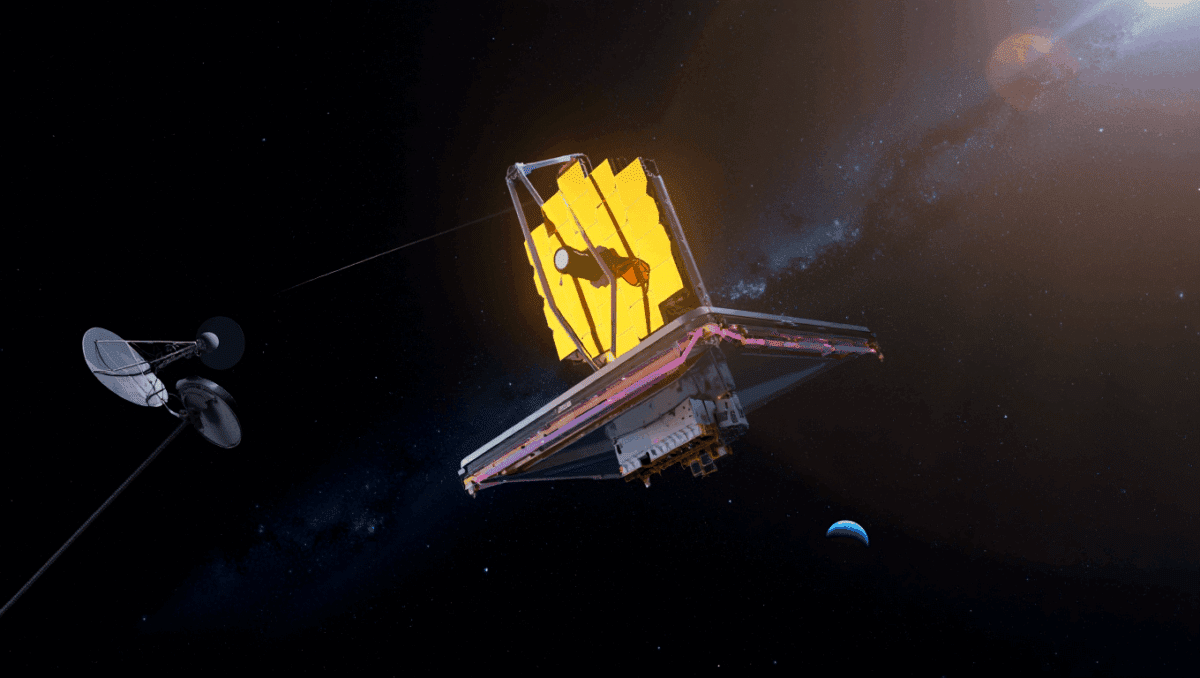
The search for life beyond Earth has moved from science fiction into an era of precision instruments and careful strategy. NASA’s newest space observatory is designed not just to take prettier pictures of the cosmos, but to find and study worlds hundreds to thousands of light-years away — and to lay the technological groundwork for actually detecting signs of life.
This telescope blends wide-field surveying power with cutting-edge starlight-blocking technology. It will expand the census of exoplanets, probe distant atmospheres, and test the direct-imaging tools that future missions will need to search for biological fingerprints on habitable planets.
How this space telescope changes the hunt for exoplanets
The observatory combines two complementary approaches to locating and studying other worlds. First, its wide-field instruments will map large swaths of sky with unprecedented sensitivity, revealing planets through gravitational microlensing and helping build a statistical picture of planetary systems. Second, a high-contrast coronagraph will attempt to suppress starlight so the telescope can directly image faint companions near bright stars — a crucial step toward spotting Earth-like planets.
The Growing Demand for Data-Driven Decision Making in Silicon Valley
He quit, ran out of money, and begged to come back — here’s how his boss reacted
- Wide-field surveys: Able to image far more sky than previous space telescopes, letting astronomers find rare events and populations of planets that are invisible to transit or radial-velocity searches.
- Microlensing capability: Detects planets by observing brief brightening caused when a foreground star and its planets pass in front of a background star.
- Coronagraph demonstration: Tests advanced starlight suppression to reveal faint planets and disks close to their host stars.
Wide-field surveys and microlensing: mapping planetary demographics
By surveying wide fields at high sensitivity, the mission will detect thousands of objects and capture transient microlensing events that point to planets otherwise hidden from other techniques. Microlensing is especially powerful for discovering colder, more distant planets and even free-floating planets that drift without a parent star. These measurements produce a more complete inventory of planetary systems, which is critical for understanding how common potentially habitable worlds may be.
Direct imaging: testing the tools to see planets directly
Direct imaging aims to capture photons that come from the planet itself rather than inferring the planet’s presence. The telescope’s coronagraph is a technology demonstration: it uses masks, deformable mirrors, and wavefront control to reduce starlight by factors of millions. While this mission won’t routinely photograph Earth twins around Sun-like stars, it will image gas giants, debris disks, and warm Neptune-class objects, showing how well next-generation instruments might work.
What astronomers hope to learn about planetary atmospheres and habitability
Beyond counting planets, the observatory will help characterize atmospheric properties and environments important to life. Even if direct detection of biosignatures is beyond its reach, the telescope will identify promising targets and refine techniques needed to interpret faint spectral signals.
- Atmospheric clues: Spectral fingerprints of molecules such as water vapor, methane, carbon dioxide, and oxygen can reveal chemistry that may be driven by geology or biology.
- Planetary environments: Observations of exoplanet albedos, temperatures, and cloud properties help determine whether a world could maintain liquid water.
- Target selection: By finding and characterizing a wider range of planets, the mission builds a catalog for follow-up with telescopes designed specifically to search for biosignatures.
How this mission complements other telescopes
This NASA observatory will not act alone. It complements ground-based giants and space telescopes that use transit spectroscopy (like JWST) to probe atmospheric composition. While transit methods favor close-in planets, microlensing and direct imaging reveal different slices of the exoplanet population. Together, these methods create a fuller picture of planetary systems and help prioritize the best candidates for in-depth atmospheric study.
Technological breakthroughs being tested in space
A central goal of the mission is to push technology readiness: proving that advanced coronagraphs, deformable mirrors, and extreme wavefront control can function in the space environment. These demonstrations are essential for designing future flagship telescopes capable of imaging Earth-sized planets and searching for biosignatures.
- Coronagraph technologies: Multiple coronagraph designs will be tested to learn which approaches deliver the highest contrast and stability.
- Wavefront control: Precision mirrors and real-time control systems tune the telescope’s optics to remove speckles that mimic faint planets.
- Data-processing pipelines: New algorithms to extract weak planetary signals from noisy images will be refined using real mission data.
Obstacles and the path toward finding life
The road to detecting life is technically demanding. Achieving the contrast needed to see an Earth-like planet next to a Sun-like star requires orders of magnitude improvement over current capabilities. There are also astrophysical limits — stellar activity, exozodiacal dust, and varying planet-star geometries complicate interpretation.
- Instrument stability must be maintained over long exposures to prevent tiny optical errors from swamping planetary light.
- Astrophysical noise, such as starspots and background dust, can mimic or obscure atmospheric signals.
- Follow-up resources are limited: identifying the right candidates for deep characterization will be a major part of mission strategy.
Building toward future biosignature searches
The technologies and scientific insights gained will feed directly into planning for the next generation of space observatories — missions explicitly designed to image Earth-sized planets and seek chemical signs of life. Concepts under study, such as large space telescopes with advanced coronagraphs or separate starshade spacecraft, rely on the lessons learned from this mission’s demonstrations and surveys.
What astronomers will be watching for in early data releases
Once observations begin, scientists will prioritize several outcomes that indicate the mission is on track to revolutionize exoplanet science:
- Successful suppression of starlight to pre-launch contrast goals.
- Detection of new planets via microlensing events and confirmation of predicted yields.
- High-quality images of planetary systems and debris disks that reveal system architecture and composition.
- Improved techniques for extracting faint spectral features that hint at atmospheric constituents.
Why these early wins matter
Each technical and scientific milestone reduces risk for larger missions. Demonstrating that instruments can handle the harsh environment of space and still deliver precise, high-contrast observations builds confidence that the community can take the next step: designing observatories capable of directly searching for life on distant Earth analogs.
You might also like:
- Roman Space Telescope survives attempted budget cuts, set to launch 9 months early
- Milky Way center’s largest, most detailed image reveals millions of stars and thousands of worlds
- Exoplanet magnetospheres detected for first time, opening new window on planets
- Super-puff exoplanets discovered by researchers are lighter than cotton candy
- Butterfly Nebula image captured by Gemini telescope reveals glowing gaseous wings

William Anderson is a multimedia producer specializing in videos, podcasts, and interactive galleries. With five years of immersive content creation, he turns information into a rich audio‑visual experience. His storytelling skills draw you directly into the heart of every story, on any platform.


Man, NASA aint playing around with that new telescope! I remember when we could barely see the Moon up close, and now theyre out here hunting exoplanets for signs of life. What a time to be alive, huh?
I remember back when sci-fi movies were all we had about hunting aliens. Now, NASAs got this telescope doing the real deal, hunting exoplanets and checking for life signs. Its like were living in a movie, but cooler.
Man, I remember dreaming bout this stuff as a kid, and now NASAs really out there, hunting exoplanets and sniffing for life signs. Feels like sci-fis knocking on realitys door, you know? Exciting times were living in!
Man, this telescope’s like my cosmic detective buddy, sniffing out alien life! It’s like our own space version of Sherlock Holmes. Cant wait for it to spill the extraterrestrial tea!
Man, NASAs new telescope got me hyped! Imagine finding alien planets or signs of life… Makes me feel like a kid dreaming of space adventures all over again. Cant wait for the discoveries!
Man, this telescope got me all hyped up! Imagine finding life out there, wild stuff. Hope they dont just discover some boring space rocks, we need aliens, okay? Lets shake things up, NASA!
Man, NASA’s new telescope got me all hyped up! Imagine if they find some real alien stuff out there. I bet those exoplanets got some crazy stories to tell. Can’t wait to see what they discover!
Man, this NASA telescopes like the ultimate cosmic detective, sniffing out exoplanets and maybe even life out there. Like, imagine the secrets its gonna uncover! Its like playing hide and seek with aliens, but for real.
Man, NASAs new telescope got me all hyped up! Imagine peepin at exoplanets and maybe even findin signs of life out there. Cant wait for the mind-blowin discoveries!
Man, NASAs always up to something cool, huh? I remember dreaming bout aliens as a kid. Now theyre out there, hunting exoplanets and all. Cant wait to see what they find!
This telescope aint messin around, huh? Huntin for exoplanets and sniffin out signs of life? NASAs really out here playin space detective. Hope they find something juicy, like alien space donuts or somethin.