
Show summary Hide summary
- Why switching off lights matters for night-flying seabirds
- How Corvo’s seasonal blackout is organized
- Volunteer rescues: small actions, big results
- Regional programs and partnerships reducing light pollution
- How other islands are following the example
- Simple steps communities and businesses can take
- Media attention and ongoing monitoring
Each autumn, the tiny Azorean community of Corvo intentionally plunges itself into darkness. For five nights at the end of October, public lights go off island-wide so fledgling seabirds can leave their nests and find the ocean without being confused or grounded by artificial light.
What began as a local conservation step has become a model for nearby islands and a seasonal ritual that has helped rescuers return tens of thousands of young seabirds to the sea.
The Growing Demand for Data-Driven Decision Making in Silicon Valley
He quit, ran out of money, and begged to come back — here’s how his boss reacted
Why switching off lights matters for night-flying seabirds
Many seabirds, including the Cory’s shearwater, time their first flights for after sunset to avoid predators. When streetlights and building illumination brighten the night, young birds become disoriented, collide with structures, or land in towns instead of on open water. On remote Atlantic islands, this means large numbers of otherwise healthy fledglings end up stranded.

The stakes are especially high in the Azores. This archipelago supports an estimated 65–75% of the global breeding population of Cory’s shearwaters, making light pollution a conservation issue with worldwide consequences.
How Corvo’s seasonal blackout is organized
Local authorities and conservation groups coordinate a brief, targeted reduction of public lighting each October. On Corvo, municipal fixtures are switched off from 9:00 p.m. until 4:00 a.m. during the last five nights of the month—precisely when fledglings are most likely to depart their burrows.
Who’s involved and what they do
- SPEA (the Portuguese Society for the Study of Birds) works alongside Corvo’s municipal council to plan and promote the blackout.
- Volunteers patrol streets overnight to collect grounded birds, assess them, and — when possible — return them to the coast.
- Community outreach and surveys build public support; local residents have repeatedly backed the temporary lights-out approach.
Volunteer rescues: small actions, big results
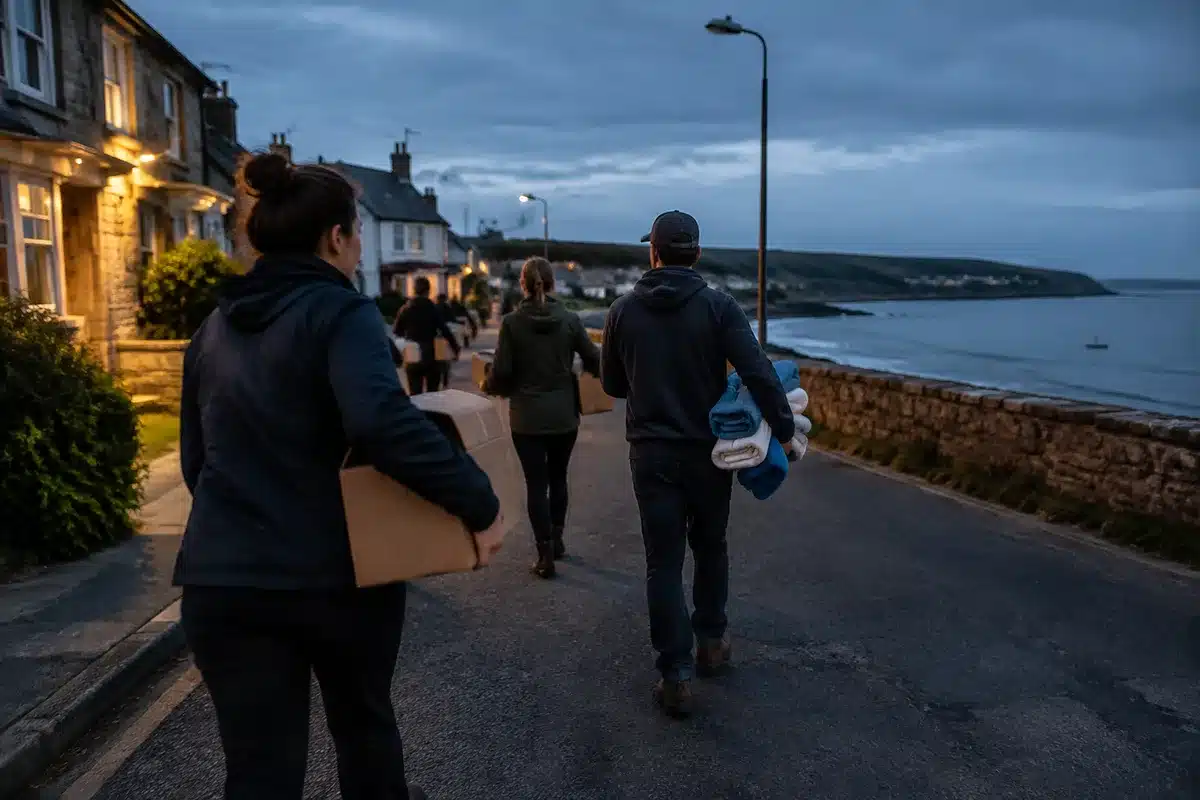
On the ground, dozens of volunteers use simple gear—cardboard boxes, towels, and soft hands—to gather confused fledglings and keep them safe until they can be released. These grassroots rescue efforts complement the blackout itself by addressing individuals that still end up ashore.

- Since 2015, volunteers across the Azores have helped more than 30,000 Cory’s shearwater fledglings get back to sea.
- Corvo alone accounts for roughly 6,000 of those rescues, a notable share given the island’s small population.
Regional programs and partnerships reducing light pollution
The lights-out campaign on Corvo is part of broader initiatives aimed at limiting the impact of artificial night lighting on wildlife. Interreg projects such as LuMinAves and EElabs focus on technical and community solutions: better lamp design, timing controls, and public-awareness campaigns that promote energy efficiency and biodiversity protection.
Conservation groups emphasize that the approach is scalable—other towns and islands can adopt short-term blackouts or permanent lighting changes during critical breeding seasons.
How other islands are following the example
Corvo’s practice has inspired similar actions on neighboring islands. Madeira and Porto Santo have organized blackout nights and outreach programs to reduce unnecessary outdoor illumination and to teach residents and businesses why darker nights matter for fledgling seabirds.
Campaigns run by SPEA and partners remain active through early November, mobilizing volunteers and coordinating with local governments to cover the peak period for stranded young birds.
Simple steps communities and businesses can take
- Limit outdoor lighting during peak fledging weeks—targeted, short-term blackouts can be very effective.
- Use downward-directed, shielded fixtures to minimize skyglow and glare.
- Install motion sensors and timers so lights operate only when necessary.
- Educate residents, hotels, and shops about the seasonal risks to seabirds and how to minimize disruption.
Media attention and ongoing monitoring
The seasonal efforts have attracted wide coverage in regional and international outlets, highlighting both dramatic night-time rescues and the quieter policy shifts that enable them. Researchers and NGOs continue to monitor outcomes to refine timing, lighting technology, and volunteer response strategies so more fledglings can reach the ocean safely.
You might also like:
- Eastern imperial eagle, Serbia’s national bird, sees record breeding year
- Zoo saves 21 snails from extinction, returns hundreds to pristine Atlantic island
- Crow teaches orphan bird to eat in viral video
- Record bird migration captured on radar at night during perfect storm
- Ospreys recover as pioneering pairs nest away from main population

Michael Thompson is an experienced journalist covering U.S. and global news. With ten years on the front lines, he breaks down political and economic stories that matter. His precise writing and keen attention to detail help you grasp the real‑world impact of every event.

