Show summary Hide summary
- From a Field Accident to a New Purpose: Xie’s Early Struggle and Turning Point
- Breaking Records and Redefining Limits: Athletic Feats on Wheels
- Inventing Wheelchair Skateboarding: Adaptations, Practice, and Creativity
- Opening a Training Center in Nanchang: From Personal Practice to Community Rehab
- Vision for the Sport: Competitions, Awareness and the Future of Wheelchair Skateboarding
When Xie Junwu straps into his chair and pushes, he is doing more than getting from point A to B — he’s rewriting what people imagine a wheelchair can do. Once confined to his home for years after a life-changing injury, Xie transformed frustration into motion, scaling peaks, finishing marathons and now teaching others to ride and carve in a sport many outside China have never seen: wheelchair skateboarding.
His story blends grit, creativity and a fierce belief that setbacks are a starting point. From a single, desperate climb in his youth to a Guinness record and an innovative training hub in Nanchang, Xie has built a path for people with spinal injuries to regain strength, confidence and joy on wheels.
The Growing Demand for Data-Driven Decision Making in Silicon Valley
He quit, ran out of money, and begged to come back — here’s how his boss reacted
From a Field Accident to a New Purpose: Xie’s Early Struggle and Turning Point
At 19, a fall during a geology field internship left Xie with a severe thoracic spinal injury, paralyzing him from the waist down. In the years that followed he retreated from the outside world, relying on his mother for daily care. The isolation lasted nearly a decade and left him doubting his future.
Everything shifted after his mother’s death in 2000. What had been a promise to become more independent turned into an urgent necessity. A few years later, a spinal injury meet-up introduced him to a simple but electrifying skill: balancing a wheelchair on its rear wheels. That moment sparked something in Xie — a determination to relearn what mobility could mean.
Breaking Records and Redefining Limits: Athletic Feats on Wheels
Xie threw himself into mastering advanced wheelchair maneuvers, studying videos and teaching himself techniques that few people in China had attempted. He endured countless falls and months of practice, steadily building balance, endurance and daring.
- Guinness world record: In 2012 he completed the longest wheelchair wheelie on record, maintaining the rear-wheel balance for 25.8 kilometers (about 16 miles).
- Mountain summits: He has climbed Mount Huangshan — nearly 6,000 feet — four times, a remarkable achievement for a wheelchair athlete.
- Marathon finishes: Xie has crossed the finish line in 32 marathons, including the New York City Marathon, proving endurance sports are within reach for skilled wheelchair users.
These milestones didn’t come overnight. They were forged by repetition, pain, and a steady increase of ambition. Along the way he developed a public profile through viral videos that showcased both technical skill and resilience.
Inventing Wheelchair Skateboarding: Adaptations, Practice, and Creativity
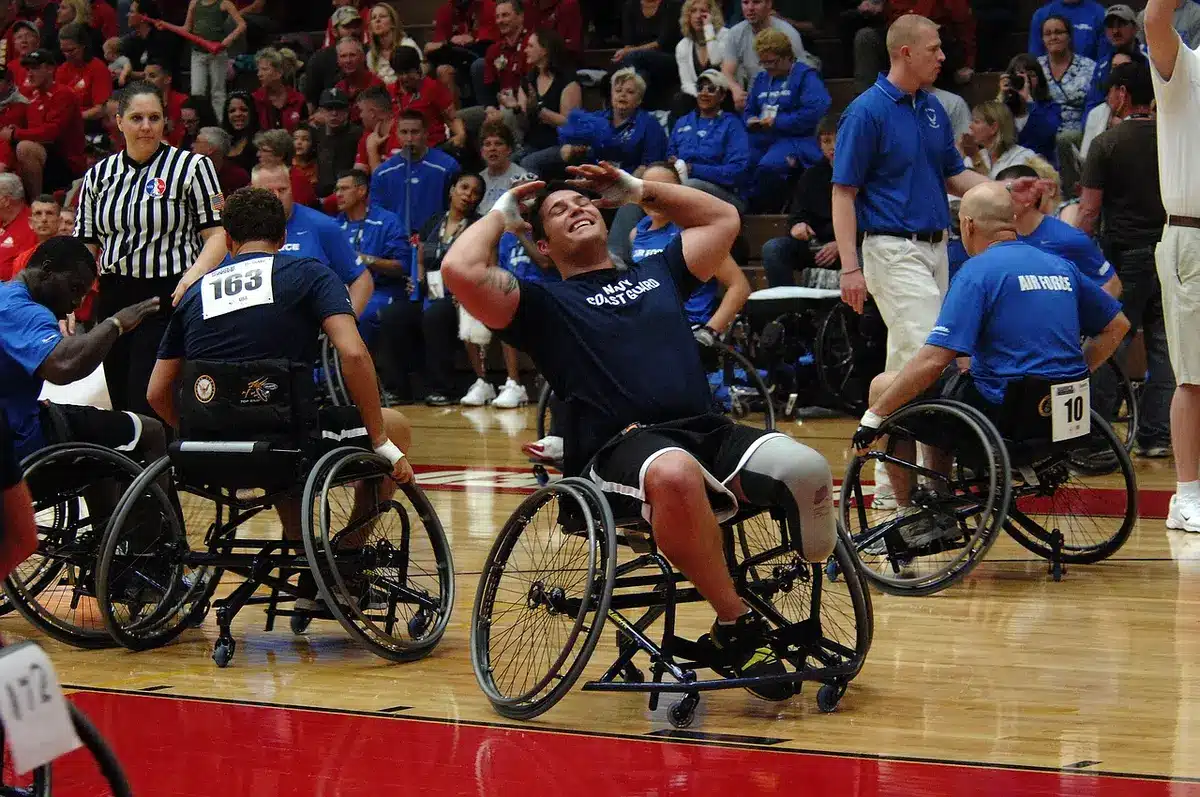
Skateboarding entered Xie’s life in 2014 as a curious experiment. Early attempts were challenging: ordinary skateboards are designed for feet, not wheels. Undeterred, Xie adapted the sport for his chair by attaching metal rails to a skateboard so his wheelchair’s wheels could anchor and shift weight to steer much like a rider’s feet.
How the setup works
- Metal rails secure the wheelchair to the board, preventing slips.
- The rider uses lateral pressure from the chair’s wheels to carve and turn.
- Gentle slopes and curved courtyards become practice zones for building nuance and control.
Although he set the project aside temporarily to focus on marathons and mountain climbs, he returned to skateboarding with fresh momentum after discovering an ideal practice space in Nanchang: a courtyard with gradual curves and slopes that let him relearn balance and tricks more safely.
Opening a Training Center in Nanchang: From Personal Practice to Community Rehab
After honing his skills and gaining followers online, Xie launched a sports rehabilitation clinic — the Nanchang City Hope House — aimed at people with spinal cord injuries. The center combines skill training with physical rehabilitation, emphasizing how coordinated movement strengthens muscle, improves cardiovascular health and supports immunity.
- Personal coaching for wheelchair maneuvers and balance.
- Group sessions that build social confidence and shared progress.
- Adaptive equipment development and hands-on training for caregivers.
Xie sees the center as more than a school for tricks. It’s a place where people learn to move differently and reclaim parts of their lives that disability had boxed in.
Vision for the Sport: Competitions, Awareness and the Future of Wheelchair Skateboarding
Once an experimental hobby, wheelchair skateboarding is on the cusp of becoming an organized activity in China, thanks in part to Xie’s advocacy. He hopes to stage the country’s first wheelchair skateboard competition — a modest, ambitious goal that would create exposure and opportunities for practitioners across the nation.
Beyond contests, Xie wants to normalize adaptive sports through public demonstrations, therapy programs and media that highlight the athleticism involved. His journey — from a bedridden young man to a world-record holder and coach — serves as a live demonstration that physical limits can be expanded with creativity and steady effort.
His message is simple and relentless: setbacks don’t have to determine the rest of your life; they can be the start of a new chapter.

You might also like:
- Dancing wheelchair helps paralyzed teen feel cool as a different kind of dancer
- Hockey player returns to the rink nine months after devastating injury
- 29-Year-Old Woman Skates Across U.S.: Carries Late Stepfather’s Ashes in Epic Tribute
- Double neural bypass surgery helps paralyzed man feed himself and pet his dog
- Denver neurosurgeon performs rare surgery to help former paramedic walk his daughter down the aisle

Michael Thompson is an experienced journalist covering U.S. and global news. With ten years on the front lines, he breaks down political and economic stories that matter. His precise writing and keen attention to detail help you grasp the real‑world impact of every event.