
Show summary Hide summary
- What river blindness is and how it spreads
- How Niger achieved elimination: decades of targeted treatment
- The role of ivermectin and the Mectizan Donation Program
- Regional context: where the disease remains and recent progress
- Why partnerships and local leadership mattered
- What this milestone means for global neglected tropical disease efforts
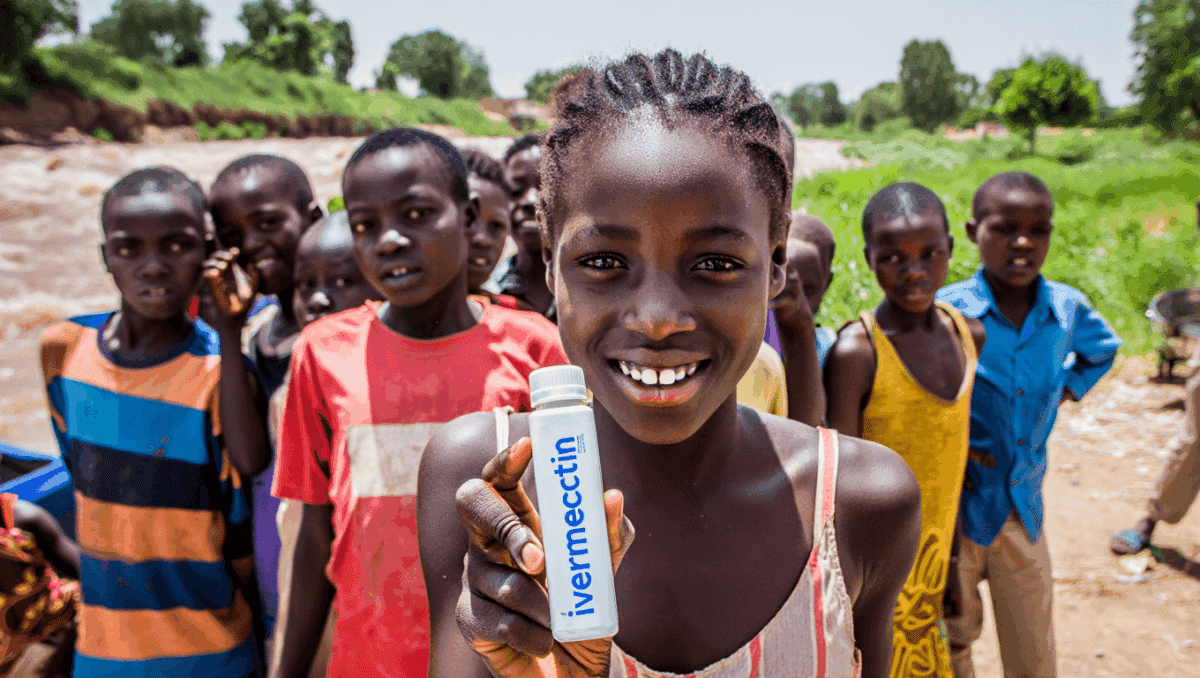
Niger has reached a major public health milestone: after decades of community treatment campaigns, the country has been recognized as the first African nation to eliminate river blindness, a disease that once devastated communities along fast-moving rivers. This achievement — confirmed on World Neglected Tropical Disease Day — reflects long-term commitment to mass drug administration, cross-border cooperation, and grassroots health programs despite limited resources.
The story also underscores how a single, affordable medication, distributed at scale, can transform lives across generations. As Niger moves from mass treatment into surveillance, public health experts are watching closely to see how the country sustains gains and supports neighboring regions following similar paths.
What river blindness is and how it spreads
The Growing Demand for Data-Driven Decision Making in Silicon Valley
He quit, ran out of money, and begged to come back — here’s how his boss reacted
River blindness, medically known as onchocerciasis, is caused by the parasitic worm Onchocerca volvulus. Tiny blackflies that breed along swift rivers transmit the parasite when they bite humans. Repeated infections can lead to intense skin disease, disfigurement, seizures in some cases, and permanent blindness.
- Transmission hotspots: riverine and riparian communities with large blackfly populations.
- Symptoms: severe itching, skin changes, and progressive vision loss.
- Geography: historically present across parts of sub-Saharan Africa, and in pockets of the Americas and Yemen.
How Niger achieved elimination: decades of targeted treatment
The elimination effort in Niger rested on sustained, nationwide mass drug administration using ivermectin. Health workers and volunteers repeatedly delivered the drug to communities at risk, interrupting the parasite’s life cycle and preventing new infections.
Key elements of the national strategy
- Consistent mass distribution campaigns over roughly four decades.
- Community engagement to reach remote riverine populations.
- Cooperation with neighboring countries to limit reintroduction across borders.
- Monitoring and phased transition from mass treatment to careful surveillance.
Despite facing resource constraints and significant logistical challenges, Niger’s public health teams prioritized outreach to villages along the Niger River and other affected waterways, gradually driving down transmission until elimination could be declared.
The role of ivermectin and the Mectizan Donation Program
Ivermectin — a widely used antiparasitic medicine — has been central to global onchocerciasis control since large-scale community programs began in the late 20th century. The drug is safe, inexpensive, and effective at killing the parasite’s microfilariae, the immature larvae that cause symptoms and spread infection.
The long-running Mectizan Donation Program (MDP), a public-private initiative coordinated with international health agencies, supplied ivermectin for mass treatment efforts. The program has served as a model for medicine donation partnerships and helped countries in the Americas and Africa reduce or interrupt transmission.
Regional context: where the disease remains and recent progress
Onchocerciasis still exists in many places, but large-scale treatment has greatly reduced its footprint.
- Africa: endemic in many countries, historically high burden across West and Central Africa.
- Americas: transmission has been interrupted in several countries following targeted programs.
- Other regions: isolated foci reported in parts of the Middle East and South America.
Senegal recently announced the end of its mass treatment phase and is moving into a monitoring period similar to what Niger has completed. These transitions mark crucial moments: stopping routine distribution requires robust surveillance to catch any residual or reintroduced transmission quickly.
Why partnerships and local leadership mattered
Experts point to strong collaboration among communities, national health authorities, international agencies, and private-sector partners as central to the outcome in Niger. According to a report in the Weekly Epidemiological Record, coordinated effort and long-term support from donation programs were pivotal.
Public-private partnerships helped ensure consistent supplies and technical assistance, while community health workers and volunteers delivered treatments and educated residents about the importance of continuing rounds until elimination thresholds were reached.
What this milestone means for global neglected tropical disease efforts
Niger’s success offers a practical template for countries still battling onchocerciasis and other neglected tropical diseases. It demonstrates that sustained, focused interventions — even in low-resource settings — can interrupt transmission and prevent suffering across generations.
Moving forward, surveillance, targeted responses to new cases, and regional coordination will be crucial to preserving gains and expanding them to neighboring countries. International health programs that combine medicine access, local capacity-building, and monitoring are likely to remain central to eliminating similar diseases elsewhere.
You might also like:
- Australia eliminates trachoma, 30th country to end leading infectious cause of blindness
- Egypt eliminates trachoma, becoming the 26th country to end leading cause of infectious blindness
- African life expectancy rises 10 years since 2000 despite wars, famine and instability
- Southeast Asia malaria nears elimination as cases fall two-thirds since 2010
- WHO Triumphs: Kenya Finally Free from Deadly Tropical Parasite After Long Battle!

Michael Thompson is an experienced journalist covering U.S. and global news. With ten years on the front lines, he breaks down political and economic stories that matter. His precise writing and keen attention to detail help you grasp the real‑world impact of every event.


Man, the news of River Blindness getting wiped out in a whole country is like a ray of sunshine in a stormy sky. Its all about that ivermectin magic, yall. Lets celebrate this rare win in the midst of chaos!
Man, this news hits different. Remember hearing about river blindness in school? Now Nigers kicking it to the curb with ivermectin. Big up for science and those making it happen!
Man, I remember when folks thought river blindness was a curse. Now, Niger smashes it with treatment! Aint science just mind-blowing? Big up to the Mectizan Donation Program for making it happen!
Man, hearing about River blindness getting wiped out in Niger? Thats some next-level progress right there. Its like a real-life superhero move, using ivermectin to kick that disease to the curb. Makes you wonder what else we can conquer, right?
Oh man, this news hits different! River blindness out of Niger? Thats some serious progress. Its like witnessing a real-life superhero story. Keep it up, world! Next stop: tackling more health challenges like its nobodys business.
Man, this news hits different. Reminds me of that time I doubted if progress was possible. Turns out, when people rally together, miracles happen. Lets keep this energy going, yall! ✨
I remember hearin’ ‘bout river blindness in school once. Crazy how Niger’s makin’ moves to eliminate that stuff! Treatin’ millions with ivermectin? That’s some real progress right there. Keep it up, Niger!
Man, I totally get what you mean! Its wild how Nigers stepping up to tackle river blindness head-on. Ivermectin for the win! Its awesome to see progress like this, aint it? Keep crushin it, Niger!
Man, I remember when river blindness was a big deal in Niger. Now hearing theyve eliminated it after all those treatments with ivermectin? Thats some real progress right there. Makes you believe in the power of science, huh?
Oh, man, I totally feel you! Its insane how science can work wonders like that, right? Eliminating river blindness in Niger is no small feat. Its like a superhero move by the medical world. Gives you hope that maybe one day well conquer even more of these pesky diseases, you know?
Dang, Niger coming in hot with that river blindness elimination after treating millions with ivermectin! Props to those on the ground making it happen. One step closer to a healthier world, yall!
Man, hearing about Niger kicking river blindness to the curb with ivermectin treatment is like a breath of fresh air. Its like watching the underdog finally win, yknow? Gives me hope for more health wins in Africa!
I remember hearin bout river blindness in school. Glad to see progress happenin. Makes ya believe in science, huh? Keep it up, Niger! Gotta spread the word bout this victory.
Oh man, thats some good news! Finally, a win against river blindness in Niger! Its like watching the underdog team score the winning goal in the last minute. Keep fighting, Niger, youre on the right track!
Man, this news about river blindness getting kicked out of Niger is like a plot twist in a movie. I mean, who wouldve thought something so harmful could be eliminated? Its like a superhero swooping in to save the day!
Man, thats wild! Its like seeing the underdog finally win against all odds. Who knew Niger would be the stage for this unexpected hero moment? I gotta admit, it does have that movie magic vibe. Superhero vibes in real life – who wouldve thunk it?
Man, when I think about all those people now free from river blindness in Niger, its like a superhero movie come true! Ivermectin, youre the real MVP here. Saving lives and kicking diseases outta the park!