
Show summary Hide summary
- New dates and what they reveal about long-term human–wolf proximity
- Physical clues from the remains that suggest intimate contact
- Laboratory techniques that strengthened the case
- Implications for when and how dogs may have emerged
- Why some scientists urge caution
- How this finding fits into the bigger archaeological picture
- Next steps scientists are pursuing
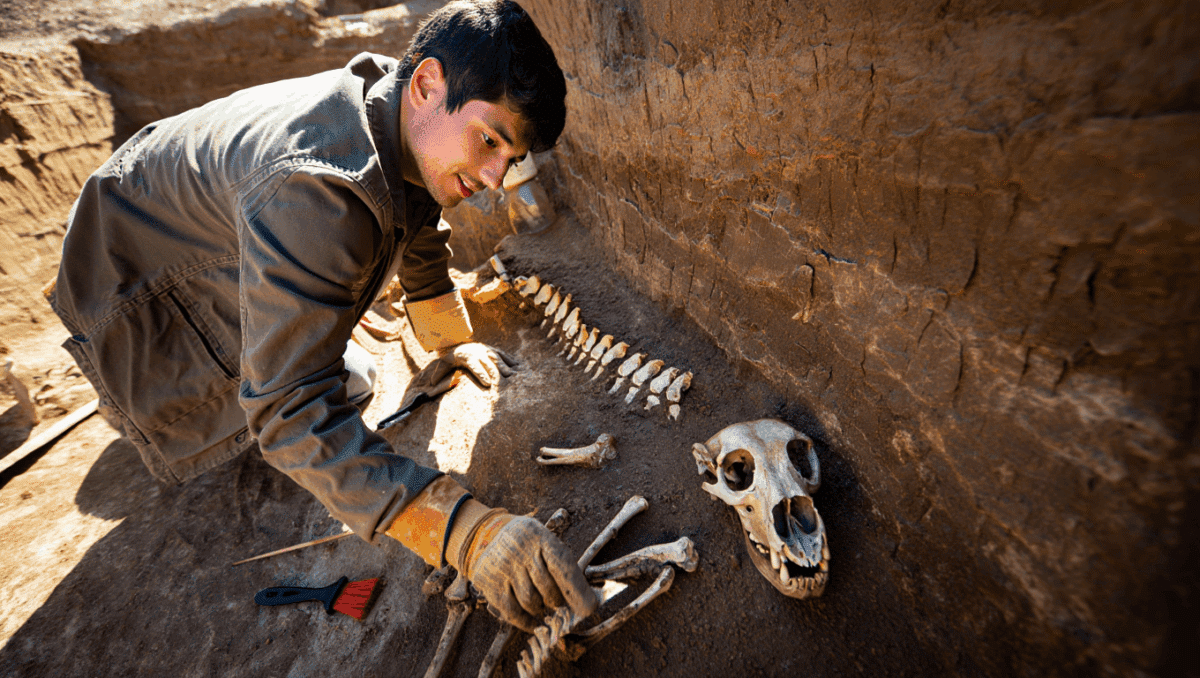
New analysis of ancient wolf bones is reshaping how scientists think about early encounters between humans and canids. The remains — excavated from a prehistoric site and recently reexamined with modern techniques — suggest people and wolves may have been living in close proximity far earlier and for longer stretches than many researchers previously believed.
The discovery doesn’t just adjust a timeline: it opens a window into everyday life in prehistoric communities, showing how humans and wild carnivores might have shared space, resources, and even social bonds long before formal dog domestication. Below, we unpack the evidence, the methods, and what the find could mean for the story of wolves, dogs, and human society.
New dates and what they reveal about long-term human–wolf proximity
The Growing Demand for Data-Driven Decision Making in Silicon Valley
He quit, ran out of money, and begged to come back — here’s how his boss reacted
Radiocarbon and stratigraphic data from the site place the wolf remains in layers associated with repeated human activity. Rather than a single incident of interaction, the pattern of deposits points to ongoing contact over multiple generations. That continuity is crucial: sustained proximity is a necessary condition for any process that would eventually lead to domestication or deep ecological entanglement.
How the chronology was built
- Radiocarbon dating of bone collagen provided age estimates for the remains and nearby hearths.
- Layer sequencing tied the assemblage to repeated occupation episodes at the site, not a one-time event.
- Comparisons with other dated finds in the region show a broader pattern of human settlement and carnivore presence during the same period.
Physical clues from the remains that suggest intimate contact
The skeletons show a mix of marks and conditions that archaeologists interpret as signs of close living rather than casual scavenging. Several types of evidence stand out:
- Healed fractures and wear patterns — bones exhibiting healed injuries suggest individuals survived wounds, which can indicate human care or at least repeated encounters in a settled environment.
- Cut marks and butchery signals — butchery traces are present in ways consistent with meat processing, disposal, or use of pelts, implying humans directly handled the animals.
- Burial or placement contexts — some elements appear intentionally arranged or buried near human features, raising the possibility of symbolic or utilitarian relationships beyond predator–prey dynamics.
Dietary and ecological signals
Stable isotope analysis of bone collagen provides a chemical snapshot of diet. In several specimens, isotopic signatures suggest diets that overlapped with human food webs — scavenging near hearths or consuming refuse associated with camps. Dietary overlap supports the idea that wolves and people were sharing the same ecological niche, at least temporarily.
Laboratory techniques that strengthened the case
Researchers applied a multi-method approach to reduce uncertainty and produce a robust interpretation:
- Radiocarbon dating to anchor the remains in time.
- Stable isotope analysis to reconstruct diet and ecological interactions.
- Microscopic bone surface analysis to distinguish human-made marks from natural damage.
- Comparative morphology to assess whether skeletons show traits trending toward domestication or remain clearly wild.
When taken together, these techniques build a layered narrative: the wolves were present across multiple occupational phases, bore signs of human contact, and lived in an environment where resource overlap was frequent.
Implications for when and how dogs may have emerged
This evidence does not prove domestication occurred at the site, but it strengthens the idea that the social and ecological groundwork for dog formation was being laid earlier and more gradually than a single origin story suggests. The find supports models where domestication is a multistep process that begins with commensal relationships — wolves exploiting human refuse and early camps — and may culminate in closer bonds through selection and mutual benefit.
- Commensal pathway: animals adapt to human environments, gradually becoming tamer and more dependent.
- Directed pathway: humans actively capture and raise young wolves for specific tasks.
- Mixed scenarios: elements of both pathways occurring in different places and times.
If sustained interactions like those suggested by the new remains were common across regions, dog domestication could be the outcome of repeated, localized processes rather than a single discrete event.
Why some scientists urge caution
Not every archaeologist accepts a straight line from close living to domestication. Critical voices stress that:
- Healed injuries and proximity don’t necessarily mean emotional bonds or deliberate care; wild animals can survive in human-modified landscapes.
- Cut marks can indicate exploitation rather than companionship; wolves could have been hunted or used for pelts.
- Morphological traits indicating domestication are subtle and can take thousands of years to appear reliably in the skeleton.
These caveats are important because the distinction between coexistence and domestication carries different implications for human behavior, social organization, and evolutionary processes.
How this finding fits into the bigger archaeological picture
The new data adds another piece to a mosaic of finds across Eurasia and beyond, where multiple sites now point to early, repeated human–canid interactions. Together they suggest a complex story involving regional variation, ecological opportunity, and cultural choices.
Key research questions that remain
- How widespread were these intimate human–wolf interactions across different landscapes and cultures?
- Which behaviors accelerated the transition from wild wolf to domestic dog in specific contexts?
- Can ancient DNA from these bones clarify lineage relationships and trace genetic changes associated with domestication?
Next steps scientists are pursuing
To move from plausible scenarios to firmer conclusions, researchers plan to:
- Perform more extensive ancient DNA sequencing to identify genetic signatures of domestication and connectivity among populations.
- Expand isotopic and microscopic analyses to additional sites to test whether the pattern of shared diets and healed injuries is common.
- Integrate environmental reconstructions to see how climate and resource distribution shaped human–wolf dynamics.
Ongoing interdisciplinary work — combining archaeology, genetics, ecology, and ethology — will be essential for mapping how wolves and humans shaped each other’s histories across thousands of years. The new remains are a reminder that the path from wild animal to companion is often long, messy, and deeply entwined with human social life.
You might also like:
- Pharaoh’s daughters were skilled archers 4,000 years ago, new study finds
- Morocco fossils could rewrite human origins
- 16,000 dinosaur footprints found at world’s largest track site
- World’s largest whale graveyard teems with deep-sea life including species unknown to science
- 60,000-year-old ostrich eggshell carvings reveal complex human thinking

William Anderson is a multimedia producer specializing in videos, podcasts, and interactive galleries. With five years of immersive content creation, he turns information into a rich audio‑visual experience. His storytelling skills draw you directly into the heart of every story, on any platform.


Man, aint it wild how weve been running with wolves for longer than we thought? Like, imagine the stories those ancient bones could tell us. Bet our ancestors had some crazy campfire chats with those furry buddies!
Man, these ancient wolf tales just keep getting wilder! Who knew humans and wolves were like old pals, hangin out for way longer than we thought? Natures full of surprises, aint it? Time to rethink that history book!
You know, its wild how we keep discovering new things about our past with wolves. Imagine the stories those ancient wolf remains could tell, showing that humans and wolves go way back. Makes you wonder what other surprises are buried out there.
Man, ancient times were wild! Imagine kicking it with wolves like its no big deal. Bet they had some epic stories to share. Makes you wonder how different things were back then, huh?
Man, reading bout humans & wolves kickin it back in the day? Fascinatin stuff. Makes ya wonder bout all the stories they could whisper if they could talk, yknow? Maybe theyd spill some ancient tea or two.
Man, these ancient wolf remains spillin the tea on humans and wolves kickin it longer than we knew? Wild! Like, werewolf BFFs or what? Time to rethink the whole mans best friend vibe!
Man, thinkin of how humans & wolves go way back, its like a wild history lesson, ya know? Imagine the tales theyd tell if they could talk. Bet they got some epic stories from way back when!
Man, imagine kickin it back in ancient times with wolves as your sidekicks. Bet they were the OG best buds, huntin and chillin together. Who needs a time machine when you got these cool findings?
Man, its wild to think we were chilling with wolves ages ago, like, way longer than experts guessed. Guess we were more paw-some pals than they thought! Wonder what else were off the mark about…
Man, can you believe it? Humans and wolves, like, tight since forever? Makes you wonder what other secrets natures hiding. Bet those wolves had some juicy gossip about us back in the day!
Man, imagine living side by side with wolves back in the day! Bet they had some wild adventures together. Makes you wonder what other surprises historys hiding. Maybe were not so different after all, eh?
Dude, totally feel you on that! Can you imagine the shenanigans wed get into with a pack of wolves as our wingmen? Bet theyd have us howling at the moon every night. Historys full of surprises, man. Maybe were not so different after all… Maybe were just a bunch of wild souls tryin to find our pack, ya know?
I mean, who knew humans and wolves go way back like that? Its like a prehistoric buddy cop movie waiting to happen! Can you imagine the ancient shenanigans they got up to? Wild, man.
Dude, totally! Imagine the human trying to teach the wolf how to fetch a stick or the wolf showing the human how to hunt! That ancient odd couple wouldve been a riot! Bet they had more drama than all the reality shows combined. What a wild crossover that wouldve been, right?
Man, I always knew humans and wolves had a deep bond! Like, they were bros since forever. These ancient remains spillin the tea on their long history together? So cool. Bet they shared snacks and stories by the fire.
I mean, who wouldve thought, right? Humans and wolves, chillin together for way longer than folks guessed. Makes you wonder what other surprises historys hidin. Maybe next theyll find out dinosaurs rocked tuxedos, who knows!
Man, these ancient wolf stories got me thinkin. Imagine walkin around with those furry buddies, discoverin the wild side together. Bet they had some epic adventures we can only dream of. Wild times!
Man, I always knew wolves were the original squad members! Imagine humans chilling with these majestic creatures for that long. Bet they had some epic adventures and deep talks under the moonlight. Wild times, literally.