
Show summary Hide summary
- What the Moroccan fossils are and why they matter for human origins
- How researchers established the timeline — dating methods and sediment clues
- What the finds say about the evolution of Homo sapiens
- Archaeological context: tools, fire, and behavior
- How this changes the map of early human movement and diversity
- Ongoing debates and uncertainties among scientists
- Where research goes from here: tests, digs, and genetic questions
A set of remarkably old human remains unearthed in northwest Africa is forcing scientists to rethink when and how our species emerged. Found alongside stone tools and signs of early behavior, the fossils from Morocco push the timeline of Homo sapiens back by tens of thousands of years and broaden the geographic picture of human evolution.
These discoveries are reshaping debates about the origin of modern humans — suggesting a more complex, continent-wide process rather than a single birthplace. As researchers reanalyze bones, artifacts and sediments, the story of our deep past is becoming both richer and more disputed.
What the Moroccan fossils are and why they matter for human origins
The Growing Demand for Data-Driven Decision Making in Silicon Valley
He quit, ran out of money, and begged to come back — here’s how his boss reacted
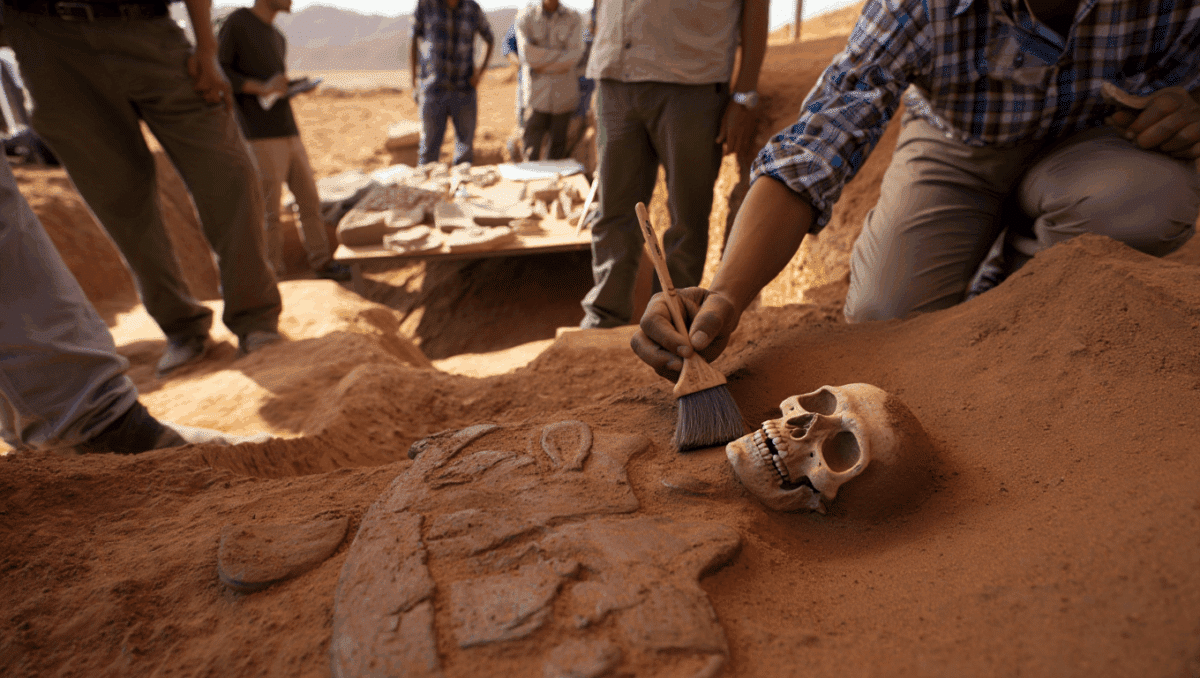
Excavations at a site in Morocco recovered skull fragments, jawbones and other skeletal pieces that show a surprising combination of features. The facial structure and aspects of the skull align with modern humans, while the braincase and some other traits retain more primitive characteristics. Scientists date these remains to roughly 300,000 years ago, several times older than many previously recognized early Homo sapiens fossils.
- Age: Dating methods place the material at around 300,000 years old.
- Context: The fossils were found with Middle Stone Age tools and evidence of hearths and butchered animal bones.
- Appearance: A mosaic of modern and archaic anatomy that complicates simple “first human” narratives.
Because of their age and anatomical mix, these Moroccan fossils are central to a newer view of human origins: one in which evolutionary changes took place across Africa over long periods, not necessarily in a single region or moment.
How researchers established the timeline — dating methods and sediment clues
Determining the age of ancient fossils requires cross-checking multiple lines of evidence. In Morocco, scientists used advanced techniques to date both the bone-bearing layers and the surrounding artifacts.
Key dating techniques applied
- Thermoluminescence (TL): Applied to burned flints and sediments, TL measures when mineral grains were last heated or exposed to sunlight.
- Electron spin resonance (ESR): Used on tooth enamel and some sediments to estimate the time since mineral restructuring occurred.
- Stratigraphic analysis: Careful mapping of sediment layers helped place finds in their geological context and detect post-depositional disturbance.
Combined, these methods provided converging age estimates that support an early origin for modern human traits. Repeated, independent measurements helped build confidence in the roughly 300,000-year figure, although scientists acknowledge uncertainties remain and debate fine-grained chronological details.
What the finds say about the evolution of Homo sapiens
Rather than a sudden emergence of a fully modern human, the Moroccan material points to a gradual, regionally variable process. The remains show that elements of our facial anatomy were present early, while brain shape and other features continued to change.
- Evolution appears to have been mosaic: different traits modernized at different times and places.
- Cultural innovations, like refined stone tools and potential use of pigments, suggest complex behavior accompanied anatomical change.
- There may have been multiple interacting populations across Africa exchanging genes and ideas.
This mosaic model contrasts with older, simpler models that treated Homo sapiens as arising in a single African location at a single point in time. Instead, the evidence supports a long, continent-wide evolutionary process that produced the anatomy and behavior we associate with modern humans.
Archaeological context: tools, fire, and behavior
The Moroccan site yielded more than bones. Stone artifacts and traces of human activity help reconstruct daily life tens of thousands of years ago.
- Stone tool technology: Middle Stone Age flake tools and prepared-core techniques point to skilled toolmaking traditions.
- Use of fire: Burned sediments and hearth structures suggest controlled use of fire for warmth, cooking, or tool-making.
- Symbolic possibilities: The presence of pigments and worked pieces hints at early symbolic behavior, though interpretation is cautious.
Together, the material culture associated with the fossils implies that the people there had established behavioral repertoires similar in important ways to those seen in later Homo sapiens groups.
How this changes the map of early human movement and diversity
Before these finds, many models emphasized East Africa as the primary stage for the origin of Homo sapiens. The Moroccan evidence forces a broader perspective: Northwest Africa now clearly figures in the deep history of our species.
Researchers are increasingly open to a pan-African view in which evolutionary novelties spread between scattered populations through migration and gene flow. That perspective recognizes Africa as a dynamic mosaic of environments and communities that collectively fostered human evolution.
Ongoing debates and uncertainties among scientists
While the Moroccan discoveries are groundbreaking, they also spark lively scientific debate. Key points of contention include:
- Interpretation of anatomy: Whether the fossils should be classified as Homo sapiens or represent a closely related lineage remains discussed.
- Sampling bias: Fossil records are uneven; new discoveries can shift interpretations quickly.
- Dating precision: Although multiple methods converge, small errors can affect evolutionary timelines.
- Role of different regions: Scholars argue over the relative importance of various African regions in producing modern traits.
These debates are normal — and productive — in paleoanthropology. Each new find refines the picture and tests existing models, prompting reassessment of long-held assumptions.
Where research goes from here: tests, digs, and genetic questions
Future work will deepen and complicate the story. Researchers are planning further excavations across North and sub-Saharan Africa, applying improved dating, microstratigraphic analysis and detailed morphological comparisons.
- Expanded fieldwork aims to find additional fossils and cultural material in diverse regions.
- Refined imaging and morphometric techniques will help quantify how these early individuals relate to other fossil groups.
- Attempts to recover ancient DNA continue, though warm climates make preservation difficult; proteins and other molecular evidence may offer alternatives.
Each new dataset will either reinforce or reshape current interpretations, adding more nuance to our understanding of how modern humans arose and spread across the continent and beyond.
You might also like:
- Oldest poisoned arrowheads date back 60,000 years, show hunters’ knowledge of toxins
- 500,000-year-old wooden tools are the oldest ever discovered
- 60,000-year-old ostrich eggshell carvings reveal complex human thinking
- Lost land bridge found by female archaeologists may rewrite European history
- Ancient giant shark ruled the seas before megalodon, fossils reveal

William Anderson is a multimedia producer specializing in videos, podcasts, and interactive galleries. With five years of immersive content creation, he turns information into a rich audio‑visual experience. His storytelling skills draw you directly into the heart of every story, on any platform.


Man, these fossils from Morocco are like pieces of a puzzle that could change everything we thought we knew about our origins! Its mind-blowing how much we can learn from these ancient bones. Cant wait to see what else they uncover!
Dude, these fossils from Morocco are like a treasure hunt that keeps getting better! Its insane how much we can dig up about our roots from those old bones. Cant wait to see what other mind-blowing stuff they uncover next!
I heard those Moroccan fossils could shake up the whole human origins gig! Can you imagine, like, finding out weve been telling the wrong story all this time? Mind-blowing, man.
Man, these Morocco fossils are like a plot twist in a movie you thought you had figured out! Its wild how science keeps shakin up our understanding of human origins. Cant wait to see where this discovery leads us next!
So, like, these Morocco fossils are shaking things up, huh? Imagine all we thought we knew about human origins getting a remix. Makes you wonder, right? Evolutions full of surprises, man.
Yeah, man, its like evolutions dropping a surprise album outta nowhere! Who knew Morocco was hiding these fossil gems, right? Like, the whole human origins story just got a plot twist. Makes you question what else is out there waiting to be dug up, ya know? Lifes full of curveballs, keeps things interesting for sure.
Man, these Moroccan fossils got me rethinking my family tree! Like, what if our Homo sapiens ancestors were way more complex than we thought? Mind blown, dude! Cant wait to see how this shakes up the whole evolution game!
Man, these Morocco fossils got me rethinking my whole family tree! Evolutions a wild ride, huh? Cant wait to see what else these ancient bones have in store for us. Time to rewrite those history books!
I once thought evolution was like a straight road, but these fossils got me zigzagging! Morocco, rewriting the human story? Thats like finding out your fave books got a hidden chapter!
Man, these Morocco fossils? Theyre like a time machine to our ancient past, ya know? Its wild to think how much we still gotta learn bout where we came from. Cant wait to see what else they uncover!
Man, totally get what you mean, dude! Those Morocco fossils are like a real-life Jurassic Park adventure, except with more science and less running from dinos, ha! Its insane how much historys still buried out there, waiting for us to dig it up. Cant wait to see what other mind-blowing secrets those rocks are hiding, right?
Dang, these Morocco fossils flippin the script on human origins? Wild! Imagine if we had a time machine to see these Homo sapiens in action. Bet they had some killer dance moves.
I remember readin bout Morocco fossils in school. Now, they sayin it might change how we see human origins? Thats wild, man. Cant wait to see if they rewrite the textbooks on this one.
So, like, these Morocco fossils are giving us a fresh scoop on human origins, man. Its like digging up the ultimate family tree! Can you imagine our ancient buds strutting around in Morocco back in the day? Wild!
Man, these Morocco fossils are like opening a time capsule to our past, ya know? Its mind-blowing how much were still learning about where we came from. Makes you wonder what other surprises are buried out there.
Dude, totally feel ya on that! Its crazy how those Morocco fossils can just transport us back in time, right? Makes you think, like, what other mind-blowing discoveries are just waiting to be dug up! Its like a real-life treasure hunt, man.
Man, these Morocco fossils bringin the history heat! Its like uncovering a whole new chapter in our human story. Cant wait to see what secrets these ancient bones gonna spill!
Man, these Morocco fossils got me thinking were just a blip in time. Evolutions a wild rollercoaster, huh? Cant wait for the next twist in our species story!
Man, those Morocco fossils? Theyre like time machines, takin us back in our family tree. Imagine walkin with our ancient cousins. Makes you wonder, right? We aint so different after all.
Dang, those Morocco fossils? They really do make you feel like youre time-traveling back to the good ol days, walkin alongside our ancient fam. Its wild to think about, innit? Who knew our roots ran so deep? Makes you wonder if were just modernized versions of our long-lost relatives…
I once read this wild theory about humans evolving from aliens. Now, hearing about these Morocco fossils and our human origins being rewritten? Who needs sci-fi when youve got real-life plot twists like this, right? Mind officially blown!