
Show summary Hide summary
- How the fast spin was detected and what the measurements mean
- Why this rotation is surprising — the physics of asteroid breakup
- What the spin tells scientists about internal structure and composition
- Why this discovery matters for science and planetary defense
- What follow-up observations are underway and what scientists hope to learn
- Open questions scientists are racing to answer
- Why the discovery is getting attention now
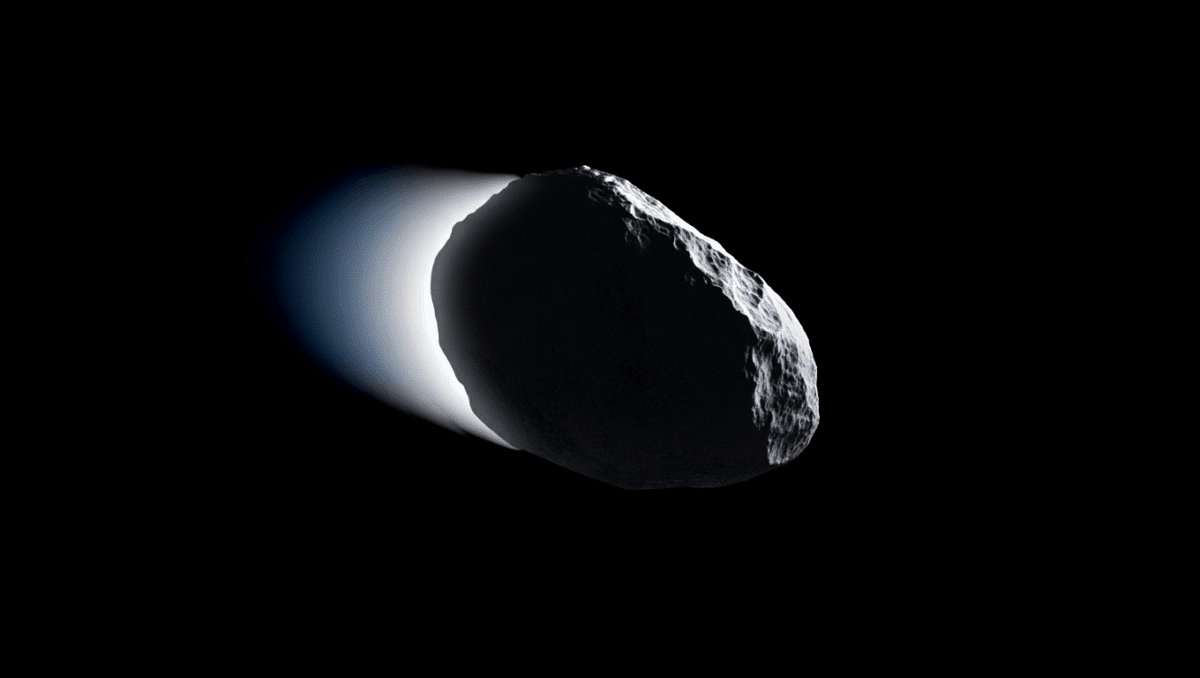
Astronomers have announced the discovery of an asteroid spinning faster than experts expected for an object of its size, a finding that challenges assumptions about how small bodies hold together in space. The rapid rotation was identified through careful analysis of its changing brightness, and the object’s behavior is already shaping new questions about asteroid structure, formation, and the forces that rearrange the small bodies in our solar system.
The announcement has prompted follow-up plans across observatories worldwide. Scientists are racing to collect more data — from lightcurves and spectra to radar imaging — to pin down the asteroid’s size, composition, and whether its extreme spin is a clue to its internal makeup or to a recent disruptive event.
How the fast spin was detected and what the measurements mean
Light reflected from an asteroid brightens and dims as it spins, producing a repeating pattern called a lightcurve. Researchers used high-cadence photometry — repeated, rapid observations of the object’s brightness — to derive a rotation period that stands out from the usual range seen for similar-sized asteroids.
The Growing Demand for Data-Driven Decision Making in Silicon Valley
He quit, ran out of money, and begged to come back — here’s how his boss reacted
- Rotation measurement: The lightcurve shows repeated peaks and troughs at intervals that indicate a very short rotation period, meaning the object completes a full turn far quicker than expected for its estimated size.
- Shape inference: Large brightness variations in the lightcurve suggest an elongated or irregular shape, which amplifies the brightness changes as the object spins.
- Size and albedo estimates: Combining the lightcurve with follow-up observations in different wavelengths allows astronomers to estimate size, though uncertainties remain until radar or thermal data arrive.
Why this rotation is surprising — the physics of asteroid breakup
Asteroids behave differently depending on their size and internal cohesion. Many kilometer-scale asteroids are thought to be “rubble piles,” loose aggregates held together primarily by gravity. For those bodies, there is a well-known spin limit: if they rotate too quickly, centrifugal forces overcome gravity and the object sheds material or disrupts completely.
For much smaller bodies, however, internal strength — friction and material cohesion — can allow survival at much higher spin rates. The newly discovered object apparently lies in a regime where its rapid spin challenges simple classifications.
Mechanisms that can drive an asteroid to spin faster
- The YORP effect: Tiny but persistent torques from sunlight absorbed and re-emitted as heat can slowly change an asteroid’s rotation over timescales of thousands to millions of years.
- Collisions and close encounters: A recent hit with a smaller body or a tidal interaction during a close approach to a planet could abruptly spin up an asteroid.
- Mass loss events: Outgassing or shedding of surface material can alter angular momentum and accelerate rotation.
What the spin tells scientists about internal structure and composition
Rapid rotation carries clues about whether an asteroid is monolithic rock or a loose collection of boulders and dust. If a relatively large object is spinning unusually fast, that suggests it has significant internal strength. Conversely, if a small object spins rapidly, it may be simply small and strong enough to withstand high centrifugal forces.
- Monolithic vs. rubble-pile: A very fast rotator that does not disrupt implies internal cohesion, pointing to a solid, coherent structure.
- Surface properties: Spectroscopy will help determine composition — silicate, metal-rich, carbonaceous — which in turn constrains material strength.
- Implications for formation: If rapid spin resulted from a collisional event, the object might be a fragment from a larger body; if driven by YORP, it reflects long-term thermal effects.
Why this discovery matters for science and planetary defense
Understanding asteroid spin and structure has practical as well as scientific value. The behavior of small bodies affects theories of solar system evolution and the strategies planners would use to deflect a hazardous asteroid.
- Mission planning: Surface cohesion and rotation rate influence landing and sampling strategies for robotic or crewed missions.
- Resource extraction: Fast spin and weak gravity make mining operations more complex; knowing which objects are coherent rocks versus loose piles matters.
- Impact mitigation: An object’s internal make-up determines how it would respond to kinetic impactors or other deflection techniques.
What follow-up observations are underway and what scientists hope to learn
Teams are coordinating a campaign of ground- and space-based observations to refine orbital elements, probe surface composition, and attempt direct imaging or radar mapping if the asteroid is close enough. Priority goals include reducing uncertainties in size and spin, detecting any mass loss or companion fragments, and measuring spectral fingerprints.
Key follow-up methods
- High-cadence optical photometry to confirm and refine the rotation period.
- Infrared and thermal observations to constrain diameter and surface properties.
- Spectroscopy to assess mineralogy and possible metal content.
- Radar imaging, when geometry allows, for direct shape and size measurements.
Open questions scientists are racing to answer
The discovery raises several immediate questions that teams will try to resolve in the coming months:
- Is the rapid spin a long-lived state or the result of a recent event?
- Does the object show any debris, satellites, or signs of shedding material?
- How does its composition compare with other fast rotators and with typical near-Earth or main-belt asteroids?
- What does this case tell us about the limits of asteroid cohesion and the operation of the YORP effect in small-body populations?
Why the discovery is getting attention now
Extreme examples help refine models. A single object that sits outside expected behavior becomes a natural laboratory for testing theories of small-body mechanics, surface processes, and long-term orbital evolution. Observatories and research groups often seize such opportunities because one well-studied outlier can force broader revisions to our understanding of how asteroids form and change.
This record-spinning asteroid is a fresh prompt to rethink assumptions about small bodies — and a reminder that even in a well-observed solar system, surprises still await measurement and explanation.
You might also like:
- asteroid collision observed: astronomers see debris cloud and brightness changes
- Comet spins backward near sun, leaving scientists baffled
- Comet 3I/ATLAS moving strangely: scientists explain why
- Asteroids near Venus could devastate Earth and remain invisible to telescopes
- 3I/ATLAS comet’s unusual tail points toward the sun

William Anderson is a multimedia producer specializing in videos, podcasts, and interactive galleries. With five years of immersive content creation, he turns information into a rich audio‑visual experience. His storytelling skills draw you directly into the heart of every story, on any platform.


Whoa, did the asteroid chug too many energy drinks or what? Spinning like a record, baby! Makes me wonder if its doing the asteroid version of the cha-cha slide up there in space.
Man, this asteroid be spinnin like a DJ at a party! Got me wonderin what wild forces be makin it twirl so fast. Science never fails to drop some mind-bendin discoveries, fo real.
Man, asteroids are like the rockstars of space, aint they? Just heard about this speedy spinner – like, how do they even measure that? Imagine being on a ride that fast, Id lose my lunch for sure!
Yo, did you know bout that asteroid spinning like crazy? Sounds like its breakdancing in space! Wonder whats makin it go so fast, like a cosmic DJ mixin beats. Wild stuff, man!
Man, talk about a cosmic speedster! Reminds me of that time I spun around too fast on the teacup ride at the fair. But hey, this asteroids spin? Thats some next-level twirl action!
Man, this news bout the fastest-spinning asteroid got me thinkin bout my life. Imagine if we could spin like that! Bet wed get dizzy real quick. But for real, science never ceases to amaze.
Man, imagine spinning like that asteroid! Life would be a wild ride! Science keeps dropping bombs that make us rethink everything, huh? Just when you think you got it all figured out, bam, asteroid spinning faster than a DJ at a rave! What a trip, right?
Dang, this asteroid got some serious DJ skills with that speed spin! Imagine breakin out the dance moves up there. Maybe its just vibin to some cosmic tunes or tryna impress its asteroid crush!
Mate, asteroids these days be spinning faster than my brain after a double espresso shot! This discoverys like finding out your quiet neighbors a secret rockstar. Cant wait for more asteroid secrets to drop!
I remember watchin this show bout asteroids and thinkin, Dang, theyre like cosmic dancers! Now they findin the fastest spinner? Thats like an asteroid breakdancin record, right? Spin on, little rock, spin on!
I once heard a theory that asteroids are just like cosmic disco balls, spinning their way through space. But hey, this new speed demon takes the crown! Imagine it groovin faster than a DJ on caffeine – wild, right?
Man, this asteroid be like the Energizer Bunny on steroids, spinning faster than my head at a math test. Wonder if its doing the fidget spinner challenge up there. Science always uncovering the craziest stuff!
Man, asteroids are wild! Imagine finding one that spins like a DJ on turbo mode. Bet the scientists are buzzing over this find. Cant wait to see what other secrets these space rocks are hiding!
I once watched this sci-fi flick where aliens had asteroids spinning like crazy. Now, boom, fastest-spinning asteroid found! Real life imitating art or what? Wonder if those aliens are having a good laugh at us now.
I never knew asteroids could spin so fast! Reminds me of that one time I spun around too much on a tire swing and got all dizzy. Science never fails to surprise me, man.
Man, imagining an asteroid spinning like a DJ at a rave is wild! But on a real note, its fascinating how scientists unravel these cosmic mysteries. Cant wait to see what other mind-blowing discoveries come out of this!
Man, this asteroid be spinnin like its in a hurry to get somewhere! Can you imagine if we had a ride that fast? Like, Hold on, folks, were in for a wild spin! *laughs* Space never fails to surprise us, huh?
Who knew asteroids could breakdance? Fastest-spinning rock in town! Bet its playing some interstellar music up there. Keep groovin, little buddy. What a wild galaxy we live in, huh?
Man, discovering the fastest-spinning asteroid is like finding a speed racer in space! Makes you wonder what else is zooming out there. Science never fails to drop some mind-bending facts on us.