Show summary Hide summary
- Personal memories of Budapest and how they shape perspective
- Revolution versus riot: goals, organization, and political imagination
- Symbols, flags and what they tell us about belonging
- Behavior in the streets: solidarity, looting and attacks on institutions
- Grassroots governance vs. nihilism: what emerges after the smoke clears
- Why looting and anti-patriotic gestures matter for social cohesion
- What the comparison tells us about the state of democratic societies
Seventy years after the uprising in Budapest, memories of that autumn keep returning as France grapples with waves of urban unrest. The echoes are unsettling: young people in the streets, sudden eruptions of violence, and public authorities caught off guard. Yet beneath the surface similarities lie starkly different motives and consequences.
Looking back from the vantage point of someone who was a child in Hungary in 1956, the contrast with the recent French disturbances is not merely chronological. It’s about purpose, communal responsibility, and what citizens were willing to risk for the future of their country.
Personal memories of Budapest and how they shape perspective
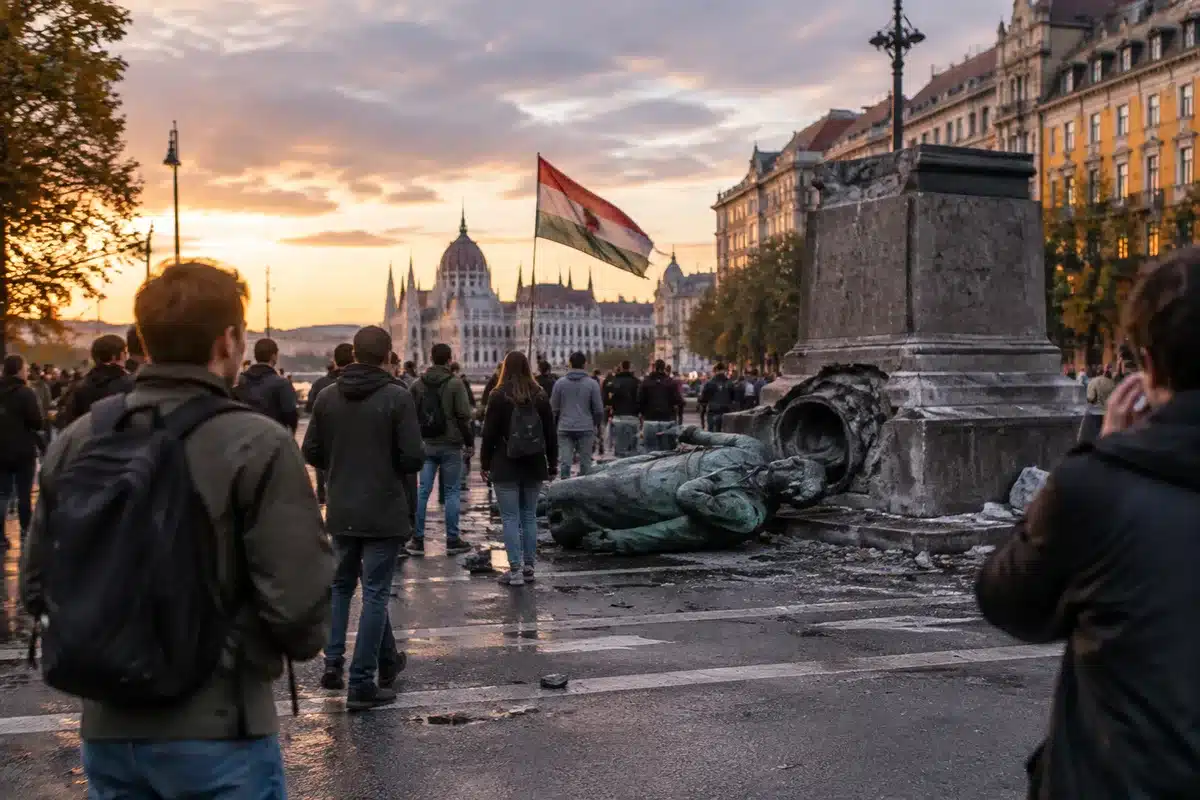
I was nine in Budapest when the revolt broke out. The fear and hope of those days are vivid: crowds chanting for change, the sight of monumental statues toppled, and streets that felt both liberated and dangerous. The violence then was brutal and often lethal — far beyond what the incidents in France have produced — because it was directed against an occupying political order that denied ordinary political freedoms.
The Growing Demand for Data-Driven Decision Making in Silicon Valley
He quit, ran out of money, and begged to come back — here’s how his boss reacted
Those memories do more than provide a historical comparison. They frame how one judges protest today. In 1956, the struggle was for sovereignty and political self-rule. That sense of fighting for a collective future affected how people acted in the city: even amid shooting and shelling, there was an overarching ethic that protected community property and discouraged looting.

Revolution versus riot: goals, organization, and political imagination
At the heart of the difference is intent. The Hungarian uprising carried a clear political program: throw off foreign-imposed domination and build self-governing institutions. The recent unrest in France lacks that same coherent political blueprint.
- Hungary (1956): A movement aimed at national independence and democratic self-governance, organized by students, workers, and local committees.
- France (2026): Sporadic, often chaotic clashes that frequently devolve into destructive behavior without a unified plan to remake political institutions.
Where one movement aspired to create new civic frameworks — workers’ councils, revolutionary committees — the other has produced largely destructive episodes without a sustained, constructive program to channel public grievances into institutional change.
Symbols, flags and what they tell us about belonging
Symbols reveal motives. In Budapest, people ripped the hammer and sickle from the national flag and toppled statues that embodied an imposed regime. That symbolic defiance expressed a desire to reclaim national identity and sovereignty.
By contrast, much of the recent turmoil in France has targeted the symbols of the Republic itself. The violent invasion of city halls and the dramatic tossing of Marianne’s bust in Marseille were not random acts of vandalism; they were symbolic assaults on the French state and its civic values. Equally telling is what did not appear: the French tricolor — historically a banner of popular protest — has been conspicuously absent from many demonstrations. Instead, foreign flags have sometimes been more visible.
Behavior in the streets: solidarity, looting and attacks on institutions
One of the most striking divides between the two episodes is how participants treated their communities.
- Respect for shared goods (Budapest): Even amid conflict, many Hungarians refrained from looting and protected neighborhood shops and property. There was a sense that plunder would destroy the social fabric they were fighting to reclaim.
- Destruction and plunder (France): In many recent incidents, looting and deliberate damage to schools and public buildings have been widespread. These actions signal a different relationship to the community — one that prioritizes immediate gain or nihilistic expression over collective welfare.
Attacks on schools are particularly disturbing because they undermine the future. Striking a building where children learn is a form of symbolic and material violence against coming generations. The willingness to vandalize public institutions suggests a level of moral disengagement that goes beyond political protest.
Grassroots governance vs. nihilism: what emerges after the smoke clears
When communities attempt to change their political reality, what matters is not only what they destroy but what they build in place of it. The Hungarian uprising gave rise to spontaneous democratic structures — bodies that attempted to organize life under new rules. Thinkers such as Hannah Arendt pointed to the dignity of those emergent institutions even after the revolt was crushed.
In contrast, the recent disturbances in France have yielded little of that constructive energy. There are no lasting civic organs or proposals for systemic reform coming out of the unrest that match the transformational ambition of 1956. Instead, the episodes risk leaving behind scars and a weakened sense of civic responsibility.
Why looting and anti-patriotic gestures matter for social cohesion
Looting and the deliberate desecration of national symbols do more than create immediate damage; they corrode trust.
- Economic harm: Looting destroys livelihoods and undermines small businesses that anchor neighborhoods.
- Social harm: When people feel they cannot rely on communal norms, mutual aid frays and social capital declines.
- Cultural harm: Assaults on civic symbols — like knocking down a bust of Marianne — erode shared narratives that bind diverse populations together.
These behaviors are not simply crimes of opportunity. They reveal attitudes toward the future of the community and the obligations citizens have to one another. In the 1956 uprising, acts of restraint reflected a broader commitment to rebuilding a nation. In many of the recent riots, restraint has been absent.
What the comparison tells us about the state of democratic societies
When citizens rise against a repressive regime, even a failed revolt can leave behind institutions or ideas that energize later reforms. When unrest is driven by anger without direction, it often produces destruction without renewal.
The key difference lies in whether participants seek to reclaim political authority for their people or to vent outrage in ways that fracture civic life. The Hungarian moment, violent and tragic as it was, represented an attempt to recover national sovereignty and political dignity. The recent French disturbances, characterized by symbolic attacks on the Republic and by opportunistic looting, suggest a different trajectory: erosion rather than renewal.
Frank Furedi leads the Freedom and Sovereignty Initiative Europe.
You might also like:
- French school riots expose entitled students and spark nationwide debate
- France protests and riots spread as fires and clashes hit major cities
- Civic nationalism must be revived to heal U.S. political divides
- Britain becoming like France raises alarm about politics, public services
- 2020 summer chaos: pandemic, protests and burnout reshaped America

Robert Johnson is a dedicated columnist focusing on political and social debates. With twelve years in editorial writing, he provides nuanced, well‑argued perspectives. His commentaries invite you to form your own views and engage in critical issues.