
Show summary Hide summary
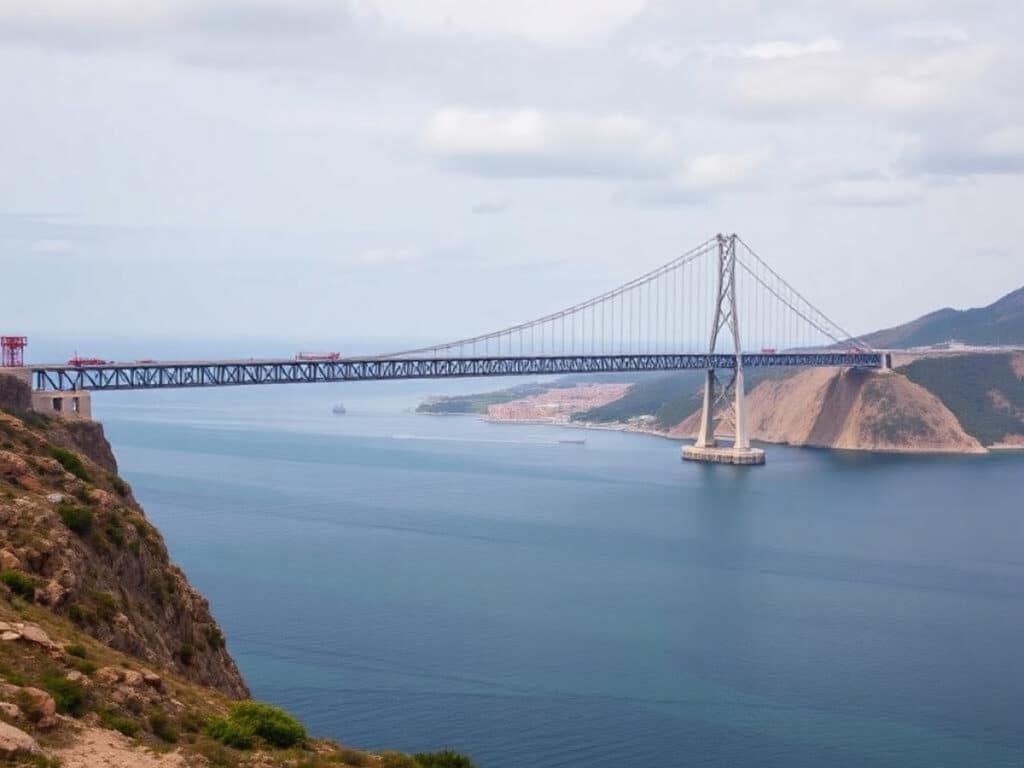
After years of planning and countless setbacks, Italy is finally setting the stage for a monumental feat of engineering—a bridge that will stretch across the Strait of Messina to connect Sicily with the mainland. Known as the Ponte Stretto di Messina, this proposed suspension bridge is poised to break world records, not just in ambition but in scale and scope. The bridge’s planned length of 2.24 miles (3.6 kilometers) would make it the longest of its kind in the world, supported by towers soaring 1,309 feet (399 meters) into the sky. The vision for this bridge has been a topic of discussion and daydreams for decades, but now, it’s moving closer to reality, with the Italian government giving its nod of approval.
Imagine a bridge so vast that it can accommodate 6,000 vehicles per hour and 200 trains per day. The design includes a 60-meter-wide deck featuring three lanes of road traffic on each side, two emergency lanes, and dual railway tracks. The target completion year? 2032. While the numbers alone are staggering, they only begin to scratch the surface of this grand endeavor’s complexities and challenges.
The Architectural and Engineering Marvel
The Ponte Stretto di Messina isn’t just another bridge; it’s a beacon of modern engineering and architectural might. Planned to be the world’s longest suspension bridge, it embodies ambition and innovation. The bridge will rely on two massive suspension cables, each over a meter in diameter, comprised of 44,323 steel wires. These aren’t just numbers; they represent a lifeline that will hold together a structure large enough to be a small city floating in the air.
The Growing Demand for Data-Driven Decision Making in Silicon Valley
He quit, ran out of money, and begged to come back — here’s how his boss reacted
Structural Specifications
- Total length: 2.24 miles (3.6 kilometers)
- Height of towers: 1,309 feet (399 meters)
- Width of deck: 60 meters
- Dual carriageways with three lanes each way
- Two emergency lanes and two railway tracks
Logistical Nightmares and Ecological Concerns
The Strait of Messina, a dynamic body of water marked by high winds and frequent seismic activity, presents formidable natural challenges to the construction of such a massive structure. These geographical hurdles are compounded by the logistical complexities of orchestrating a project of this magnitude. The region’s busy shipping routes and the strait’s notorious weather patterns add layers of difficulty in both the construction and maintenance phases.
Moreover, the shadow of the 2018 Morandi Bridge collapse in Genoa looms large, a sobering reminder of what can go wrong with large-scale infrastructure projects. This history brings safety sharply into focus, intensifying scrutiny on every aspect of the bridge’s design and implementation.
Environmental and Public Opposition
Aside from technical challenges, there is significant opposition from various quarters, including local communities and environmental groups. The concerns range from potential environmental degradation to fears about the bridge altering the local culture and landscape. The project’s budget, estimated at €13.5 billion (approximately $15.7 billion), also raises questions about economic priorities and fiscal prudence in a country grappling with various socio-economic issues.
The Road Ahead
Despite the hurdles, the dream of the Ponte Stretto di Messina lives on, fueled by decades of anticipation and planning. As engineers, architects, and planners converge to turn this dream into a reality, the world watches closely. Will this bridge, a blend of aspiration and innovation, redefine what’s possible in civil engineering, or will it succumb to the formidable challenges it faces? Only time will tell, but one thing is certain: the journey from dream to reality will be a story worth following, a narrative of human endeavor, resilience, and the relentless pursuit of connecting and advancing societies.
You might also like:
- US-Canada pedestrian and bike bridge set to open in 2026
- Singapore 3D-printed bridge to open in 2028 after rigorous testing
- Old railroad bridge transformed by million-dollar makeover into city’s trendiest venue with a view
- Boston bike lanes reduce traffic after residents pushed for more
- China just broke a Guinness World Record by moving a 30,000-ton giant

William Anderson is a multimedia producer specializing in videos, podcasts, and interactive galleries. With five years of immersive content creation, he turns information into a rich audio‑visual experience. His storytelling skills draw you directly into the heart of every story, on any platform.

