
Show summary Hide summary
- MMX mission: Japan’s plan to fetch moon material from Mars
- Timeline and what to expect on the way to Mars
- Why scientists are eager for Phobos and Deimos samples
- Idefix and the hardware built to handle Phobos’ tricky surface
- International teamwork and what MMX means for future Mars exploration
- Science goals, engineering tests, and the broader payoff
Japan launched a bold expedition on October 19 — a spacecraft bound for the tiny, enigmatic moons that orbit Mars. The mission’s objective is unprecedented: land on Phobos, scoop up surface material, and return those samples to Earth so scientists can finally examine pieces of a Martian moon in terrestrial labs.
The probe rose from the Tanegashima Space Center aboard Japan’s new H3 rocket and begins a multi-year voyage that will test delicate landing techniques, robotic exploration at extremely low gravity, and international teamwork on a planetary-scale science project.
MMX mission: Japan’s plan to fetch moon material from Mars
The Growing Demand for Data-Driven Decision Making in Silicon Valley
He quit, ran out of money, and begged to come back — here’s how his boss reacted
The project, called the Martian Moons eXploration (MMX) mission and led by the Japan Aerospace Exploration Agency (JAXA), is a roughly five-year campaign with an estimated budget of about $578 million. MMX carries scientific instruments from multiple space agencies and research centers around the world, reflecting how modern planetary science increasingly depends on partnerships.
- Launch vehicle: H3 rocket
- Lift-off site: Tanegashima Space Center, Japan
- Spacecraft mass: roughly 5 tons
- Primary goal: collect and return samples from Phobos
Timeline and what to expect on the way to Mars
MMX is scheduled to reach the Martian neighborhood in late summer 2027, after a long cruise through interplanetary space. Once in the Mars system, the spacecraft will study both Phobos and Deimos, perform close flybys, and then attempt a precision landing on Phobos to extract material from its surface.

Key mission milestones
- Arrival at Mars system: late summer 2027
- Detailed mapping and reconnaissance of Phobos and Deimos
- Deployment of a small rover and selection of a sampling site
- Touchdown on Phobos, sample collection, and ascent back to orbit
- Departure from Mars system: around 2030
- Sample capsule return to Earth (Australia): expected in 2031
MMX aims to collect at least 10 grams of material using a combination of drilling and vacuuming tools contributed by JAXA and NASA. If the retrieval and Earth-return phases go according to plan, this will be the first time humans bring back material from any moon other than our own.
Why scientists are eager for Phobos and Deimos samples
Phobos and Deimos are small, irregularly shaped bodies — Phobos measures about 14 miles (22 kilometers) across — and their origins are still debated. Two main ideas dominate the discussion:
- They are captured asteroids that originated elsewhere in the solar system.
- They formed from debris produced by a giant impact on Mars early in its history.
Examining physical samples in laboratories will let researchers analyze mineralogy, isotopes, and organic compounds with techniques that far surpass what remote instruments can achieve. Crucially, Phobos may hold fragments ejected from Mars over billions of years; those grains could provide fresh evidence about the Red Planet’s past climate, geology, and the conditions that might have influenced habitability.
Idefix and the hardware built to handle Phobos’ tricky surface
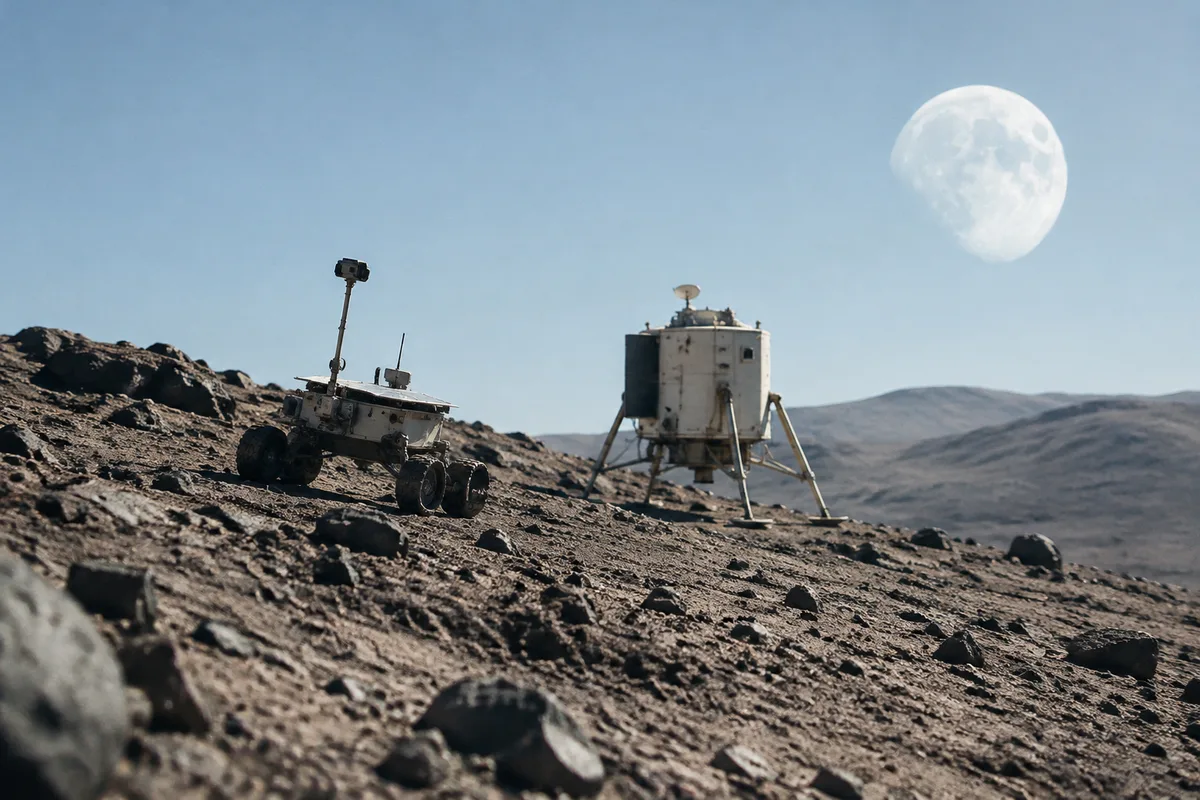
Operating in the extremely weak gravity of Phobos is a major engineering challenge. To scout the terrain and help choose a safe landing site, MMX will release a tiny, four-wheeled rover — a microwave-sized scout nicknamed Idefix, a playful nod to the small dog from the Asterix comics.

- Idefix features: French-German design, four wheels, low-speed hopping/bouncing mobility
- Role: survey prospective sampling areas and test mobility in milligravity
- Movement: travels in millimeters per second to avoid kicking up hazardous debris
The main lander will aim for a relatively brief surface stay — only about two hours — during which it will drill and vacuum samples into a sealed container. Instruments from international partners are part of the payload, combining to maximize the scientific value of whatever material is returned.
International teamwork and what MMX means for future Mars exploration
MMX brings together agencies and institutes across the globe: NASA, France’s CNES, Germany’s DLR, the European Space Agency, and Japanese research organizations are all contributing technology, instruments, and expertise. This collaborative model spreads cost and risk while allowing each partner to add unique scientific capabilities.
Besides answering origin questions about the Martian moons, MMX will produce data helpful for planning human missions to Mars. JAXA has proposed that Phobos could one day serve as a staging area or a logistical outpost for astronauts because its low gravity makes landing and launching easier than on Mars itself. The experience of operating in that environment will sharpen navigation, landing, and sample-handling techniques relevant to crewed exploration.
Science goals, engineering tests, and the broader payoff
Beyond the headline of returning the first Martian moon samples, MMX will:
- Map surface composition and structure of Phobos and Deimos
- Test precision landing and short-duration surface operations in milligravity
- Search for materials that originated on Mars
- Deliver a cache of well-documented samples for decades of laboratory studies
Successful sample return would give scientists material to analyze with instruments far more powerful than those that can fly on spacecraft, opening the door to discoveries about planetary formation, impact processes, and Mars’ own history — while demonstrating technologies that could be reused on future missions.

You might also like:
- In 2011, a collector bought a Moroccan meteorite—it turned out to be proof of thermal water on Mars
- NASA moon mission 2026: first crewed lunar mission in 50 years
- Mysterious “Second Moon” Revealed: Hidden for 60 Years, Now Uncovered!
- NASA moon base details: plan to prepare humanity for next phase of exploration
- NASA may have found life on Mars 50 years ago and accidentally killed it

Michael Thompson is an experienced journalist covering U.S. and global news. With ten years on the front lines, he breaks down political and economic stories that matter. His precise writing and keen attention to detail help you grasp the real‑world impact of every event.

