
Show summary Hide summary
- Where the discovery was made and what was found
- How scientists determined the age of the art
- What the motifs tell us about early symbolic behavior
- How this discovery shifts timelines in prehistoric art studies
- Reactions from the research community and outstanding questions
- Preservation challenges and next steps for the site
A newly announced archaeological discovery is forcing researchers to rethink when humans first began making recognizable art. Excavators uncovered marks and pigments in a sheltered rock formation that appear to predate many previously known examples of symbolic expression, and the find is already stirring debate across the fields of archaeology, paleoanthropology, and cognitive science.
The evidence combines visible decoration with scientific dating that suggests the markings are extremely old. If the age estimates hold up, this could expand our understanding of how early humans used images and symbols to communicate, record ideas, or shape group identity.
Where the discovery was made and what was found
The Growing Demand for Data-Driven Decision Making in Silicon Valley
He quit, ran out of money, and begged to come back — here’s how his boss reacted
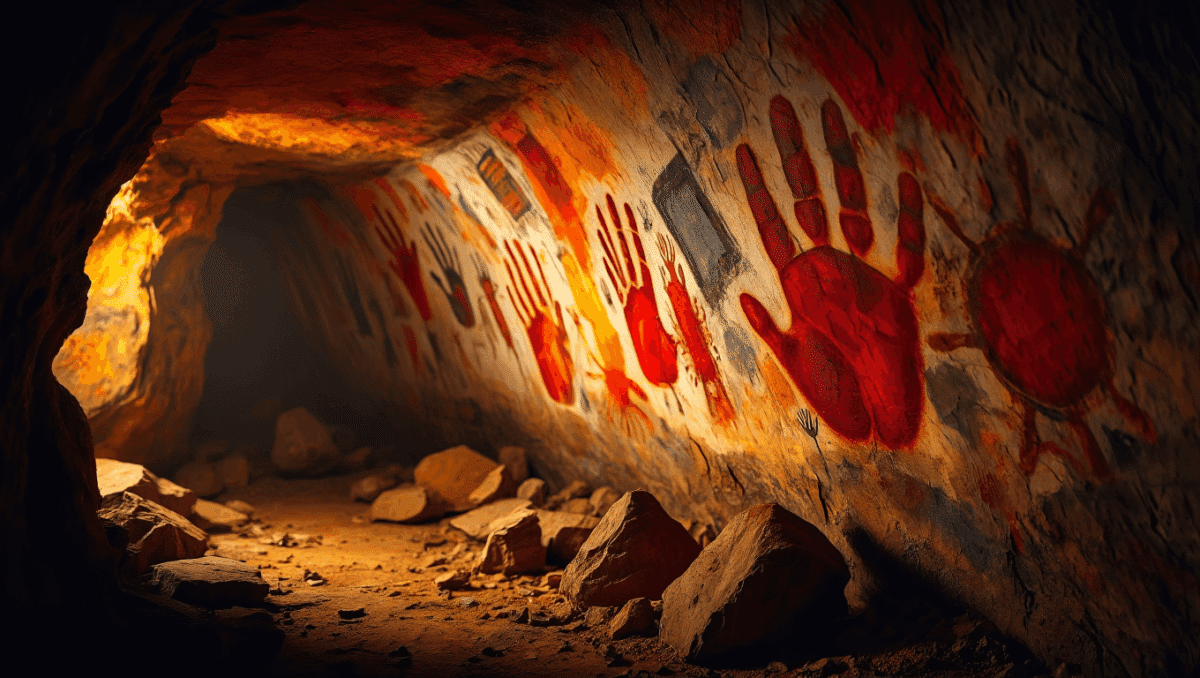
Teams working at a remote rock shelter uncovered a sequence of painted and engraved surfaces on a single wall. The visible features include repeated geometric patterns and faded pigments rather than obvious figurative scenes. Excavators also recovered small artifacts near the painted surfaces that helped place the artwork in a broader archaeological context.
- Types of markings: dots, lines, crosshatching, and layered pigments.
- Associated materials: pigment residues, tiny stone tools, and mineral crusts covering portions of the paint.
- Site context: a sheltered rock overhang with stratified deposits indicating periodic human use.
How scientists determined the age of the art
Dating prehistoric wall art is technically demanding. Researchers combined several methods to reach their age estimates, focusing on techniques that can directly date mineral layers associated with paintings rather than only the surrounding sediments.
Primary dating techniques used
- Uranium-thorium dating on thin mineral (calcite) layers that formed on top of the pigments — this gives a minimum age for the artwork beneath.
- Radiocarbon dating of organic remains found in the same stratigraphic layers to provide complementary timelines when organics are present.
- Stratigraphic analysis to relate the painted surfaces to occupation layers and buried artifacts.
Combining multiple approaches strengthens the case for the paintings’ antiquity, because each method has different sensitivities and potential sources of error. That cross-checking is what convinced many team members to publish the results.
What the motifs tell us about early symbolic behavior
The images are mainly abstract — repetitive marks and color fields — rather than detailed animals or human figures. That matters because abstract designs are often linked to symbolic thinking: the ability to use visual code to represent ideas, affiliations, or rituals.
- Abstract motifs can function as group identifiers, ritual signs, or memory aids.
- Repetition and layering suggest intentional design and possibly long-term maintenance of the painted surface.
- The presence of pigment and deliberate abrasion shows deliberate, technology-mediated production.
Such visual choices point to cognitive capacities beyond simple decoration — they imply planning, shared meaning, and cultural transmission.
How this discovery shifts timelines in prehistoric art studies
Previous benchmarks for the earliest known art have come from engraved ochres, shell beads, and cave paintings found in several regions. This new find may push those benchmarks earlier in some places or show that the behavior was geographically widespread at an earlier date than assumed.
- It opens the possibility that symbolic expression emerged multiple times independently or that early networks spread ideas widely.
- It raises questions about the role of migration, climate change, and social complexity in stimulating visual culture.
- It challenges models that tie symbolic art to a single evolutionary leap or to a specific population.
Reactions from the research community and outstanding questions
Colleagues welcomed the data but emphasized caution. Independent verification, additional samples, and replication of dating results are needed before rewriting textbooks.
- Some experts want more direct dating of pigments themselves, when possible, to eliminate ambiguity.
- Others point out that taphonomic processes can complicate interpretation of layered deposits.
- There is a call for broader regional surveys to determine whether similar art appears nearby and how it fits with known artifact assemblages.
Debate will focus on reproducibility and whether the markings functioned as “art” in the way modern observers understand the term, or whether they served other social or practical purposes.
Preservation challenges and next steps for the site
Rock art sites are fragile. Conservators are working with archaeologists to stabilize painted surfaces and control visitor access. Future research plans include higher-resolution imaging, micro-sampling for pigment analysis, and expanded excavation of adjacent deposits.
Planned lines of inquiry
- Noninvasive imaging (multispectral and 3D) to reveal hidden layers of paint and manufacturing traces.
- Microscopic and chemical analysis to identify pigment sources and production techniques.
- Comparative studies across sites to map stylistic and chronological relationships.
Funding and international collaboration are being mobilized to ensure careful study while protecting the site’s integrity, and teams are preparing to publish follow-up papers with more extensive datasets for peer review.
You might also like:
- UK’s oldest cave painting reclassified from striped rock once dismissed as natural in 1928
- Morocco fossils could rewrite human origins
- 500,000-year-old wooden tools are the oldest ever discovered
- Archimedes manuscript lost page found in museum reveals hidden text under illustration
- Japanese fish printing (gyotaku): how it grew from documenting daily catch to acclaimed art

William Anderson is a multimedia producer specializing in videos, podcasts, and interactive galleries. With five years of immersive content creation, he turns information into a rich audio‑visual experience. His storytelling skills draw you directly into the heart of every story, on any platform.


I remember when I found a doodle on a cave wall as a kid, thought I was the next Picasso. But this ancient art discovery? Mind-blowing! Makes me rethink my stick-figure game. Guess I got some catching up to do!
Whoa, imagine stumbling upon ancient art like that! Its like peeking through a time machine. Makes you wonder what stories these motifs held for our long-gone ancestors. Time to grab some popcorn and unravel this archaeological mystery!
Man, totally feel you on that one! Its like stumbling upon a hidden treasure chest full of ancient secrets, right? Makes you wonder what epic adventures our ancestors were up to. Pass me some of that popcorn, lets solve this archaeological puzzle together!
I remember my grandpa telling stories bout ancient art in caves. Now, archaeologists found more! Crazy how these ancient folks expressed themselves. Wonder what our art will tell future peeps bout us.
Yo, your grandpa sounds like a legend! I can picture him spinning those ancient tales like a boss. Its wild how those old-school artists left their mark in caves for us to discover. Makes you think, right? What kind of crazy stories will our selfies and memes tell future generations? Times gonna have a field day decoding our vibe, for sure!
Man, finding ancient art is like digging up pieces of the pasts soul. Its like seeing a snapshot of our ancestors minds. Makes you wonder how much weve changed, or not.
A conspiracy nut: So, they found some ancient doodles, huh? Bet theyre hiding the real stuff in Area 51! Cant trust these archaeologists, man. Probably aliens drawing stick figures.
I remember when I found a weird rock and tried to convince everyone it was ancient art. Turns out, I was just a kid with a muddy imagination. Props to the real archaeologists for finding the actual deal!
Man, I feel that! I once tried to pass off a squished gummy bear as modern art. Had the whole family fooled until it melted in the sun! Props to the pros for uncovering the real treasures, huh? Thats a whole different league of detective work!
Man, imagine being the first artist ever, like the OG creative genius of prehistoric times. Those ancient peeps were onto something with their rock art vibe. Its wild how arts been a thing since forever, right?
Totally feel ya, dude! Imagine those ancient folks, just chillin in caves, like, Yo, lets paint some epic stories on these walls. Bet they were the real OG influencers of their time, you know? Art has been the OG since forever, man. Just goes to show, creativitys timeless, even if your tools are just rocks and mud. Crazy, right?
So, archaeologists dug up ancient art, huh? Reminds me of that time I found my grandpas old vinyl collection in the attic. Wonder what stories these doodles tell. Bet those ancient folks had some wild tales!
Man, finding ancient art is like peeking into a time capsule! Its crazy how those old civilizations expressed themselves. Wonder what future archaeologists will think of our memes and emojis?
Man, these ancient artists were the OG trendsetters! Imagine, carving out their masterpieces with primitive tools. Its like the Stone Age version of Banksy, but with mammoths instead of political statements.
Bro, totally! Those ancient artists were like the original hipsters, carving their stuff with prehistoric swag. Imagine Banksy swapping his spray cans for a chisel, tagging mammoths instead of walls. Talk about a Stone Age upgrade!
Yo, Im a curious skeptic here. Oldest art, huh? Wonder what ancient peeps were tryna say with them motifs. Cant imagine drawing on cave walls instead of Insta. Weird flex, but okay.
Man, finding ancient art is like digging up memories of our ancestors. Its like peeking into a time capsule, seeing what stories they told with those strokes and colors. Wonder what stories our doodles will tell in a thousand years!
Man, finding the oldest human art is like digging up a time capsule from prehistoric coolness! Imagine the stories those ancient doodles could tell. Bet they had no clue wed be geeking out over their art thousands of years later!
I remember when I tried drawing on cave walls as a kid, just scribbles really. Can you imagine the talented ancient artists creating the oldest human-made art now found by archaeologists? Mind-blowing!
I remember when I found an ancient toy in my grandpas attic, felt like a little archaeologist. Wonder what stories these newfound arts could tell. Makes you think about the human journey, huh?
Dude, thats wild! Uncovering an ancient toy in your grandpas attic is like diving into a time capsule. It really does make you ponder about all the tales and adventures those old artifacts have witnessed. Its crazy how objects can carry so much history, right? Bet that toy had some epic stories to tell. Ever thought of putting on a little explorer hat and digging up more hidden treasures? Who knows what other gems you might stumble upon!
Man, these ancient artists were really ahead of their time! Can you imagine creating art that stood the test of centuries? Makes my doodles look like chicken scratch. Respect to our creative ancestors!
Man, finding the oldest art is like unlocking a time capsule! Its like peeking into the minds of ancient peeps. Wonder if they had caveman critics too—“ugh, those handprints are soooo 10,000 BC.”