
Show summary Hide summary
Researchers at the University of Maryland have built a discreet sensor that clips to underwear and records intestinal gas in real time — a gadget as weird as it sounds, and oddly illuminating. After decades of estimates and self-reports, this “smart underwear” gives scientists a first look at how often people actually release flatus and what that tells us about digestion and the microbiome.
The findings overturn long-held assumptions and expose how unreliable human recall can be when it comes to bodily functions most of us pretend don’t exist. Beyond the giggles, the project is producing measurable data that could reshape how clinicians think about gas-related symptoms and gut health.
How the wearable sensor detects intestinal gas
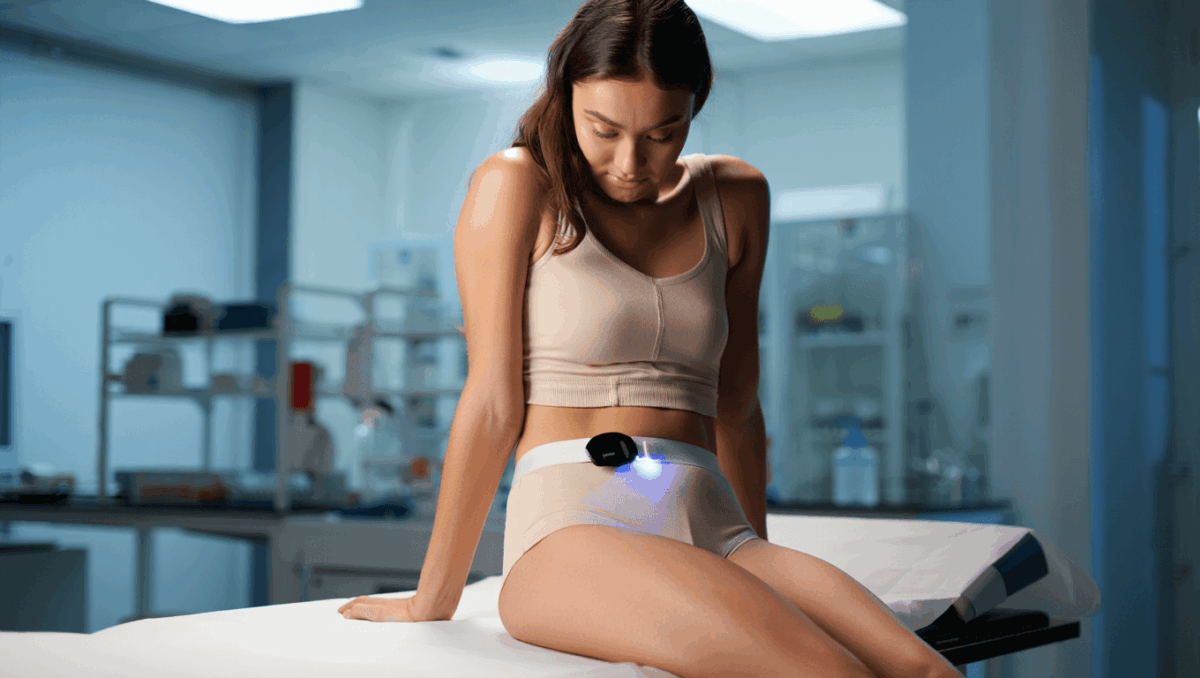
The UMD device is a small, clip-on sensor attached to a person’s underwear that samples the air around the buttocks and analyzes hydrogen levels during episodes of flatus. Hydrogen is a useful proxy because many gut microbes produce it when fermenting carbohydrates, so spikes in hydrogen correspond to emitted gas events.
The Growing Demand for Data-Driven Decision Making in Silicon Valley
He quit, ran out of money, and begged to come back — here’s how his boss reacted
- Noninvasive monitoring: The sensor livens up continuous tracking without requiring participants to change daily routines.
- Real-time data: Instead of relying on memory or intermittent lab tests, researchers capture each event as it happens.
- Privacy limits: The device does not or cannot record in the restroom, meaning stool-related emissions are not sampled — a boundary the team drew to avoid invasive monitoring.
New measurements: people fart far more than they say
Earlier estimates, often based on self-reporting or limited clinical tests, settled around 14 emissions per day. The UMD sensor study paints a very different picture: participants averaged about 32 gas events daily. Variation was wide — some people averaged as few as four occurrences, while others recorded close to 60 in a single day.
Key numbers at a glance
- Previously reported average: ~14 events per day
- Smart-underwear study average: ~32 events per day
- Observed range in the study: about 4 to 59 events per day
Researchers attribute the discrepancy largely to human error and social bias. People often undercount or only acknowledge the loud, obvious passes and omit quieter or more frequent micro-emissions. The smart sensor removes that subjective filter and logs every hydrogen spike it detects.
Why accurate gas counts matter for medicine and gut science
Clinicians and scientists have long struggled to define what constitutes normal gas production. Without an objective baseline, diagnosing disorders characterized by excessive gas — and assessing treatments — remains difficult.
- Clinical diagnosis: Objective tracking could help determine when flatulence is genuinely abnormal versus within natural variability.
- Microbiome insights: Hydrogen readings reflect microbial fermentation, offering clues about which species are active after certain meals.
- Treatment evaluation: Continuous measures can show whether dietary changes, probiotics, or medications actually reduce gas production.
An assistant professor involved with the project emphasized that medical practice lacks a clear benchmark for “normal” flatus production. The smart-underwear data aim to supply that benchmark, enabling physicians to distinguish nuisance from pathology.
Building the Human Flatus Atlas: mapping farts by diet and microbiome
The research group is assembling what they call the Human Flatus Atlas — a larger database that pairs gas-event patterns with participants’ diets, gut microbiome profiles, and lifestyles. The goal is to identify reproducible patterns, such as whether certain high-fiber diets reliably increase episodes for some people and not others.
What the atlas will explore
- Correlations between specific foods and increases in hydrogen-associated events
- Differences in gas patterns across microbiome types
- Inter-individual variability that might explain why one person’s fiber causes riotous flatulence while another remains quiet
The atlas could help stratify people into subgroups — frequent farters, low-frequency emitters, and the broad middle — and map those categories to microbiological and dietary signatures.
Practical implications and limitations of the study
The research opens several practical avenues but also carries constraints. Continuous, objective monitoring brings credibility to a previously anecdotal topic and may lead to better-targeted therapies for people whose lives are affected by painful bloating or embarrassing symptoms. Still, the data are not a full record of all gastrointestinal gas: emissions during defecation or while in the toilet were excluded to respect privacy and practical limitations.
- Potential benefits: Better diagnostics, more precise dietary advice, improved trial endpoints for GI treatments.
- Limitations: No toilet monitoring, participant selection bias, and the challenge of scaling device deployment for large, diverse populations.
- Ethical considerations: Continuous body monitoring raises privacy questions even when the data are anonymized for research.
Researchers say the work should be taken seriously despite the subject’s comic reputation. Accurate, objective measures of intestinal gas production could quietly transform how gastroenterologists and microbiome scientists study digestion — turning what used to be gossip into data-driven medicine.
You might also like:
- Diabetes: light-based skin scan can replace finger-prick glucose tests
- Coffee linked to 18% lower dementia risk in 43-year study
- Revolutionary Artificial Tongue Mimics Human Taste: Learns Flavors Just Like Us!
- 3I/ATLAS alien search: scientists find no signs of alien life
- Deep sleep brain waves may protect against Alzheimer’s, new study shows

William Anderson is a multimedia producer specializing in videos, podcasts, and interactive galleries. With five years of immersive content creation, he turns information into a rich audio‑visual experience. His storytelling skills draw you directly into the heart of every story, on any platform.


Man, this studys a real eye-opener! Who knew our undies could spill the beans about our gas game? Next time someone blames the dog, we should just blame our smart undies!
Oh man, Ive always said it – were all just human beans, full of gas! This study just proves what we already knew deep down. Next time someone denies letting one rip, Ill just show em this!
I mean, who woulda thought, right? Weve all been living in a silent-but-deadly world, it seems. Wearable sensors counting farts? Whats next, a ranking system for burps? Sign me up for the gas Olympics!
Man, this study is cracking me up! Who knew we were all such masters of silent but deadly acts, huh? Next time I let one rip, Ill blame it on science – its all in the name of research, right?
Man, this studys blowing up my perception! People tootin more than they let on, huh? Bet those wearable sensors are gettin quite the earful. So, hows that for some gas-powered honesty, eh?
Man, this study is like a wake-up call for everyone pretending theyre all high and mighty! Who wouldve thought our bodies were such gas factories? Maybe next time well think twice before denying a little toot here and there!
Man, this studys like a gas bomb going off in a quiet room! Who knew our undies could spill the beans on our, uh, secret emissions? Next time you deny a fart, remember: your smart undies know the truth!
Man, this study bout farting in smart undies is wild! Cant trust nobody, huh? Next time someone says they never toot, Ill be like, Mmm-hmm, sure, buddy, sure. Smart undies never lie!
Man, aint that the truth! Smart undies spillin all the secrets now, huh? Cant trust a silent tooter no more. Gotta keep an eye on those high-tech skivvies! Who knew undies could be snitches too?
Man, this studys a real eye-opener! Who wouldve thought our bodies are such gas factories? Bet everyones rethinking their silent but deadly game now. Wonder if they have Smart Air Fresheners next.
Man, this studys a gas! Who knew were all farting machines in disguise? Bet grandma wouldve aced this research with her secret weapon: the silent-but-deadly technique! Gas sensors in undies… Whats next, smart burp detectors?
Whoa, talk about a gas-tastic revelation! Grandmas stealthy silent-but-deadly technique definitely deserves a round of applause in the fart department. Gas sensors in undies… Are we gearing up for a future where smart burp detectors become the new norm? The possibilities are both hilarious and slightly alarming!
Man, who woulda thought people are ripping farts left and right more than they own up to? Bet this wearable sensors spillin some spicy secrets! Maybe its time we embraced the gas, let it flow, yknow?
Man, this study is a real eye-opener! People are letting those silent but deadly farts rip more than they admit, huh? Guess we all need to embrace our gas-passing ways, thanks to smart undies!
Man, this studys a real gas, aint it? Guess were all letting rip more than we care to admit! Next time someone denies it, Ill just whip out these stats. *insert cheeky grin*
I once thought I was the champion of stealthy farts, but hey, turns out were all in the same boat! Smart undies spill the beans on our gas secrets. Can we blame the dog now?
Man, this study just proves what I already knew deep down – were all just big ol fart machines! Who knew our undies could spill the beans on our tootin habits? Science really out here doing the Lords work, huh?
Dang, aint that the truth! Who knew our undergarments were secretly spilling the beans on our gas-passing ways? Science really be uncovering some wild stuff, huh? Cant help but wonder what other secrets our undies are holding onto!
Man, this study is a real eye-opener! Who knew we were all walking around, hiding our true farting potential? Guess next time someone blames it on the dog, we gotta think twice. Keep those sensors handy, folks!
Man, this study just confirms what we all knew deep down – were all a bunch of gas factories! Who knew our undies could spill the beans about our, uh, fragrant habits? Science, man, always uncovering the real juicy stuff!
Man, this studys a real eye-opener! Who knew our undies could spill the beans on our, erm, toots? Imagine the awkwardness if we had to wear these sensors during a first date or a job interview!
Man, this study is like the ultimate truth bomb! We all knew it deep down, but now science is backing up our gassy confessions. Its a real eye-opener, or should I say, nose-pincher!