
Show summary Hide summary
- Turning sperm into steerable microrobots: the technique explained
- Magnetic coatings and safety checks: how the particles behave
- Putting the bots to the test inside a 3D-printed reproductive model
- Seeing the invisible: real-time imaging and X-ray visibility
- Potential medical uses: where microrobotic sperm could matter
- Ethical, regulatory and security considerations around living microcarriers
- What’s next for sperm-derived microrobots in research labs
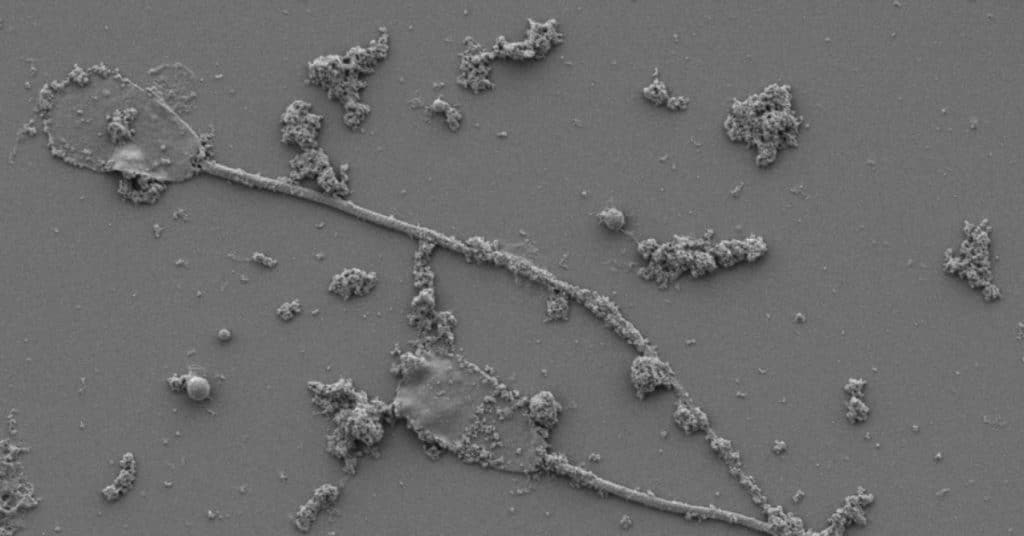
Scientists have taken a familiar biological swimmer and turned it into a controllable tiny machine: sperm cells cloaked in magnetic particles that can be steered through a life-sized, 3D-printed model of the female reproductive tract. The work, led by researchers at the University of Twente, combines biology, materials science and robotics to explore how microscopic, living propellers might one day deliver treatments or help study fertility in unprecedented detail.
Early experiments show these hybrid “spermbots” respond to external magnetic fields and remain visible under imaging techniques, opening the door to targeted therapies and new diagnostic tools. The research raises practical hopes — and ethical questions — about using living cells as vehicles in medical applications.
Turning sperm into steerable microrobots: the technique explained
The Growing Demand for Data-Driven Decision Making in Silicon Valley
He quit, ran out of money, and begged to come back — here’s how his boss reacted
Rather than engineering tiny mechanical swimmers from scratch, the team started with motile sperm cells and applied a thin layer of magnetic nanoparticles to their surfaces. This coating gives researchers something to grip: by applying controlled magnetic fields, they can influence the swimming direction and monitor the location of individual sperm.
Why sperm?
- Sperm are already optimized by nature for propulsion in viscous environments at microscopic scales.
- They generate their own thrust, reducing the need for built-in motors or power supplies.
- The cells’ tiny size and flexibility make them suitable for navigating narrow, complex pathways inside the body.
Magnetic coatings and safety checks: how the particles behave
The magnetic layer is primarily iron oxide nanoparticles formulated to stick to the sperm membrane without harming its function. Refinements over earlier versions improved how well the coating responds to steering fields, while also minimizing toxic effects on human cells.
Laboratory tests exposed uterine cells to the coated sperm for several days, and the results indicated the particles did not cause widespread cell death under those conditions. That safety data is an important early step, but researchers emphasize that much more testing is needed before any clinical use could be considered.
Putting the bots to the test inside a 3D-printed reproductive model
To mimic the real-world challenge of navigating a human reproductive tract, the team built a full-scale, 3D-printed replica of the female anatomy. In that controlled environment they were able to pilot the spermbots through complex turns and narrow passages using external magnets.
What the model allowed researchers to learn
- How magnetic steering affects swimming patterns and speed
- Which geometries present the biggest obstacles for guided movement
- How to coordinate imaging and actuation to maintain real-time control
Seeing the invisible: real-time imaging and X-ray visibility
One of the study’s striking features is that the coated sperm are detectable under certain imaging methods, including X-ray techniques. That visibility provides continuous feedback to operators maneuvering the cells — a capability not available with natural, unmodified sperm without harmful radiation doses.
Real-time tracking could be a major asset for research into fertilization and for precise drug delivery, because it lets scientists observe which swimmers reach a target, which get lost, and how micro-environments affect motion.
Potential medical uses: where microrobotic sperm could matter
Researchers and clinicians are considering several possible applications if the technology advances safely through preclinical and clinical stages. These include:
- Targeted drug delivery to the uterus or fallopian tubes for localized treatments
- Treatment delivery to hard-to-reach tumors or lesions inside reproductive organs
- Experimental platforms to study sperm motility and causes of infertility with direct observation
Because the cells can propel themselves, they may be able to reach locations that passive drug carriers cannot, while magnetic steering would offer directional control to reduce off-target effects.
Ethical, regulatory and security considerations around living microcarriers
Using living cells as components of medical microrobots introduces complex questions. Regulators will need to address safety, informed consent for novel therapies, and long-term effects of releasing or disposing of biologically active materials. There are also dual-use concerns: technologies that enable precise internal navigation could be repurposed for harmful applications if left unchecked.
- Safety hurdles: Comprehensive toxicity and biodistribution studies are required before human trials.
- Regulatory pathways: Combining a biological agent with a device may trigger multiple oversight regimes.
- Security risks: Any remotely steerable system demands safeguards against misuse or unintended control.
What’s next for sperm-derived microrobots in research labs
Scientists plan additional experiments to optimize coating chemistry, improve steering precision, and test how these hybrids behave in more realistic biological environments. That includes refining imaging approaches and evaluating how immune responses might affect performance.
Early demonstrations in synthetic models provide a proof of concept, but translating that into clinical practice will require staged, rigorous testing to confirm efficacy and safety before any patient-facing applications are attempted.
You might also like:
- Spinal cord injury mouse regains normal movement after experimental treatment
- Voyager 1 just sent a signal that could rewrite everything we know
- Endangered sharks caught on video mating in three-way encounter
- Exercised mice pass fitness to male offspring but not via DNA
- Breast cancer risk lower after childbirth and breastfeeding, new study finds

William Anderson is a multimedia producer specializing in videos, podcasts, and interactive galleries. With five years of immersive content creation, he turns information into a rich audio‑visual experience. His storytelling skills draw you directly into the heart of every story, on any platform.


Man, science never fails to amaze me! Turning sperm into little microrobots? Thats some next-level stuff right there. Can you imagine the possibilities? Who knew those little swimmers had such a futuristic destiny ahead of them!
Dude, imagine sperm cells going from swimming aimlessly to steering tiny robots. Thats some Black Mirror stuff right there. Cant decide if its cool or creepy. Like, are we living in a sci-fi flick now?
Whoa, hold up, they turned sperm into microbots? Thats some sci-fi stuff right there! Can you imagine these little guys zipping around doing their thing? Wonder if theyll get a union soon.
Whoa, hold up, they turned sperm into microbots? Thats like something out of a wild sci-fi flick! Just imagine these tiny dudes whizzing around like miniature superheroes. Bet theyll start demanding mini-lunch breaks and micro-overtime soon!
Why turn sperm into tiny robots, bruh? Are they gonna race or something? Like, Sperm Grand Prix? Hope they dont get lost in the maze, man. Wild times were living in, for real.
Whoa, hold up! Sperm cells turned into tiny robots? Thats some wild sci-fi stuff happening in real life. Can you imagine those little guys on a mission inside a 3D-printed reproductive model? Science never fails to surprise!
I mean, whats next? Sperm cells on a mission? Its like a sci-fi movie plot come to life. Cant help but wonder what crazy uses theyll come up with next for those lil guys!
Oh man, this is some sci-fi stuff right here! Turning sperm into tiny robots? Can you imagine the possibilities? Its like a wild combo of biology and technology. Wonder what theyll come up with next!
I never thought Id see the day when sperm cells become tiny robots! Its like a sci-fi movie coming to life in the lab. Wonder if theyll soon be delivering messages or fixing stuff inside us? Wild times we live in!
I mean, who wouldve thought sperm could be turned into tiny robots? Crazy times were living in. Can you imagine the possibilities? Its like a sci-fi movie come to life! Wonder whats next on the weird science agenda.
Yo, talk about a plot twist straight out of a sci-fi flick! Sperm-powered robots? Sign me up for the next wild ride. The futures looking crazier by the minute. Can you imagine whats gonna pop up next in the lab? The bizarre science train keeps on chugging!
Yo, isnt it wild how theyre turning sperm into tiny robots now? Like, imagine those little guys on a mission in someones reproductive system. Science is on some next-level stuff! Wonder what theyll come up with next.
Man, I always knew scientists were up to something crazy! Turning sperm into tiny robots you can control? Thats straight out of a sci-fi flick! Can you imagine the possibilities? Its like were living in a real-life futuristic world!
Ive seen it all now! Sperm turning into microbots? Whats next, robot babies? Imagine those little guys zipping around, following a GPS inside you. Science fiction is becoming reality, folks!
Whoa, hold up! Sperm cells on a mission? Thats some sci-fi level stuff right there! Reminds me of that time I accidentally turned my moms vacuum into a makeshift spaceship. Cant wait for the movie adaptation of this, I tell ya!
Haha, dude, thats some wild imagination you got there! Sperm cells on a space adventure? Thats like a sci-fi comedy waiting to happen! I can already picture the vacuum spaceship blasting off with a heroic whoosh. Can you imagine the tagline? In a world where even the tiniest heroes can save the day! Id totally grab popcorn for that movie!
Oh, great, now sperms pulling double duty as tiny robots? Whats next, mini rocket ships? I bet the scientists had a blast turning those swimmers into little trackers. Wonder if theyll be offering them a union soon!
Well, aint that a wild ride! I can already envision those little swimmers forming a labor union and demanding better working conditions. Maybe theyll start negotiating for better benefits and shorter shifts next. Who knows, maybe well see those mini rocket ships sooner than we think!
Who wouldve thought sperm could be turned into tiny robots? Science never ceases to amaze me! I wonder what other wild ideas theyll come up with next. Its like a sci-fi movie, but in real life!
No way, right?! Science is out here pulling plot twists like a Netflix series! Makes you wonder what else those sneaky scientists are cooking up in their labs. Next thing you know, well have robot chefs whipping up gourmet meals! Crazy times we live in, man.
My cousin once said tech was getting *too* intimate, but this? Sperm as microrobots? Next level! But hey, how’s it work inside a 3D-printed reproductive model? Curious minds, yknow.