
Show summary Hide summary
- Laboratory tests recreate ghostly glows and point to specific chemical reactions
- How microbes and wetlands join the chemistry to make light
- Why these discoveries could reshape thinking about the origin of life
- Astrobiology and the search for life beyond Earth
- Folklore, eyewitness reports and modern monitoring
- Next steps: experiments, field campaigns and new sensors
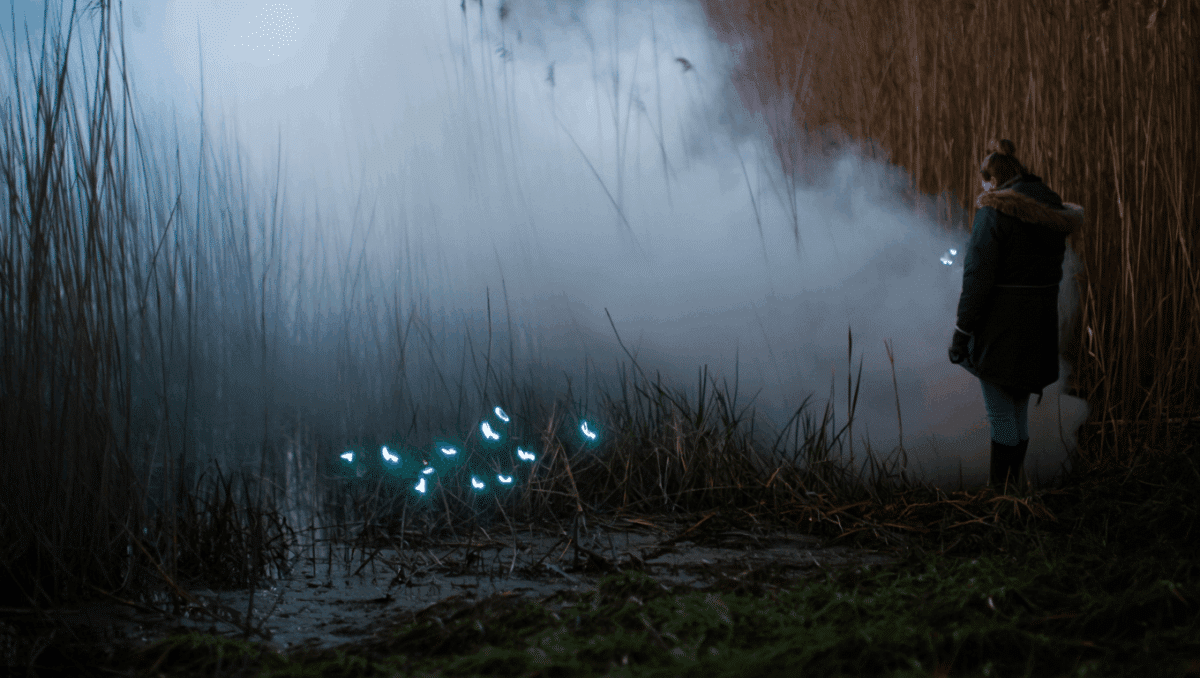
On foggy nights in marshes around the world, travelers have reported seeing small, bluish lights bobbing above the ground — the will-o’-the-wisps of legend. For centuries those ghostly flames were explained with folklore and superstition. Now, a cluster of recent laboratory experiments and field observations is building a concrete chemical and biological picture of what produces these flickering lights — and why those same processes could matter for how life first began on Earth.
Scientists are no longer content to call the phenomenon “mysterious.” By recreating glowing gas mixtures and isolating microbes from wetlands, researchers have narrowed the list of viable explanations and linked the lights to real-world chemical reactions and living organisms. The result is a new narrative that connects marsh gas chemistry, microbial metabolism, and the energy flows that may have powered life’s earliest steps.
Laboratory tests recreate ghostly glows and point to specific chemical reactions
In controlled experiments, researchers have been able to produce faint, sustained light from mixtures of gases and soils that mimic wetland conditions. These tests show that the ghost lights can arise from chemical oxidation reactions that emit visible light — a process known as chemiluminescence — rather than from simple combustion or phantom spirits.
The Growing Demand for Data-Driven Decision Making in Silicon Valley
He quit, ran out of money, and begged to come back — here’s how his boss reacted
Leading chemical mechanisms that produce light
- Oxidation of reduced phosphorus compounds: Decomposing plant material in waterlogged soils can release small phosphorus-containing gases. When these react with oxygen in trace amounts, they can produce luminous byproducts.
- Methane and other hydrocarbons igniting in pockets of air: Localized heating or catalytic surfaces in soil can set off short-lived flames or glowing edges of combustion without large fires.
- Chemical reactions involving peroxide and metal ions: Peroxides can oxidize organic molecules in the presence of iron or copper, giving off light as intermediates fall back to lower-energy states.
- Microbial metabolites that spontaneously luminesce: Some bacteria and fungi generate light through enzymatic reactions, or produce compounds that luminesce when they react with oxygen.
Although the exact mix varies from site to site, experiments indicate that tiny amounts of reactive gases — mixed with soil minerals and organic detritus — can produce luminous plumes similar to the will-o’-the-wisp sightings reported historically.
How microbes and wetlands join the chemistry to make light
Field teams sampling peat bogs and salt marshes are finding a recurring cast of microbial players and gas signatures at locations with reported lights. In many instances, pockets of methane and trace phosphorous compounds coexist with dense bacterial communities capable of modifying those gases.
- Microbial breakdown of plant material releases methane, hydrogen sulfide, phosphides and other reduced species into soil pores and shallow water layers.
- When those reduced gases reach slightly oxygenated zones — for example, where groundwater bubbles meet the atmosphere — rapid oxidation can produce short-lived, glowing chemiluminescent reactions.
- Some microbes can also produce light directly through biochemical pathways similar to classic bioluminescence, creating another possible source for faint blue-green glows.
These observations suggest that will-o’-the-wisps are not a single phenomenon but a family of light-producing processes tied together by wetland chemistry and microbial ecology. That diversity explains why reports vary so widely in color, duration and behavior.
Why these discoveries could reshape thinking about the origin of life
Beyond explaining folklore, the same chemical systems that produce marsh lights may have played a deeper role in Earth’s past. Scientists argue that the interplay of reactive gases, mineral catalysts and shallow water environments could create the energy gradients and reactive compounds essential to prebiotic chemistry.
Energy gradients — places where chemical potentials differ across small distances — are crucial for driving early metabolisms. Wetlands, with their alternating oxidized and reduced microenvironments, provide natural redox interfaces where chemistry can be concentrated and sustained.
Key links to prebiotic chemistry and early metabolism
- Oxidation reactions that emit light also generate highly reactive molecules and radicals, which can drive synthesis of more complex organic compounds.
- Mineral surfaces found in mud and sediments can act as catalysts, concentrating reactants and guiding molecule assembly in a way that might favor proto-metabolic cycles.
- Microbes that exploit these gradients today demonstrate pathways that primitive life could have adapted, showing plausible evolutionary routes from chemistry to biology.
While scientists cannot claim that glowing marsh gas directly created life, the processes behind will-o’-the-wisps form part of a larger suite of environmental conditions — localized energy sources, catalytic surfaces and abundant organics — that make wetlands a compelling stage for origin-of-life scenarios.
Astrobiology and the search for life beyond Earth
The mechanisms under discussion also have implications for detecting life on other planets. Remote sensing searches look for chemical disequilibria — gases that shouldn’t coexist unless something is producing them. Where detectable signatures like phosphine or methane are found, scientists consider both abiotic and biological explanations.
- On planets or moons with subsurface water and volcanic inputs, the same redox chemistry could create detectable gases or even transient luminescence detectable by sensitive instruments.
- Careful laboratory characterization of chemiluminescent reactions helps researchers avoid false positives in the search for biosignatures and improves models of planetary atmospheres.
Recent debates over trace gases in atmospheres like Venus’ underscore how important it is to understand both microbial and nonbiological pathways for producing reactive phosphorus and methane-like compounds.
Folklore, eyewitness reports and modern monitoring
Stories of will-o’-the-wisps stretch across continents — from European peat bogs to Southeast Asian rice paddies. Modern investigators are combining historical records with modern instrumentation to link those eyewitness accounts to measurable environmental signatures.
- Time-lapse and infrared cameras capture transient glows that coincide with gas bubble releases from wet soils.
- Gas sampling often reveals spikes in methane and trace phosphorus species at the moment of visible luminescence.
- Ecologists mapping microbial communities find correlations between certain bacteria and sites where lights are reported repeatedly.
Together, these tools are transforming anecdote into data and helping scientists predict where and when fields of ghostly lights might appear.
Next steps: experiments, field campaigns and new sensors
Researchers are planning targeted campaigns to test hypotheses under natural conditions and refine the lab models that reproduce marsh luminescence. Future work includes more sensitive chemical sensors, isotope analyses to distinguish biological from abiotic gas sources, and long-term ecological studies of the microbial players involved.
- Deploy multi-sensor rigs in wetlands to link light events with gas flux, soil chemistry and microbial activity in real time.
- Run isotope tracing studies to identify whether methane or phosphides come from biological metabolism or from abiotic mineral breakdown.
- Use high-speed spectroscopy to characterize the light emitted, which can reveal the exact chemical pathways at work.
As experiments advance, the frontier between folklore and chemistry continues to narrow, and the humble will-o’-the-wisp is revealing itself as a small but telling piece of the puzzle about how energy and matter conspire to create complexity in the natural world.
You might also like:
- Titan alien life: could Saturn’s moon harbor signs of life?
- Methane to methanol breakthrough turns greenhouse gas into high-demand methanol
- NASA may have found life on Mars 50 years ago and accidentally killed it
- Permafrost thaw emits and absorbs CO2, landmark study finds
- Cancer-fighting plant compound decoded, could lead to new cancer drugs

William Anderson is a multimedia producer specializing in videos, podcasts, and interactive galleries. With five years of immersive content creation, he turns information into a rich audio‑visual experience. His storytelling skills draw you directly into the heart of every story, on any platform.


You ever wonder if those little lights dancing in the dark are really just natures early attempt at creating life? Like, maybe those will-o-the-wisps are the OG chemists, cooking up something special. Science is wild, man.
Oh, so they think they cracked the code on those eerie glows, huh? Reminds me of chasing fireflies as a kid. Science is cool, but can it really explain the magic of those flickering lights in the night?
Dang, chasing fireflies! Thats some good ol memories right there. Science can explain a lot, but can it really capture the mystery of those twinkling night dazzlers? Its like trying to bottle up a lightning bugs magic, you know? But hey, maybe a little mystery keeps the world sparkin!
I remember a campfire tale bout these eerie lights in the marshes. Now theyre saying its all bout chemicals and reactions. Life starting from ghostly glows? Sounds like a story straight outta sci-fi flick!
Man, these wisps of light? Remind me of that time I accidentally mixed cleaning products in the bathroom and got that spooky glow. Glad science is figuring out the real deal now! Life origins and eerie bathroom lights, who wouldve thought?
Dude, thats like a sci-fi thriller happening in your bathroom! Mixing potions and summoning eerie glows, who knew your cleaning routine could turn into a paranormal experiment? Science unraveling lifes mysteries and bathroom light shows, the ultimate unexpected combo! Who needs Netflix with these real-life mysteries, right?
Yo, did you catch this mind-blowing discovery about Will-o-the-wisps? Like, theyre not just mysterious lights anymore – scientists are diving deep into their origins, linking them to the chemistry of life itself. Talk about illuminating the past!
Man, these will-o-the-wisps got me thinkin bout that one time I got lost in the swamp. Spooky stuff! Maybe this science mumbo-jumbo will finally demystify those eerie lights and shed some light on lifes beginnings.
Dude, I feel ya! Those magical will-o-the-wisps can really send shivers down your spine. Imagine if science cracks the code on those mysterious lights – thatd be a game-changer! Maybe well finally get some answers to the swampy enigmas. Who knows, maybe itll even lead to some wild revelations about the origins of life! Exciting times, man.
I remember my grandpa telling tales bout will-o-the-wisps leadin folks astray in the marshes. Now theyre sayin its all bout chemical reactions? Lifes funny that way, keepin us guessin with its glowin mysteries.
Who knew those flickering lights in the marsh had such a scientific backstory? Its like Mother Natures own little light show. Makes you wonder what other secrets shes hiding in plain sight, yknow?
Man, these will-o-the-wisps got me thinking of that eerie marsh I stumbled upon once. If scientists can crack the glowy mystery, who knows, maybe well unlock the secrets of lifes beginnings too! Mind-blowing stuff!
Man, these ghostly glows got me feelin like Im watchin a real-life sci-fi flick unfold! The way those scientists are unravelin the mysteries behind Will-o-the-wisps, its like crackin open a secret recipe book for life itself. Mind officially blown!
Dang, aint that the truth, buddy! Its like we stumbled into a top-secret lab decoding the universes juiciest recipes. Scientists unraveling the mysteries of those wisps got us all feeling like were in a mind-bending blockbuster. Who needs Hollywood when youve got real-life sci-fi unfolding before your eyes? Mind? Blown!
Yo, didja know Will-o-the-wisps might spill the beans on how life kicked off? Crazy, right? Like, tiny ghostly glows might hold the secret sauce to life, man! Mind-blowing stuff, gotta admit.
Man, these wisps are like the elusive crush I never caught in high school – mysterious and out of reach! But who knew they could hold secrets to lifes beginnings? Mind blown, for real.
Man, these will-o-the-wisps got me thinkin of that one time I got lost in the swamp! But now, hearin bout the science behind em and how they might connect to lifes beginnings? Thats some mind-blowin stuff, aint it?
Lost_in_the_Swamp
Yo, man! I feel ya, those will-o-the-wisps can really mess with your head! Imagine gettin lost in the swamp with those eerie lights dancin around. But now, thinkin bout how they tie into the beginnings of life? Mind-blowin for sure! Natures full of mysteries, aint it?
Haha, reminds me of that time I tried to catch fireflies in the backyard as a kid. Who knew those little glows could have such deep origins? Science is wild, man. Wonder what other mysteries theyll uncover next.
I swear, these whizzing lights remind me of that time I saw a UFO after too many energy drinks in the desert! But seriously, if these findings can unlock the secrets of lifes origins, count me in for the wild ride!
Man, these Will-o-the-wisps sound like something out of a spooky fairytale! Its wild how science is unraveling their mysterious origins. Who knew ghostly glows could hold the key to understanding the beginning of life? Mind blown.
I remember hearing wild stories bout these ghostly lights, like fairy tales come to life. Now scientists playin detective to unravel their secrets? Lifes full of mysteries, aint it? Excitin times we live in!
I remember my grandpa telling stories bout mysterious lights in the swamp. Crazy to think those will-o-the-wisps might hold clues bout how life kicked off! Science is wild, man.