
Show summary Hide summary
- How falling into a reactor pool can be survivable
- What happened at the scene: emergency steps and immediate care
- Radiation exposure: acute dose, contamination, and long-term follow-up
- Regulatory steps, investigation, and industry implications
- What this means for worker safety and public confidence
- How experts interpret survival odds and health risks
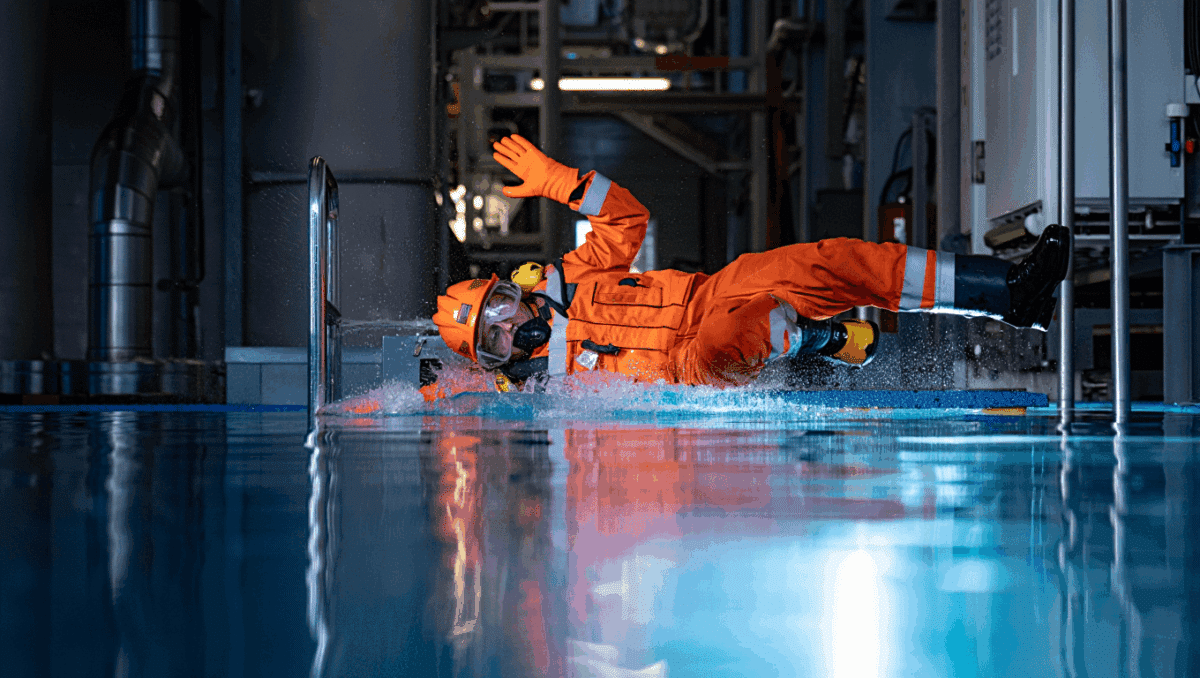
A worker’s accidental fall into a reactor pool at a nuclear power site turned a routine shift into a life-or-death scramble—and yet the person survived. The incident has reopened conversations about on-the-job risk, radiation shielding, and how emergency protocols can make the difference between a fatality and a narrow escape.
Authorities say the worker was quickly pulled from the water and rushed through radiation screening and medical evaluation. As investigators comb through how the slip happened and whether safety systems failed, experts are weighing how exposure to radioactive materials in a pool differs from other kinds of nuclear accidents—and why survival in such a scenario, while rare, is possible.
How falling into a reactor pool can be survivable
Reactor pools, also called spent fuel pools or reactor vessel pools depending on the facility, are deep, water-filled basins designed to store and cool irradiated fuel and provide shielding from radiation. Water is an effective barrier: it absorbs and scatters gamma rays and neutrons, significantly reducing the dose that reaches a person standing at the surface.
The Growing Demand for Data-Driven Decision Making in Silicon Valley
He quit, ran out of money, and begged to come back — here’s how his boss reacted
- Water provides key shielding. Unlike an open-air exposure to a damaged reactor core, a body submerged in pool water often receives less acute radiation because the water blocks much of the energy.
- Distance matters. A few feet of water or even horizontal distance to the most radioactive items can cut doses dramatically.
- Short exposure time is crucial. A brief immersion followed by rapid extraction and decontamination minimizes the total radiation absorbed.
That combination—water shielding, distance from the most radioactive sources, and a rapid rescue—can explain how a person might survive an otherwise terrifying scenario.
What happened at the scene: emergency steps and immediate care
Officials describe a fast-moving response: co-workers alerted emergency teams, trained radiation protection staff arrived with monitoring equipment, and the victim was removed and triaged. Standard on-site procedures in a modern nuclear facility typically include:
- Immediate removal from the hazard area and stabilization of injuries.
- On-the-spot contamination surveys with handheld detectors.
- Decontamination to remove radioactive particles from skin and clothing.
- Medical evaluation, including blood tests and whole-body dosimetry if needed.
Quick decontamination and monitoring are essential because the danger after immersion usually comes from radioactive particulates on the body or internal contamination from inhaled or ingested material—not just the short-term gamma dose from being near irradiated fuel.
Radiation exposure: acute dose, contamination, and long-term follow-up
Radiation experts separate two concerns: an acute external dose (how much radiation the whole body absorbed in a short time) and contamination or internal uptake (radioactive material adhering to or inside the body). Both influence medical care and the long-term outlook.
Acute dose
If the worker avoided direct contact with high-activity fuel assemblies, the acute dose could be low or moderate. Even so, health teams will:
- Use dosimeters and biological markers to estimate absorbed dose.
- Monitor for early radiation sickness symptoms—nausea, fatigue, or blood changes—within hours to days.
Contamination and internal exposure
If radioactive particles contaminated skin or clothing, removal and wash-down reduce risk. If there’s reason to suspect inhalation or ingestion, hospitals may use specialized diagnostics and treatments—chelation, potassium iodide for certain isotopes, or other targeted therapies—to limit internal absorption.
Long-term monitoring typically includes periodic medical exams, blood counts, and sometimes lifetime tracking depending on dose estimates and contamination findings.
Regulatory steps, investigation, and industry implications
After any nuclear workplace incident, the plant operator and regulators launch parallel inquiries. Investigators will focus on:
- Workplace conditions that led to the fall—slippery surfaces, inadequate railings, human factors, or procedural lapses.
- Whether safety systems and personal protective equipment were in place and functioning.
- Emergency response timelines to determine what went well and what can be improved.
Regulatory agencies may issue notices, demand corrective actions, or require retraining. The event also triggers internal safety reviews across the industry as companies re-evaluate similar work tasks and pool-area risks.
What this means for worker safety and public confidence
Incidents where a worker falls into a reactor pool and survives test both the robustness of nuclear safety systems and the emergency culture at a facility. Key takeaways industry-wide include:
- Reinforcing physical protections around pools: guardrails, non-slip surfaces, and restricted access for high-risk tasks.
- Ensuring continuous training and drills for rapid extraction and contamination control.
- Improving human factors design to reduce slips, trips, and falls during routine and maintenance operations.
Strong communication from plant operators and regulators is also important to maintain public trust. Transparent reporting, timely medical updates, and a clear plan for remediation help communities understand the real risks and the steps being taken to prevent recurrence.
How experts interpret survival odds and health risks
Nuclear safety specialists stress that survival in such a fall is plausible under specific conditions—especially when water shielding and prompt rescue limit exposure. However, they caution that every incident is unique and that outcomes hinge on variables like proximity to fuel, duration of exposure, and whether contamination occurred.
To reduce ambiguity, the worker will likely remain under monitoring for months or years. Epidemiologists and occupational health teams will collect data to inform both individual medical care and broader lessons for plant operations.
You might also like:
- How Chernobyl mutated stray dogs
- Jellyfish Invasion Shuts Down French Nuclear Plant: Power Outage Sparks Concerns
- Fusion Reactor Breakthrough: Chinese Scientists Create ‘Impossible’ Steel!
- France bans PFAS, the forever chemicals, in cosmetics, fashion and ski wax
- Radioactive isotopes in rhino horns used as anti-poaching tool

William Anderson is a multimedia producer specializing in videos, podcasts, and interactive galleries. With five years of immersive content creation, he turns information into a rich audio‑visual experience. His storytelling skills draw you directly into the heart of every story, on any platform.


Man, thats some real-life superhero stuff! Falling into a reactor pool and coming out alive? Either this dude has a guardian angel on overtime or hes got some serious luck on his side. Wonder if hes gonna start wearing a cape now.
Dude, thats like straight outta a comic book plot, right? I mean, falling into a reactor pool and walking out unscathed? Thats some next-level action hero stuff! I can already picture him rocking a cape and a mask, ready to save the day. Maybe hell call himself Radiation Man or something. Who knows, maybe hell be fighting evil villains by night now!
Man, that story bout the nuclear plant worker survivin a fall into the reactor pool got me thinkin—thats some real-life action movie stuff right there! Cant imagine the adrenaline rush. Hope that workers doin alright now.
Dude, I once tripped over a power cord at work, thought I was a goner. This guy falls into a reactor pool and lives? I need his luck stat, like, yesterday. Mustve been carrying a four-leaf clover or something!
A conspiracy nut: Well, aint that a plot twist! Falling into a reactor pool and surviving? Sounds fishy to me. I bet the governments trying to cover up some radioactive experiment gone wrong. Dont believe everything you read, folks!
Man, that storys wild! Makes you wonder about all the safety measures in those plants. Bet that workers feeling lucky now. Id be shaking for weeks if I fell into a reactor pool, thats for sure.
You wont believe it, mate! A nuclear plant worker takes a tumble into the reactor pool and walks out alive. Talk about a plot twist in real life! Mustve had an angel on duty that day, eh?
Mate, falling into a reactor pool and living to tell the tale sounds like something out of a sci-fi flick! Bet that worker has one heck of a story to share at the pub. Talk about a crazy work hazard, right?
Dang, that nuclear plant worker who fell into the reactor pool and lived is one lucky dude! Mustve felt like a real-life superhero for a sec. Bet hes gonna have one heck of a story to tell at parties!
Man, I once dropped my lunch in the break room and thought it was a disaster. Imagine falling into a reactor pool! Hope the workers doing okay. Thats one intense way to get a workplace story, huh?
Dang, dropping lunch is already a bummer, but falling into a reactor pool? Thats next-level chaos, mate! Hope the workers are safe after that wild workplace adventure. Can you imagine the water cooler talk after that? Hey, Bob, remember that time I took a dip in the nuclear reactor? Life at the office just got a whole lot more interesting!
Man, that story bout the nuclear plant worker survivin a fall into the reactor pool? Sounds like somethin outta a sci-fi flick! Bet that dude came out glowin like a superhero or somethin! Wild stuff, man.
Man, talk about a real-life superhero origin story! Falling into a reactor pool and surviving? Thats some next-level luck right there. Imagine the watercooler chat at work after that one! Bet his colleagues are gonna treat him like a legend now.
Dude, thats like straight outta a Marvel comic! The office must be buzzin with that story. Bet theyll be lining up to hear it on repeat! Wonder if hes gonna start rockin a cape to work now!
Man, thats like a real-life superhero origin story! Imagine falling into a reactor pool and living to tell the tale. Thats some next-level plot twist right there. Bet that worker has one heck of a story to share at parties!
Dang, dudes living in a real-life action movie, huh? Falling into a reactor pool and coming out alive? Sounds like something straight out of a comic book! Bet hes got folks at parties hanging onto every word, imagining themselves in his radioactive shoes!
Man, that storys wild! Reminds me of that time I slipped into the pool at the water park. Cant imagine falling into a reactor, though. Bet that workers got a crazy tale to tell!
Man, thats like a real-life superhero origin story! Imagine falling into a nuclear reactor pool and living to tell the tale. Bet that workers got some serious bragging rights now. Talk about dodging a radioactive bullet!
Man, thats some movie-level stuff! I mean, falling into a reactor pool and surviving? Talk about a real-life action hero moment. Bet that guys got a wild story to tell at parties now. #SurvivorGoals
Man, thats some sci-fi stuff right there! Falling into a reactor pool and surviving? Sounds like a plot twist from one of those crazy action movies. Hope that worker is doing alright after that intense experience!
Yo, for real! That reactor pool survival is some wild sci-fi-level stuff. Imagine that worker coming out of there like a superhero in an action flick. Hope theyre all good now after that rollercoaster of an experience!