Show summary Hide summary
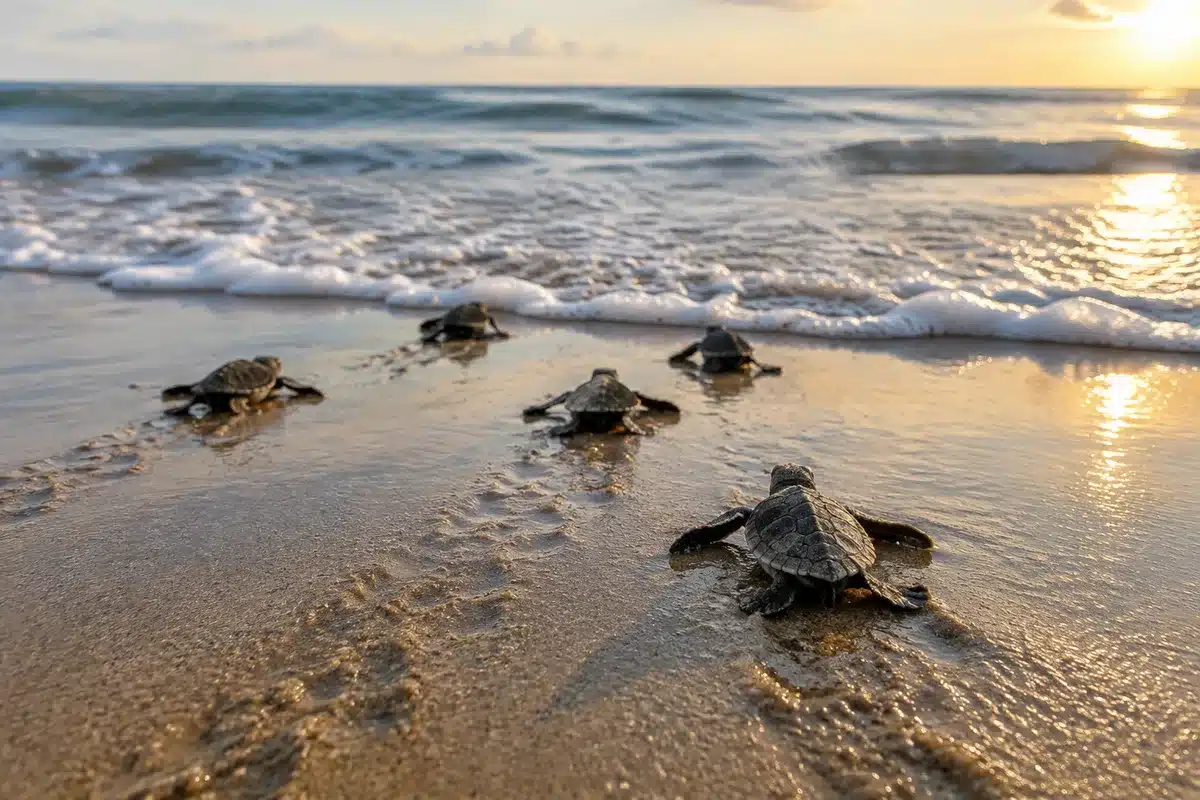
The smallest participants in a California sea turtle rescue made the final leg of their journey on their own. After hatching at the Aquarium of the Pacific in Long Beach, olive ridley sea turtles were brought to Orange County beaches over the weekend and allowed to crawl across the sand into the Pacific Ocean.
Their release followed a discovery that surprised even the lifeguards who witnessed it. In late September, a female sea turtle came ashore, dug a nest, laid her eggs, and disappeared back into the water. A second nest turned up the next day in Huntington Beach. The two finds marked the first documented sea turtle nests on the U.S. West Coast.
A storm forecast changed the plan for California’s sea turtle nests
The Growing Demand for Data-Driven Decision Making in Silicon Valley
He quit, ran out of money, and begged to come back — here’s how his boss reacted
State and federal wildlife officials initially left the eggs where the turtles had laid them, giving the clutches a chance to incubate and hatch on the beach. But with a storm approaching, officials moved the eggs to the Aquarium of the Pacific, where they could continue developing away from the threatened beaches.
Once the eggs hatched, the aquarium team got the young turtles back to the coast. Photos shared by the aquarium show handlers measuring the hatchlings under red or infrared light before giving them room to cross the sand. The hatchlings made their own way into the surf, with people keeping their interference to a minimum.
A third nest extended the discovery to Ventura County
The September sightings weren’t the only ones. Jonathan Snyder, with the U.S. Fish and Wildlife Service’s Carlsbad office, said another sea turtle nest was documented farther up the coast in Ventura County in November. The additional find broadened the stretch of Southern California coastline where nesting had been observed, but Snyder said it was still unclear how many turtles had come ashore to lay eggs.
Cassandra Davis, the aquarium’s director of volunteer services, said researchers don’t yet know what drew the turtles to Southern California. Weather could have played a role, she said, but the visits could also have been an unusual occurrence that won’t repeat. If the nests point to a longer-term change, she added, that could affect how local agencies manage and protect sea turtles.
El Niño may help explain why olive ridleys came ashore
Snyder pointed to the strong El Niño that year as one possible explanation for the unexpected nesting. The timing made it worth considering, he told reporters, but it did not establish why the turtles chose those beaches.
At a press conference, Snyder also pointed to a change that had been underway for decades: conservation work in the United States and abroad. He said olive ridley populations had grown substantially in parts of the species’ range. In his view, that progress helps explain why turtles were already present off California and able to take advantage of the unusual conditions when they arose.
You might also like:
- Sea turtles rebounding worldwide as nests and habitat protections increase, NOAA 2025 study finds
- Rare sea turtle rescued on UK beach flown 5,000 miles to Texas rehab before returning to Gulf
- Endangered cahow hatches on Nonsuch Island in Bermuda
- 650-year-old shoe found in vulture nest with dozens of other artifacts
- Last wild ecosystems untouched by humans declared new sanctuaries

Michael Thompson is an experienced journalist covering U.S. and global news. With ten years on the front lines, he breaks down political and economic stories that matter. His precise writing and keen attention to detail help you grasp the real‑world impact of every event.